
Outpatient varicose vein treatments include radiofrequency ablation, endovenous laser ablation, sclerotherapy, ambulatory phlebectomy, cyanoacrylate adhesive, and compression therapy. These minimally invasive procedures are performed under local anesthesia, require no overnight hospital stay, and allow patients to return to daily activities quickly. This guide details the mechanisms, recovery timelines, and clinical indications for each modality available at Truffles Vein Specialists in Georgia.
Radiofrequency Ablation
Clinical Mechanism and Efficacy
Recovery and Patient Experience
Endovenous Laser Ablation
Endovenous laser ablation is a thermal procedure that uses laser energy to destroy the inner lining of the varicose vein. Similar to radiofrequency ablation, a laser fiber is threaded into the vein. The laser energy heats the vein wall, causing it to seal and close. This is one of the most widely performed endovenous treatments for symptomatic varicose veins.
Procedure Details
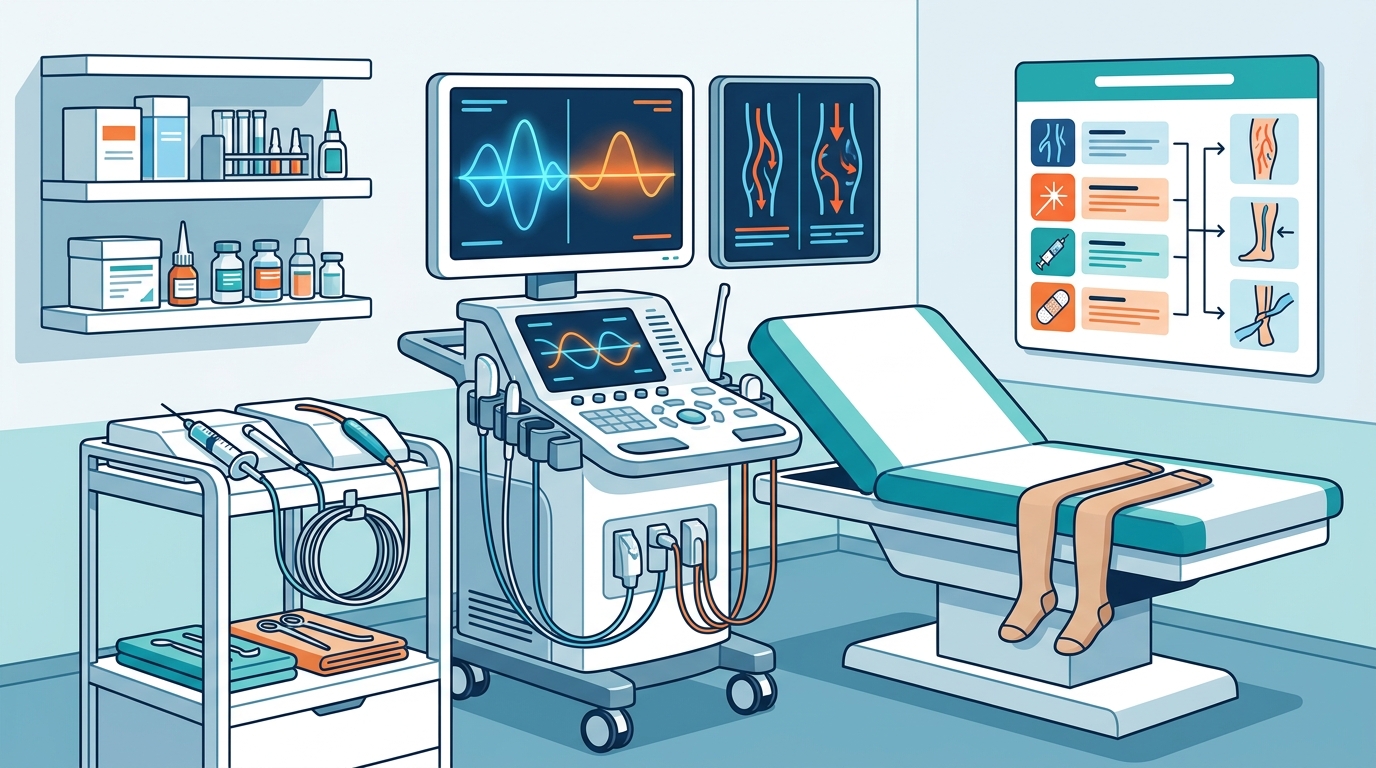
The procedure is performed in an outpatient setting under local anesthesia. The laser energy is delivered in a controlled manner to ensure complete vein closure. Studies assessing the technical efficacy of outpatient endovenous laser ablation confirm high success rates and patient satisfaction. The procedure is tailored to the specific anatomy of the patient's venous system.
Indications and Suitability
Endovenous laser ablation is indicated for patients with superficial axial venous reflux. It is not suitable for all vein types. A comprehensive venous ultrasound is required to map the reflux and determine if the saphenous vein is the primary source of the problem. At Truffles Vein Specialists, vascular testing is a critical first step in the diagnostic management of varicose veins.
Sclerotherapy
Sclerotherapy is a chemical ablation technique that involves injecting a solution into the vein to cause it to scar and disappear. It is the standard treatment for spider veins and small varicose veins. The solution, which can be a liquid or foam, irritates the vein lining, leading to its collapse. The body then reabsorbs the treated vein over time.
Liquid vs. Foam Sclerotherapy
Liquid sclerotherapy is best for spider veins and very small varicose veins. Foam sclerotherapy is used for larger varicose veins. The foam displaces the blood in the vein, allowing the sclerosant to contact the entire vein wall. This increases the efficacy of the treatment for larger vessels. Both methods are performed in an outpatient setting and require minimal recovery time.
Role in Comprehensive Care
Sclerotherapy is often used in conjunction with endovenous ablation. After the main saphenous vein is closed, remaining tributary veins may be treated with sclerotherapy. This comprehensive approach addresses both the root cause of the reflux and the cosmetic appearance of the remaining veins. Truffles Vein Specialists offers both liquid and foam sclerotherapy as part of their treatment menu.
Ambulatory Phlebectomy
Ambulatory phlebectomy is a surgical technique that involves removing varicose veins through small puncture sites in the skin. It is used for large, bulging varicose veins that are not suitable for ablation or sclerotherapy. The procedure is performed under local anesthesia and is considered minimally invasive. The removed veins are discarded, and the healthy veins take over the blood flow.
Technique and Recovery
When Phlebectomy is Indicated
Ambulatory phlebectomy is indicated for superficial varicose veins that are too large for sclerotherapy. It is often used for veins that are close to the skin surface. The procedure is highly effective for improving the cosmetic appearance of the legs. It is a key component of the treatment options available at Truffles Vein Specialists for patients with significant varicose vein burden.
Cyanoacrylate Adhesive
Cyanoacrylate adhesive is a non-thermal endovenous technique that uses a medical glue to seal the vein. The adhesive is injected into the vein, where it hardens and closes the vessel. This method does not use heat, which reduces the risk of thermal injury to surrounding tissues. It is a newer option for treating saphenous vein reflux.
Advantages of Non-Thermal Closure
Because cyanoacrylate adhesive does not use heat, it may be suitable for patients who are not candidates for thermal ablation. The procedure is performed under ultrasound guidance. The adhesive is delivered through a catheter, and the vein is closed immediately. Recovery is similar to that of thermal ablation, with minimal discomfort and a quick return to activity.
Clinical Considerations
Cyanoacrylate adhesive is a safe and effective option for treating varicose veins. It is particularly useful for patients with specific anatomical considerations. The choice between thermal and non-thermal closure depends on the patient's individual venous anatomy and medical history. Truffles Vein Specialists evaluates each patient to determine the most appropriate closure method.
Compression Therapy
Compression therapy is a conservative treatment that uses graduated compression stockings to improve blood flow in the legs. It is often used as a first-line treatment for mild varicose veins or as an adjunct to other procedures. The stockings apply pressure to the legs, which helps the veins push blood back to the heart. This reduces swelling and discomfort.
When Compression is Used
Limits of Conservative Care
While compression therapy can alleviate symptoms, it does not cure varicose veins. The underlying venous reflux remains. For patients with significant reflux, procedural intervention is often necessary. Medicare and other insurance providers typically require a trial of conservative therapy before covering procedural treatment. Truffles Vein Specialists helps patients navigate this process and determines when procedural intervention is medically necessary.
Treatment Comparison Table
| Treatment | Mechanism | Best For | Recovery Time |
|---|---|---|---|
| Radiofrequency Ablation | Thermal closure | Saphenous vein reflux | Same day |
| Endovenous Laser Ablation | Thermal closure | Saphenous vein reflux | Same day |
| Sclerotherapy | Chemical ablation | Spider veins, small varicose veins | Same day |
| Ambulatory Phlebectomy | Surgical removal | Large, bulging varicose veins | 1-2 days |
| Cyanoacrylate Adhesive | Non-thermal closure | Saphenous vein reflux | Same day |
Key Takeaways
- Outpatient varicose vein treatments are minimally invasive and performed under local anesthesia.
- Radiofrequency ablation and endovenous laser ablation are thermal techniques used for saphenous vein reflux.
- Sclerotherapy is the standard treatment for spider veins and small varicose veins.
- Ambulatory phlebectomy is used for large, bulging varicose veins that are not suitable for ablation.
- Cyanoacrylate adhesive is a non-thermal option for closing saphenous veins.
- Compression therapy is a conservative treatment that can alleviate symptoms but does not cure varicose veins.
- A comprehensive venous ultrasound is required to determine the appropriate treatment plan.
- Truffles Vein Specialists offers a full range of outpatient treatments for varicose veins in Georgia.
Frequently Asked Questions
What is the best treatment for varicose veins?
The best treatment depends on the size and location of the veins and the presence of venous reflux. Endovenous ablation is typically the first-line treatment for saphenous vein reflux. Sclerotherapy is best for spider veins. A vascular specialist will recommend the most appropriate treatment after a comprehensive evaluation.
Are varicose vein treatments painful?
Most outpatient varicose vein treatments are performed under local anesthesia and are minimally painful. Patients may experience some discomfort or bruising after the procedure, but this is usually mild and short-lived. Pain management options are available if needed.
How long does recovery take after varicose vein treatment?
Recovery from most outpatient varicose vein treatments is rapid. Patients can typically return to normal activities within a day or two. Compression stockings may be required for a short period. Full healing of the treated veins takes several weeks to months.
Is varicose vein treatment covered by insurance?
Insurance coverage for varicose vein treatment depends on medical necessity. Treatments to eliminate saphenous vein reflux are often covered if the patient remains symptomatic after a trial of conservative therapy. Cosmetic treatments for spider veins are typically not covered. Truffles Vein Specialists can help patients understand their insurance benefits.
Can varicose veins come back after treatment?
Varicose veins can develop in untreated veins or in veins that were not treated. However, the treated veins will not reopen. Maintaining a healthy weight, staying active, and wearing compression stockings can help prevent new varicose veins from developing.
What is the difference between radiofrequency ablation and endovenous laser ablation?
Both radiofrequency ablation and endovenous laser ablation are thermal techniques used to close saphenous veins. The main difference is the type of energy used. Radiofrequency ablation uses radiofrequency energy, while endovenous laser ablation uses laser energy. Both are effective and have similar recovery times.
How many treatments are needed for sclerotherapy?
The number of sclerotherapy treatments needed depends on the size and number of veins being treated. Some patients may need only one treatment, while others may need multiple sessions. The vascular specialist will provide an estimate after the initial evaluation. according to Collecting data on
Is cyanoacrylate adhesive a safe treatment?
Cyanoacrylate adhesive is a safe and effective treatment for varicose veins. It is a non-thermal technique that does not use heat, which reduces the risk of thermal injury. The adhesive is biocompatible and is eventually absorbed by the body.
Conclusion
Outpatient varicose vein treatments offer safe and effective solutions for patients suffering from chronic venous disease. From thermal ablation techniques to chemical sclerotherapy and surgical phlebectomy, there is a treatment option for every patient. The key to successful treatment is a comprehensive evaluation by a qualified vascular specialist. At Truffles Vein Specialists, our team of experts provides personalized care and advanced treatment options for varicose veins in Georgia. If you are experiencing leg pain, swelling, or cosmetic concerns, to schedule a consultation and take the first step toward healthier legs. according to Technical Efficacy and