

Varicose veins affect approximately 23% of adults globally, with prevalence increasing significantly with age and gender. According to the American Heart Association, nearly 1 in 3 people will develop visible vein issues by age 60. This condition is not merely cosmetic; it often signals underlying venous insufficiency that requires professional medical intervention. At Truffles Vein Specialists, we combine advanced diagnostic technology with minimally invasive techniques to restore vascular health and improve quality of life for patients across Melbourne.
Understanding Varicose Veins and Causes
Varicose veins are enlarged, twisted veins that typically appear on the legs. They occur when the valves inside the veins weaken or become damaged. These valves are responsible for keeping blood flowing upward toward the heart. When they fail, blood pools in the veins, causing them to stretch and bulge. This condition is medically known as chronic venous insufficiency.
Several factors contribute to the development of varicose veins. Genetics play a significant role, with family history being a primary predictor. Hormonal changes during pregnancy or menopause can also relax vein walls. Prolonged standing or sitting increases pressure in the leg veins, exacerbating the issue. Obesity adds extra weight and pressure on the venous system, further compromising valve function.
Recognizing the symptoms early is crucial for effective management. Common signs include aching pain, heaviness, swelling in the lower legs, and visible blue or purple veins. Some patients experience itching around the veins or skin discoloration. Ignoring these symptoms can lead to complications such as blood clots, ulcers, or bleeding. Early consultation with a specialist ensures proper assessment and timely intervention.
The Diagnostic Process at Truffles
At Truffles Vein Specialists, we prioritize accurate diagnosis before recommending any treatment. Our approach begins with a comprehensive clinical history and physical examination. We assess your symptoms, medical history, and lifestyle factors to understand the root cause of your venous issues.
The cornerstone of our diagnostic protocol is the Duplex Ultrasound scan. This non-invasive imaging technique uses high-frequency sound waves to visualize blood flow within the veins. It allows us to identify reflux, blockages, or valve incompetence with precision. The scan maps the entire venous system, highlighting areas of concern that are not visible to the naked eye.
Our specialists use this data to create a personalized treatment plan. We do not rely on generic protocols. Instead, we tailor our approach to the specific anatomy and pathology of each patient. This precision ensures that the chosen treatment addresses the underlying cause rather than just the surface symptoms. Patients benefit from a clear understanding of their condition and the rationale behind each recommended procedure.
Minimally Invasive Treatment Options
Modern vein treatment has moved far beyond traditional surgery. We offer a range of minimally invasive procedures that provide effective results with minimal downtime. These treatments are performed under local anesthesia, allowing patients to return to their daily activities quickly.
| Treatment Type | Procedure Description | Best For | Recovery Time |
|---|---|---|---|
| Endovenous Laser Ablation (EVLA) | Uses laser energy to seal the affected vein shut. | Large saphenous vein reflux | 1-2 days |
| Radiofrequency Ablation (RFA) | Applies radiofrequency heat to collapse the vein. | Large saphenous vein reflux | 1-2 days |
| VenaSeal™ Closure | Uses a medical adhesive to seal the vein. | Patients avoiding heat or compression | Same day |
| Microphlebectomy | Removes surface veins through tiny incisions. | Visible bulging veins | 2-3 days |
Endovenous Laser Ablation (EVLA)
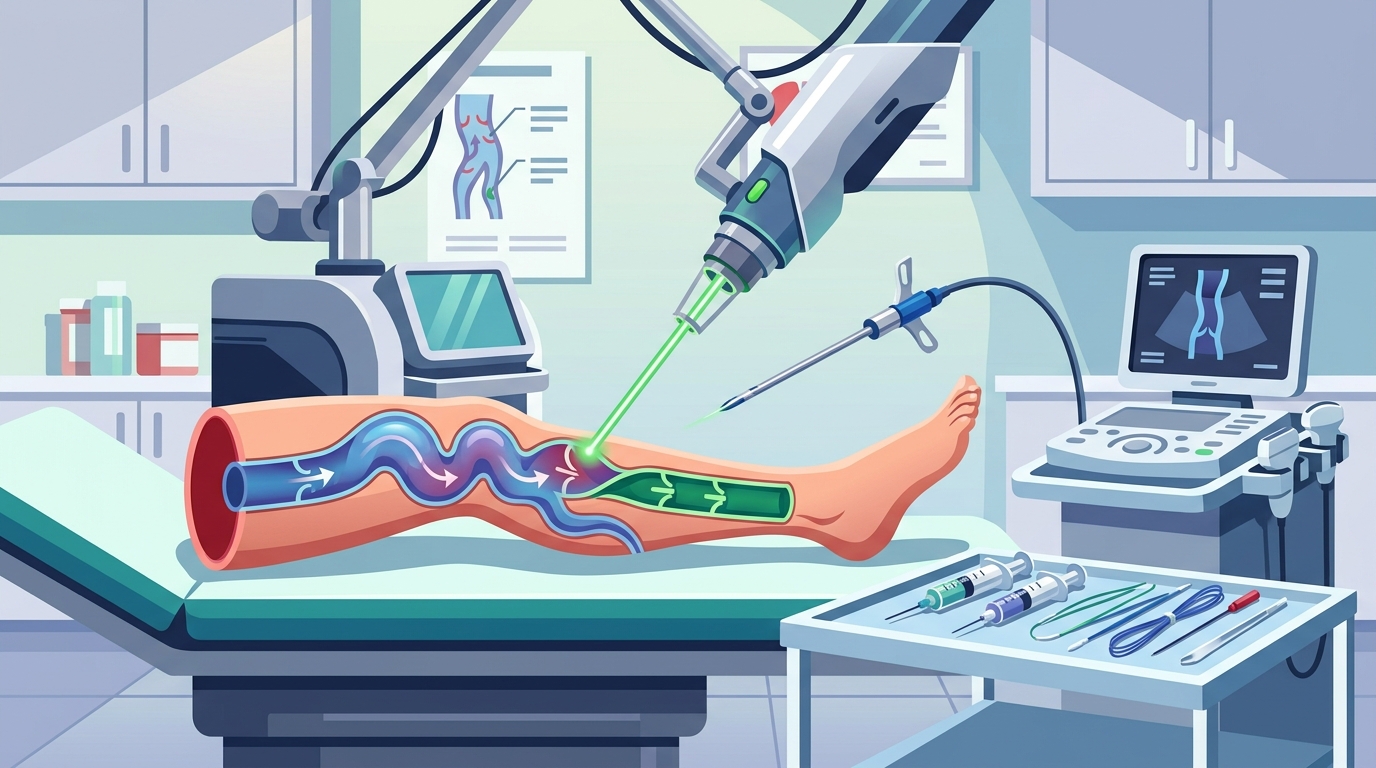
EVLA is one of the most widely used treatments for varicose veins. A thin laser fiber is inserted into the vein under ultrasound guidance. The laser emits energy that heats the vein wall, causing it to collapse and seal. Over time, the body absorbs the treated vein, redirecting blood flow to healthier veins. This procedure has a high success rate and low complication rate.
Radiofrequency Ablation (RFA)
RFA operates on similar principles to EVLA but uses radiofrequency energy instead of laser light. A catheter delivers controlled heat to the vein wall, causing collagen contraction and eventual closure. Many patients prefer RFA because it often requires less tumescent anesthesia, reducing post-procedure soreness. Both EVLA and RFA are considered gold standards in venous closure.
VenaSeal™ Closure System
VenaSeal™ offers a needle-free alternative for vein closure. It uses a biocompatible medical adhesive to seal the vein instantly. This method eliminates the need for heat, reducing the risk of nerve injury and skin burns. Patients typically experience less pain and do not require compression stockings afterward. This option is ideal for those with sensitive skin or anxiety about needles.
Recovery and Lifestyle Adjustments
Recovery from vein treatment is generally swift. Most patients walk immediately after the procedure and resume normal activities within a day or two. However, adherence to post-procedure care instructions is vital for optimal results. Wearing compression stockings as directed helps reduce swelling and supports vein closure.
Lifestyle modifications play a crucial role in preventing recurrence. Regular exercise, particularly walking, promotes circulation in the legs. Maintaining a healthy weight reduces pressure on the venous system. Elevating the legs when resting helps drain pooled blood. Avoiding prolonged standing or sitting is also recommended.
Dietary choices can influence vein health. A high-fiber diet prevents constipation, which can increase abdominal pressure and strain leg veins. Staying hydrated keeps blood viscosity optimal, reducing the risk of clots. Limiting salt intake helps minimize fluid retention and swelling.
Key Takeaways
- Varicose veins affect nearly 23% of adults, with risk increasing with age and genetics.
- Duplex ultrasound is the gold standard for diagnosing venous insufficiency and mapping treatment.
- Minimally invasive options like EVLA, RFA, and VenaSeal™ offer high success rates with minimal downtime.
- Truffles Vein Specialists provides personalized care plans based on comprehensive diagnostic data.
- Post-procedure compression and lifestyle changes are essential for long-term vein health.
- Early intervention prevents complications such as ulcers, bleeding, and deep vein thrombosis.
- Regular follow-up appointments ensure monitoring of treatment efficacy and vein stability.
Frequently Asked Questions
Is varicose vein treatment painful?
Most modern treatments are performed under local anesthesia, ensuring minimal discomfort during the procedure. Patients may experience mild soreness or bruising afterward, which is typically managed with over-the-counter pain relief. VenaSeal™ is often noted for having the least post-procedure pain.
How long does the procedure take?
A typical vein ablation procedure takes between 30 to 60 minutes. This includes preparation, the treatment itself, and immediate post-procedure checks. Microphlebectomy may add additional time depending on the number of veins treated.
Will varicose veins come back after treatment?
Treated veins do not return, as they are sealed and absorbed by the body. However, new veins can develop over time due to genetic predisposition or lifestyle factors. Maintaining a healthy lifestyle and attending regular check-ups can help prevent new issues.
Do I need to wear compression stockings?
Compression stockings are usually recommended for a period after EVLA or RFA to support healing and reduce swelling. VenaSeal™ patients may not require them. Your specialist will provide specific instructions based on your treatment type.
When can I return to work?
Most patients return to work within 1 to 2 days, provided their job does not involve heavy lifting or prolonged standing. Desk workers often resume duties the next day. Physical laborers may need a few more days of rest.
Are the treatments covered by Medicare or insurance?
Medicare and private health insurance often cover medically necessary vein treatments. Coverage depends on the severity of symptoms and diagnostic findings. Our team can assist with pre-authorization and provide necessary documentation for claims.
What is the success rate of vein treatments?
Modern minimally invasive treatments have success rates exceeding 95%. EVLA and RFA are highly effective at closing the great saphenous vein. VenaSeal™ also demonstrates high closure rates with comparable efficacy to thermal methods.
Book Your Consultation
Do not let varicose veins limit your life or cause discomfort. Take the first step toward healthier legs with expert care from Truffles Vein Specialists. Our team is dedicated to providing compassionate, evidence-based treatment tailored to your needs. Contact us today to schedule your diagnostic ultrasound and consultation. Discover how our advanced treatments can restore your confidence and comfort.