
Why Technicians Ask You to Stand and Move During a Venous Reflux Ultrasound
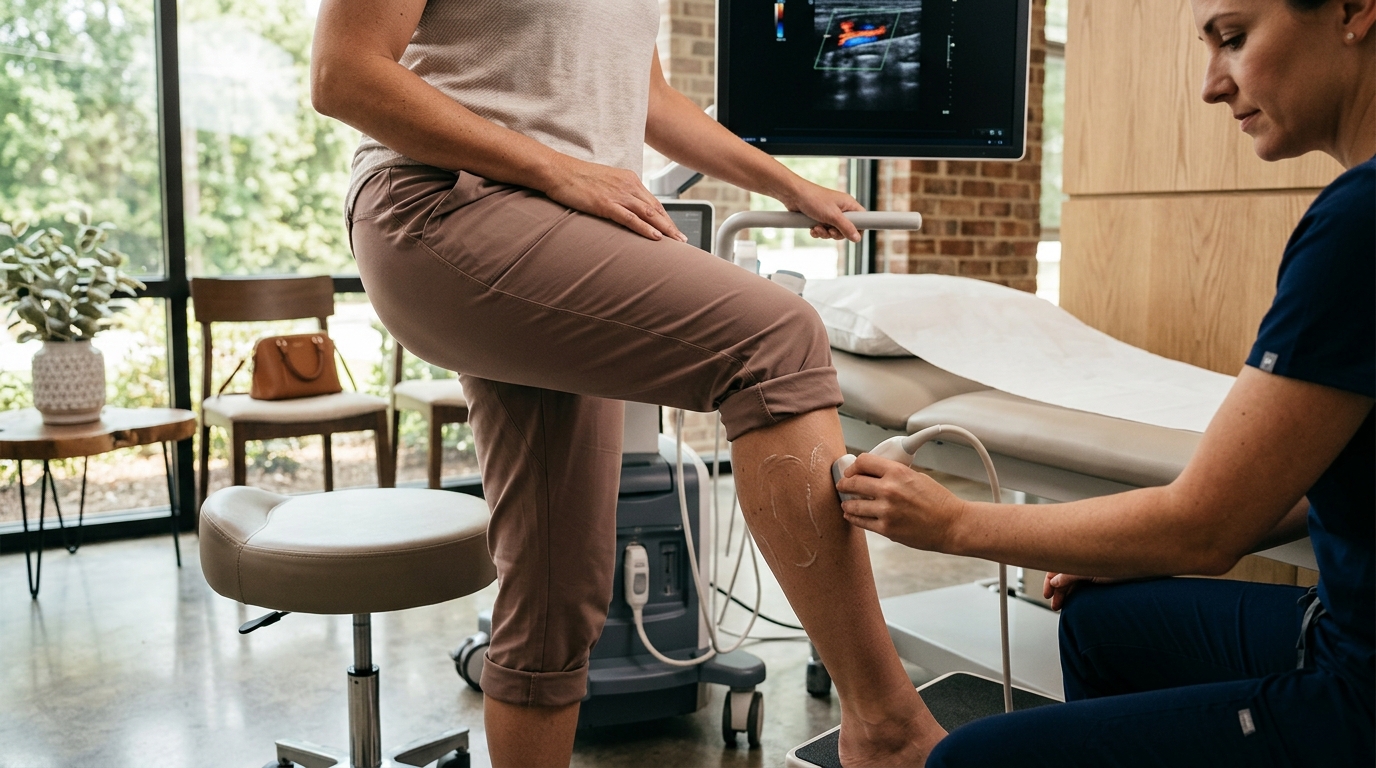
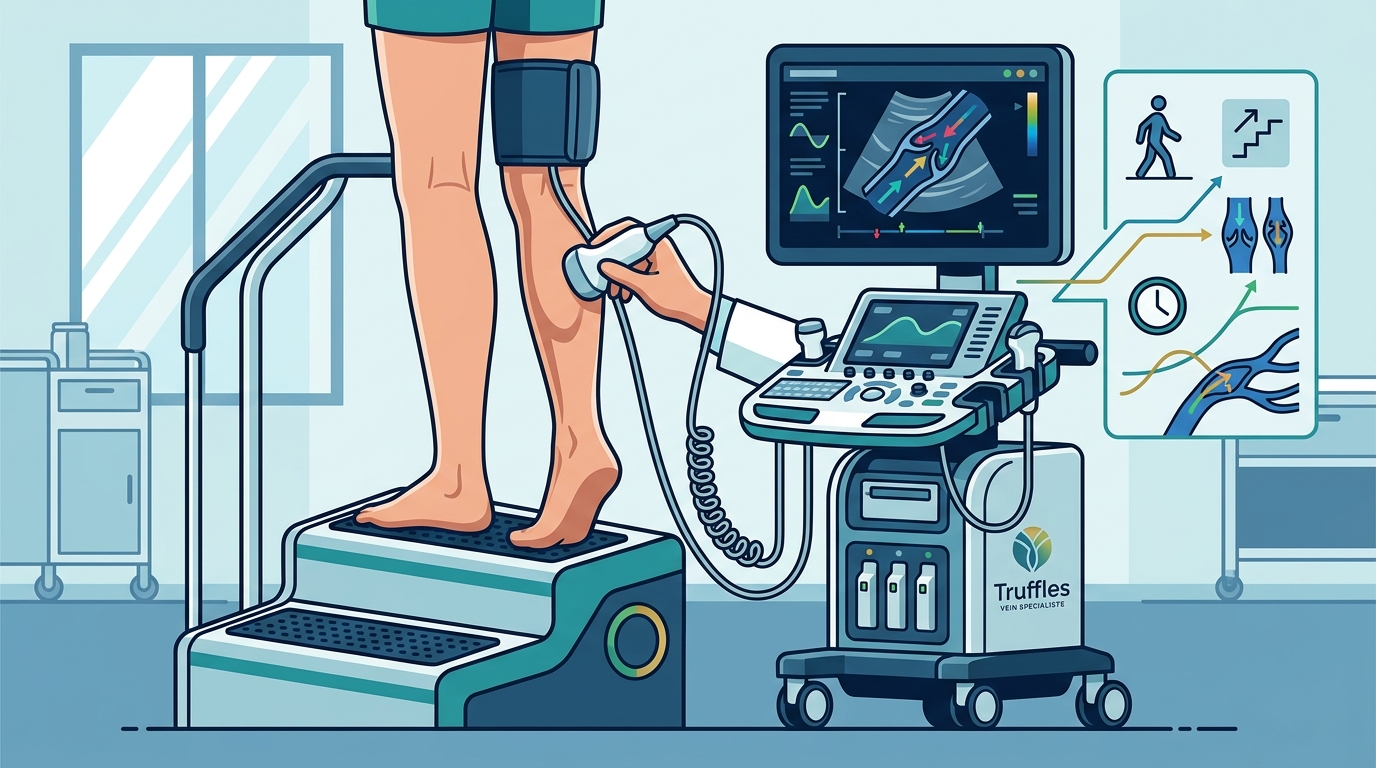
Technicians ask you to stand and move to simulate the natural pressure changes your legs experience during daily activity. This positioning reveals whether your vein valves are failing under gravity. At Truffles Vein Specialists, this dynamic assessment is critical for accurate diagnosis. It ensures we identify the true source of your symptoms before recommending treatment.
Gravity and Valve Mechanics
Standing upright is the single most important position in venous ultrasound. When you lie down, gravity no longer pulls blood downward. This neutral position often hides valve incompetence. Venous reflux is the backward flow of blood through a vein valve that fails to close properly. In a supine position, the hydrostatic pressure in your legs is minimal. The valves may appear to function normally because they are not under stress. For additional details, review the .
When you stand, hydrostatic pressure increases significantly in the lower extremities. This pressure forces the valves to work harder to keep blood moving toward the heart. If a valve is damaged or stretched, it will leak. The technician watches for this leakage in real-time. This dynamic view provides a much more accurate picture of your vein health than a static scan. For additional details, review the Customer Experience.
The Valsalva Maneuver
The Valsalva maneuver is a specific breathing technique used to increase pressure in the chest and abdomen. You are asked to take a deep breath and hold it while bearing down, as if having a bowel movement. This action temporarily raises intrathoracic pressure. It pushes blood down into the leg veins. For additional details, review the Frequently Asked Questions.
This surge of pressure tests the valves under maximum load. If the valves are healthy, they snap shut to prevent backflow. If they are incompetent, blood will flow backward. The technician measures the duration and velocity of this backflow. This data helps classify the severity of the reflux. It is a standard part of the diagnostic protocol at Truffles Vein Specialists. For additional details, review the About.
Walking and Exercise
Walking or calf muscle pumping is another common maneuver. You may be asked to walk in place or flex your ankles. The calf muscles act as a secondary pump for venous return. When you walk, these muscles squeeze the veins, pushing blood upward. This action helps clear any residual reflux.
Technicians observe how quickly the veins empty during movement. They also check if blood pools again when you stop. This functional test shows how your veins handle real-world activity. It helps distinguish between mild and significant valve failure. The goal is to see how your circulatory system performs during normal daily tasks.
Clinical Implications for Treatment
Accurate diagnosis through dynamic positioning directly impacts treatment planning. If we miss reflux because you were only scanned while lying down, the treatment may fail. We might treat the wrong vein or miss the primary source of your symptoms. At Truffles Vein Specialists, we use these maneuvers to map the exact path of the reflux.
This precision allows us to target the specific valves that are failing. It ensures that the treatment addresses the root cause. Patients often wonder why the exam takes longer when they are standing. The extra time is necessary for a complete and accurate assessment. It is the difference between a temporary fix and a long-term solution.
Key Takeaways
- Standing increases hydrostatic pressure, revealing valve leaks hidden in a lying position.
- The Valsalva maneuver simulates high-pressure conditions to test valve integrity.
- Walking tests the function of the calf muscle pump in venous return.
- Dynamic assessment is essential for accurate diagnosis and treatment planning.
- Proper positioning prevents missed diagnoses and treatment failure.
Frequently Asked Questions
Why can't the ultrasound be done while I am lying down?
Lying down removes the effect of gravity. This often hides valve incompetence. Standing is required to see the true function of your veins under natural pressure.
What is the Valsalva maneuver?
It is a breathing technique where you hold your breath and bear down. This increases pressure in the chest and abdomen to test vein valves.
Does standing during the exam hurt?
No, standing is painless. You may feel some pressure in your legs, but the ultrasound itself is non-invasive and comfortable.
How long does the standing part take?
It usually takes a few minutes. The technician needs enough time to observe the valves under different conditions.
Why is this important for my treatment?
Accurate diagnosis ensures we treat the right veins. Missing reflux can lead to treatment failure and symptom recurrence.
Can I move my legs during the scan?
Yes, you may be asked to walk or flex your ankles. This helps test the calf muscle pump and venous return.