
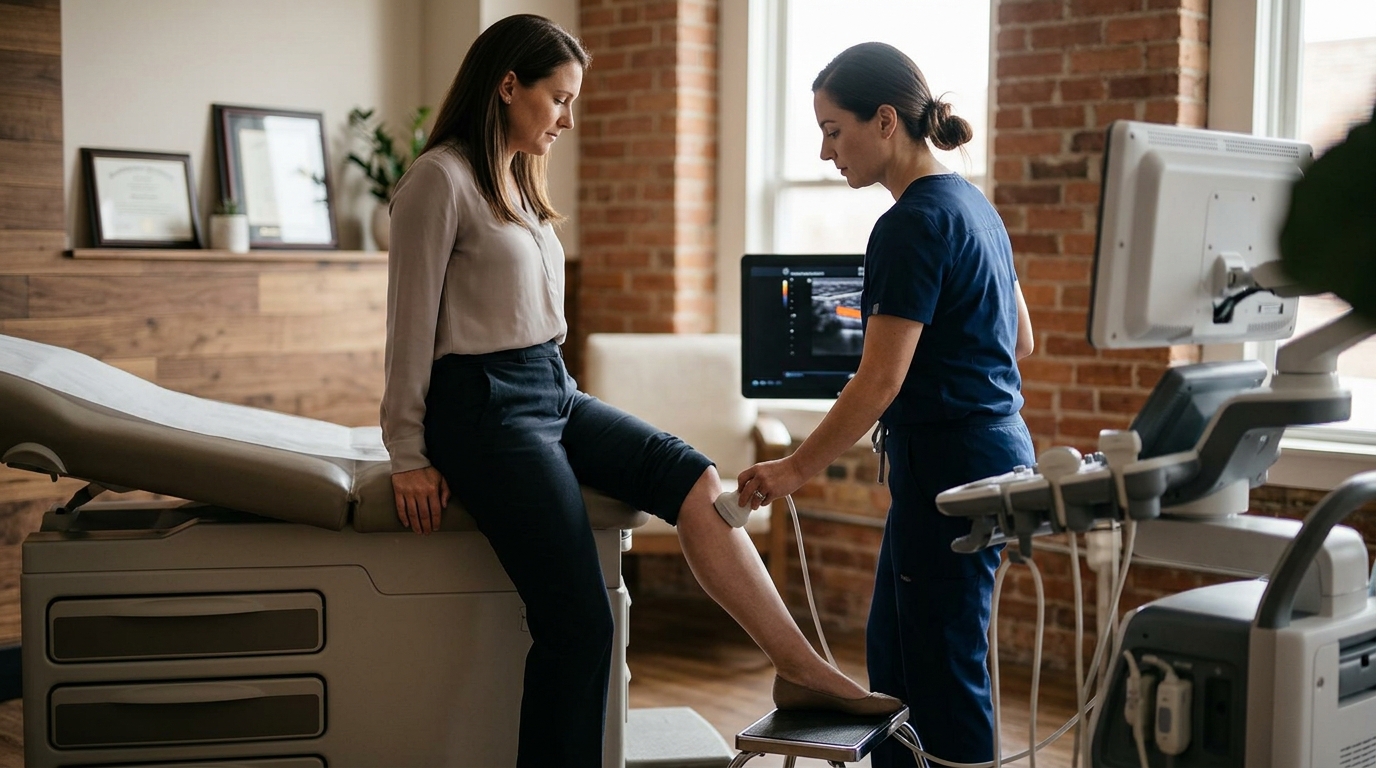
Proper positioning during a venous reflux ultrasound is critical for accurate diagnosis. You must stand upright for the majority of the exam to allow gravity to reveal venous valve failure. At Truffles Vein Specialists, our accredited vascular labs use this precise protocol to ensure your treatment plan addresses the true source of your symptoms.
The Critical Role of Upright Positioning
Many patients assume an ultrasound is a simple scan performed while lying flat. In reality, venous reflux is a gravity-dependent condition. When you lie down, blood drains easily, and incompetent valves may appear normal. Standing is the only way to demonstrate the actual failure of your venous system. This is why the standing portion of the exam is the most diagnostically significant part of the visit.
At Truffles Vein Specialists, our sonographers are trained to guide you through this process safely. We use state-of-the-art ultrasound systems to capture the exact moment blood flows backward. This precision ensures that we do not miss subtle reflux that might be hidden in a supine position.
Why Lying Down Can Be Misleading
Supine positioning removes the hydrostatic pressure that causes veins to dilate and valves to fail. A vein that looks healthy while you are lying down may be severely incompetent when you are standing. This is a common source of misdiagnosis in less specialized clinics. By prioritizing the standing exam, we ensure that your diagnosis reflects your daily life, not just a moment of rest.
Pre-Appointment Preparation for Comfort
Preparing for your appointment helps ensure the exam is smooth and accurate. You should wear loose-fitting pants or shorts that can be easily pulled down to expose your legs. Avoid wearing tight socks or compression stockings on the day of your exam, as these can interfere with the ultrasound probe and mask symptoms.
Hydration is also important. Being well-hydrated helps with the overall quality of the vascular imaging. At Truffles Vein Specialists, we recommend arriving on time to allow for a relaxed start. Stress can sometimes affect circulation, so taking a moment to breathe deeply before the exam begins can help you feel more at ease.
What to Bring
Bring a list of any medications you are currently taking, especially blood thinners. If you have had previous vein treatments, bring any records or reports from those visits. This information helps our providers understand your full medical history and tailor the exam to your specific needs.
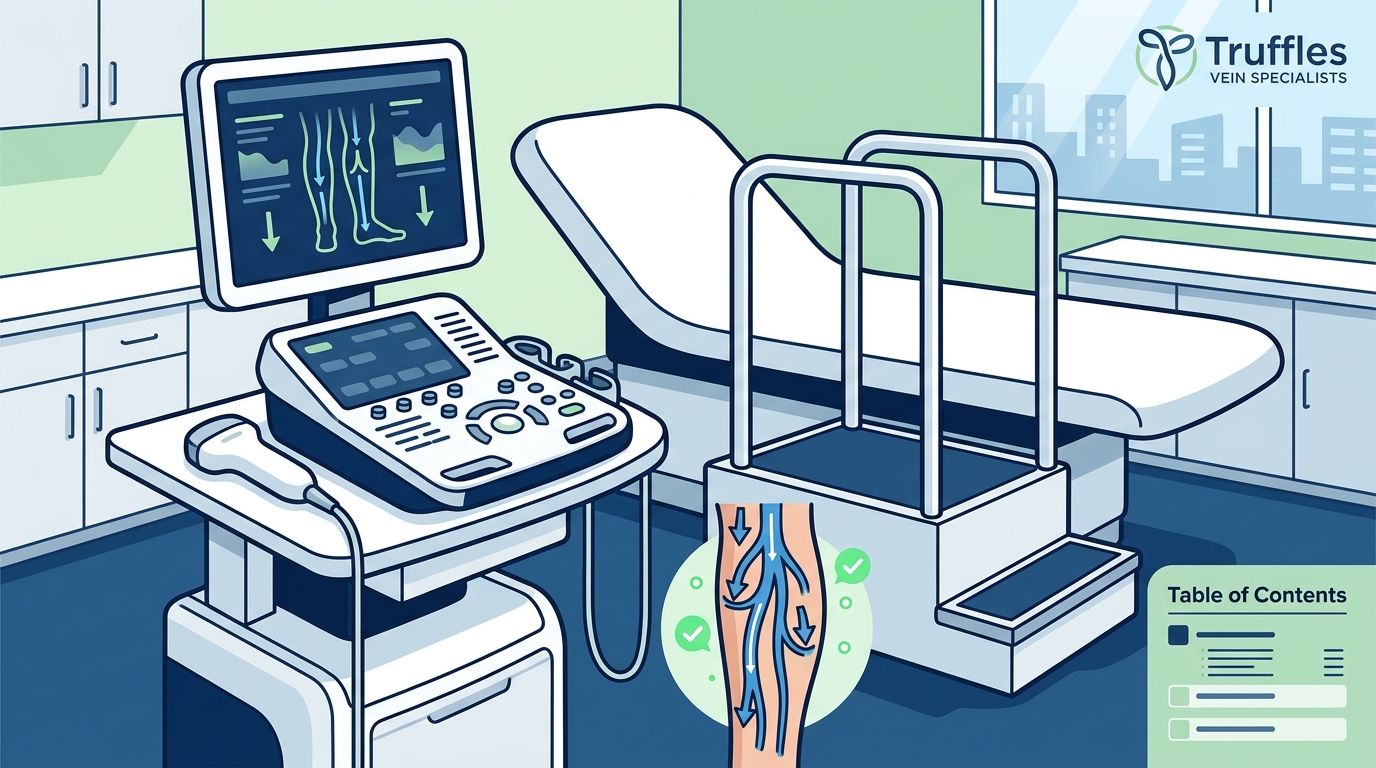
What Happens During the Standing Exam
Once you are standing, the sonographer will apply a clear, water-based gel to your skin. This gel helps the ultrasound probe glide smoothly and improves the quality of the images. You will feel a cool sensation from the gel, but the procedure itself is painless. The probe is moved along the length of your leg to assess the flow of blood in your veins.
The sonographer will ask you to perform a Valsalva maneuver, which involves bearing down as if having a bowel movement. This action increases pressure in your chest and abdomen, helping to reveal any reflux in the veins. At Truffles Vein Specialists, our team guides you through this maneuver to ensure it is done correctly. This step is crucial for detecting reflux in the great saphenous and small saphenous veins.
Duration and Comfort
The standing portion of the exam typically lasts between 10 and 20 minutes. If you feel lightheaded, let the sonographer know immediately. They can pause the exam or have you sit down. Our goal is to ensure your comfort while obtaining the necessary diagnostic data.
How Positioning Affects Diagnostic Accuracy
The accuracy of a venous reflux ultrasound depends heavily on proper positioning. If the patient is not standing tall enough, or if the probe is not positioned correctly, the sonographer may miss areas of reflux. This can lead to an incomplete treatment plan. At Truffles Vein Specialists, we emphasize the importance of this step in our patient education. We believe that informed patients are the best patients.
Our vascular labs are accredited by the American College of Radiology, which requires strict adherence to imaging standards. This accreditation ensures that our sonographers follow best practices for positioning and imaging. The result is a high level of diagnostic precision that gives you confidence in your treatment options.
The Role of Experienced Sonographers
Even with perfect positioning, the skill of the sonographer matters. An experienced sonographer knows how to adjust the probe angle and gain settings to get the clearest images. At Truffles Vein Specialists, our team includes 15 registered vascular sonographers with over 162 years of combined experience. This expertise ensures that your exam is performed to the highest standard.
Post-Exam Considerations and Next Steps
After the standing exam, you may be asked to lie down again for a final check of the deep veins. This ensures that we have a complete picture of your venous health. The entire exam usually takes about 30 to 45 minutes. Once the exam is complete, the gel is wiped off, and you can dress and leave.
Your results will be reviewed by a physician, who will discuss them with you in detail. At Truffles Vein Specialists, we take time to explain your results and answer any questions you may have. We want you to understand your diagnosis and the recommended treatment plan before you make any decisions.
Follow-Up Care
If treatment is recommended, we will schedule your next appointment. This may involve a consultation with a vein specialist to discuss your options. We offer a range of minimally invasive treatments, including radiofrequency ablation and sclerotherapy. Our goal is to help you feel and look your best.
Key Takeaways
- Standing is the most critical part of a venous reflux ultrasound.
- Lying down can mask venous reflux, leading to misdiagnosis.
- Wear loose clothing and avoid compression stockings on exam day.
- Be prepared to perform a Valsalva maneuver during the exam.
- Experienced sonographers are essential for accurate imaging.
- Proper positioning ensures a complete and accurate treatment plan.
Frequently Asked Questions
Do I have to stand for the entire ultrasound?
No, you will stand for the majority of the exam, but you may be asked to lie down briefly to check the deep veins. The standing portion is the most important for detecting reflux.
Is the standing part of the exam painful?
No, the exam is painless. You may feel a cool sensation from the gel, but there is no pain associated with the ultrasound probe.
What if I feel lightheaded while standing?
Let the sonographer know immediately. They can pause the exam or have you sit down. Your safety and comfort are our top priorities.
Do I need to remove all my clothing?
No, you only need to expose your legs. Wear loose pants or shorts that can be easily pulled down. You do not need to remove your top.
How long does the standing portion take?
The standing portion typically lasts between 10 and 20 minutes, depending on the complexity of your case.
Can I wear compression stockings to the exam?
No, you should not wear compression stockings on the day of your exam. They can interfere with the ultrasound and mask symptoms.
What happens after the exam is complete?
Your results will be reviewed by a physician, who will discuss them with you. If treatment is recommended, we will schedule your next appointment.