

Endovenous ablation, sclerotherapy, and medical adhesive closure are the most effective outpatient treatments for varicose veins. These minimally invasive procedures close diseased veins with minimal downtime. This guide details the six primary treatment modalities, their mechanisms, and how to choose the right option for your specific venous anatomy.
Endovenous Ablation
Endovenous ablation is a thermal procedure that uses heat to collapse and close the great saphenous or small saphenous vein. This technique is considered the gold standard for treating large, incompetent trunk veins. The procedure is performed under local anesthesia in an outpatient setting. A thin catheter is inserted into the vein, and energy is applied to the vein wall. The heat causes the vein to seal shut, redirecting blood flow to healthier surrounding vessels.
Radiofrequency Ablation (RFA)
Radiofrequency ablation uses radiofrequency energy to heat the vein wall. This method is known for its precision and patient comfort. The catheter delivers heat in controlled segments, ensuring the vein closes effectively. RFA is a highly reliable option for patients with significant venous reflux.
Recovery and Downtime
Patients typically return to normal activities within 24 hours. Walking is encouraged immediately after the procedure to promote circulation. Compression stockings are worn for a short period to support the healing vein. The risk of complications is low when performed by an experienced specialist.
Sclerotherapy
Sclerotherapy is an injection-based treatment that causes the vein to collapse and be reabsorbed by the body. It is the primary treatment for spider veins and smaller varicose veins. The solution irritates the inner lining of the vein, triggering a healing response that leads to closure. This procedure is quick and requires no incisions.
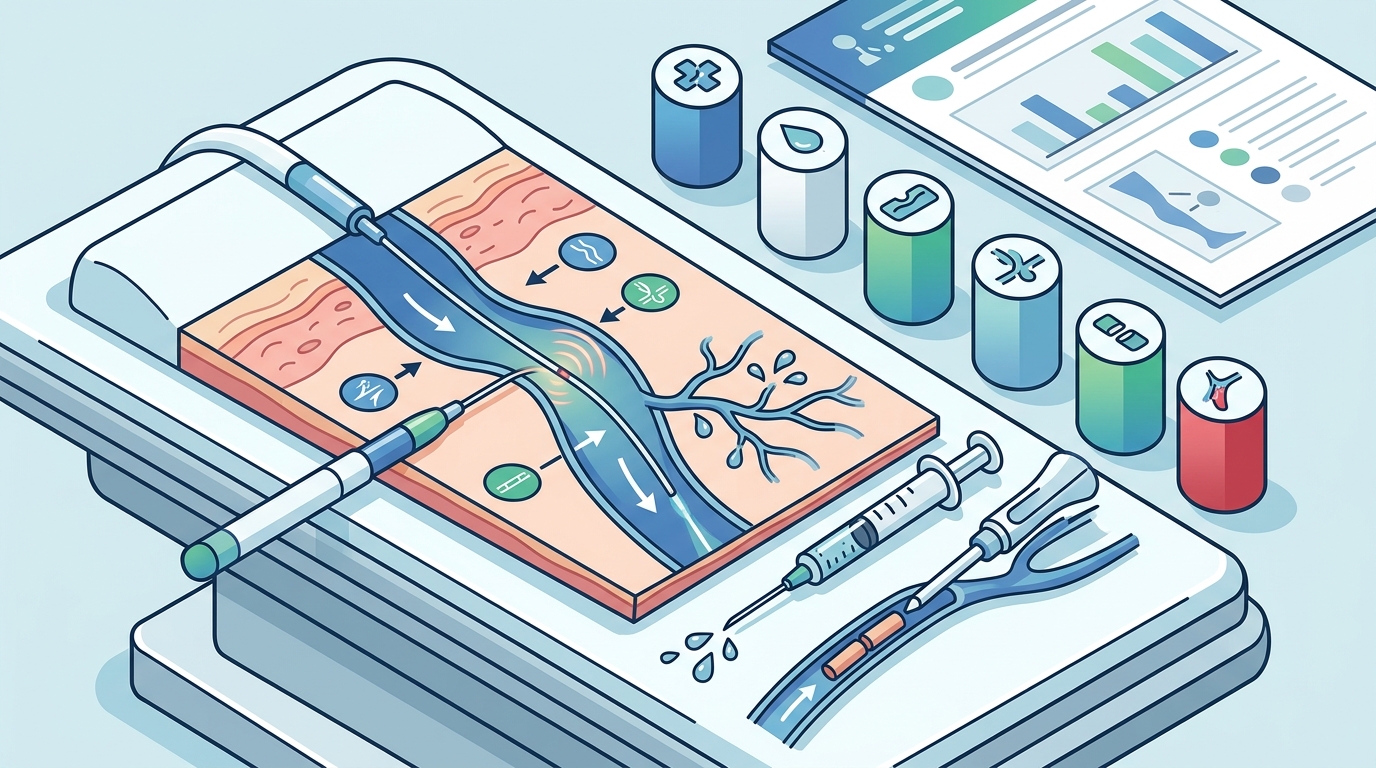
Liquid Sclerotherapy
Liquid sclerotherapy involves injecting a saline or chemical solution directly into the vein. It is effective for thread-like spider veins and small varicosities. The procedure is performed in the office with minimal discomfort. Multiple sessions may be required for optimal cosmetic results.
Foam Sclerotherapy
Foam sclerotherapy uses a gas-liquid mixture to create a foam that displaces blood in the vein. This allows the sclerosant to contact the entire vein wall. Foam is the standard of care for larger tributary veins that are too big for liquid injection. It is often used in conjunction with endovenous ablation to treat secondary veins.
Ambulatory Phlebectomy
Ambulatory phlebectomy is a surgical technique that removes visible varicose veins through tiny puncture wounds. It is ideal for large, bulging veins that do not respond well to injections or thermal closure. The procedure is performed under local anesthesia. The veins are extracted using a specialized hook or needle. This method provides immediate cosmetic improvement by physically removing the diseased tissue.
Indications for Phlebectomy
Phlebectomy is best suited for patients with large, superficial varicosities. It is often combined with endovenous ablation to treat the entire disease process. The puncture sites heal quickly and leave minimal scarring. This technique is a critical component of a comprehensive vein treatment plan.
Laser Ablation
Laser ablation is a thermal procedure that uses laser energy to close diseased veins. It is similar to radiofrequency ablation but utilizes light energy instead of radio waves. The laser catheter is inserted into the vein, and energy is delivered to the vein wall. This causes the vein to collapse and seal. Laser ablation is a well-established treatment with a long history of successful outcomes.
External Laser Therapy
External laser therapy is a non-invasive option for very small spider veins. The laser energy is applied to the skin surface, targeting the vein underneath. This method is less effective for larger varicose veins but can be useful for cosmetic concerns. It requires no injections or incisions. Multiple sessions are often needed to achieve the desired result.
Medical Adhesive Closure
Medical adhesive closure is a non-thermal procedure that uses a liquid adhesive to seal the vein. The adhesive is injected into the vein, causing it to close and harden. This method does not use heat, which can result in less post-procedure discomfort. It is a newer technology that has gained popularity for its simplicity and patient comfort. The procedure is performed under ultrasound guidance to ensure precise placement.
Advantages of Adhesive Closure
Adhesive closure is known for its minimal downtime and reduced bruising. Patients can often return to work the same day. The procedure is quick and straightforward. It is a viable alternative for patients who are anxious about thermal energy or who have specific contraindications to heat-based treatments.
Compression Stockings
Compression stockings are a conservative treatment that applies graduated pressure to the legs. They help improve blood flow and reduce swelling. While they do not cure vein disease, they are an essential part of symptom management. Compression therapy is often recommended before and after invasive procedures. It is also a standalone option for patients who are not candidates for surgery.
Choosing the Right Compression
The level of compression required depends on the severity of the venous disease. Mild compression is suitable for mild symptoms, while higher levels are needed for more advanced disease. Proper fitting is crucial to ensure effectiveness and comfort. Professional fitting ensures the stockings provide the correct pressure at the ankle and thigh.
Treatment Comparison Table
| Treatment | Primary Target | Procedure Type | Recovery Time |
|---|---|---|---|
| Endovenous Ablation | Great/Small Saphenous Vein | Thermal (Heat) | 24 Hours |
| Sclerotherapy | Spider/Small Varicose Veins | Injection | Immediate |
| Ambulatory Phlebectomy | Large Bulging Veins | Surgical Extraction | 24-48 Hours |
| Laser Ablation | Great/Small Saphenous Vein | Thermal (Laser) | 24 Hours |
| Medical Adhesive | Great/Small Saphenous Vein | Adhesive Injection | Same Day |
| Compression Stockings | Symptom Management | Conservative | N/A |
Key Takeaways
- Endovenous ablation is the gold standard for treating large trunk veins.
- Sclerotherapy is the primary treatment for spider veins and small varicosities.
- Ambulatory phlebectomy physically removes large, bulging veins for immediate cosmetic results.
- Medical adhesive closure offers a non-thermal alternative with minimal downtime.
- Compression stockings are essential for symptom management and post-procedure care.
- Accurate diagnosis via ultrasound is critical for selecting the right treatment.
- Combining treatments often yields the best long-term outcomes.
- Consulting a vein specialist ensures a personalized treatment plan.
Frequently Asked Questions
Is varicose vein treatment painful?
Most outpatient treatments are performed under local anesthesia. Patients typically experience mild discomfort or bruising, which is manageable with over-the-counter pain relievers.
How long does it take to see results?
Phlebectomy provides immediate results. Ablation and adhesive closure show improvement over a few weeks as the vein is reabsorbed. Sclerotherapy results may take several weeks to months.
Can I walk after the procedure?
Yes, walking is encouraged immediately after most vein procedures. It helps prevent blood clots and promotes healing. You should avoid heavy lifting for a few days.
Do I need compression stockings after treatment?
Yes, compression stockings are usually required for a short period after ablation or adhesive closure. They support the healing vein and reduce swelling.
Will my veins come back?
Treated veins do not come back, but new veins can develop over time. This is due to the underlying genetic and environmental factors that cause vein disease. Regular check-ups can help manage new symptoms.
Is insurance likely to cover vein treatment?
Insurance often covers treatment for medically necessary vein disease, such as chronic venous insufficiency. Cosmetic treatment for spider veins is typically not covered. A proper diagnosis is key to insurance approval.
How do I choose the right treatment?
The right treatment depends on the size and location of your veins. A vein specialist will perform an ultrasound to map your veins and recommend the best combination of therapies.
Are there any risks associated with these procedures?
Risks are generally low but can include bruising, swelling, or infection. Serious complications are rare when procedures are performed by experienced specialists.What is the difference between RFA and laser ablation?
Both are thermal ablation techniques. RFA uses radiofrequency energy, while laser ablation uses light energy. Both are effective, and the choice often depends on the provider's expertise and patient preference.Can I have multiple treatments at once?
Yes, it is common to combine endovenous ablation with phlebectomy or sclerotherapy in a single session. This allows for a comprehensive treatment of the entire venous system.
Conclusion
Choosing the right outpatient treatment for varicose veins requires a thorough understanding of your specific condition. At Truffles Vein Specialists, we provide comprehensive care using the latest technologies. Our team of experts will guide you through the diagnostic process and help you select the best combination of treatments for your needs. Whether you are dealing with painful varicose veins or cosmetic spider veins, we are here to help you look and feel your best. Contact us today to schedule a consultation and take the first step toward healthier legs.