

Chronic venous insufficiency affects millions of adults across the United States, yet many patients delay seeking care due to misconceptions about treatment complexity. According to the American Venous Forum, over 20 million Americans suffer from varicose veins, and the condition is significantly more prevalent in women. Early intervention is critical because untreated venous disease can progress to severe complications, including deep vein thrombosis and chronic ulcers. At Truffles Vein Specialists, we combine advanced diagnostic precision with minimally invasive procedures to restore vascular health and improve quality of life for patients throughout Georgia. (Experts in Vein Treatment)
Understanding Vein Disease and Its Progression
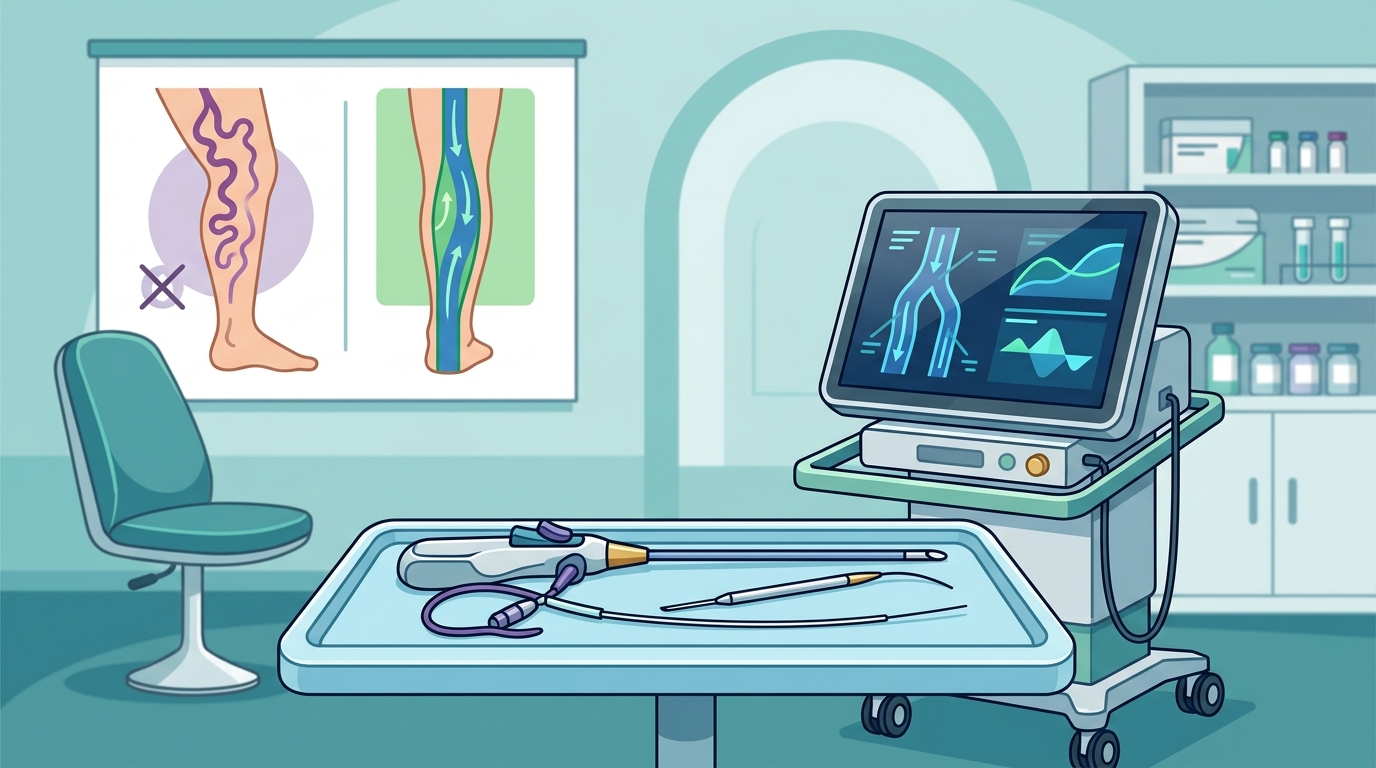
Vein disease is a progressive condition where blood pools in the veins due to weakened valve function. This pooling causes increased pressure within the vessels, leading to visible changes and physical discomfort. Varicose veins are enlarged, twisted veins that often appear blue or dark purple. Spider veins are smaller, red or blue web-like patterns that appear near the skin surface. Both conditions are symptoms of underlying venous insufficiency. (Medical Vein Center Vein)
Chronic venous obstruction occurs when blood flow is blocked, preventing proper circulation back to the heart. This obstruction can lead to leg swelling, pain, and skin changes. Stasis dermatitis is a skin condition resulting from poor blood flow, causing inflammation and discoloration. If left untreated, these conditions can worsen, leading to more serious vascular events. (Medical Vein Center Vein)
Deep vein thrombosis is a blood clot that forms in a deep vein, usually in the legs. This condition is dangerous because the clot can break loose and travel to the lungs, causing a pulmonary embolism. Venous thromboembolism refers to the combination of deep vein thrombosis and pulmonary embolism. Recognizing the signs early is essential for preventing these life-threatening complications. (Varicose Vein News in)
Diagnostic Precision and Vascular Testing
Accurate diagnosis is the foundation of effective vein treatment. Truffles Vein Specialists utilizes advanced vascular testing to map the venous system and identify the source of reflux. Venous reflux ultrasound is a non-invasive test that uses sound waves to evaluate blood flow in the veins. This test helps physicians determine which veins are failing and require treatment.
Venous ultrasound for DVT is specifically designed to detect blood clots in the deep veins. This imaging technique provides real-time visualization of blood flow and clot presence. Abdominal venous duplex scans are used to examine veins in the abdomen, such as the iliac veins, which can be compressed and cause leg symptoms. Renal artery duplex scans assess blood flow to the kidneys, helping to rule out other causes of swelling.
Carotid ultrasound is a screening tool that examines the arteries in the neck for blockages. While not directly related to leg veins, it is part of a comprehensive vascular health assessment. AAA screening, or abdominal aortic aneurysm screening, checks for bulges in the aorta. These tests ensure that patients receive a complete evaluation of their vascular health.
Our team includes certified specialists like Brian Sapp, RVT, RPhS, who bring extensive expertise in vascular technology. The RVT credential signifies a Registered Vascular Technologist, while RPhS indicates a Registered Phlebology Specialist. This dual certification ensures the highest standard of diagnostic accuracy for every patient.
Minimally Invasive Treatment Options
Modern vein treatment has moved away from traditional surgery toward minimally invasive techniques. These procedures offer faster recovery times, less pain, and better cosmetic results. Radio-frequency closure uses heat energy to seal off diseased veins. Laser vein ablation uses laser energy to close veins from the inside. Both methods are highly effective and performed in our office setting.
Foam sclerotherapy involves injecting a foam solution into the vein to irritate the lining and cause it to collapse. Ultrasound guided sclerotherapy uses imaging to target deeper veins that are not visible on the surface. Visible sclerotherapy is used for smaller spider veins and is performed without imaging guidance. Varithena is a newer foam-based treatment that offers a needle-free option for some patients.
| Treatment Method | Best For | Procedure Type | Recovery Time |
|---|---|---|---|
| Radio-Frequency Closure | Large varicose veins | Minimally Invasive | Immediate |
| Laser Vein Ablation | Large varicose veins | Minimally Invasive | Immediate |
| Foam Sclerotherapy | Medium to large veins | Injection | Immediate |
| VenaSeal | Large varicose veins | Glue-Based | Immediate |
| Varithena | Large varicose veins | Injection | Immediate |
The VenaSeal Advantage
VenaSeal is a revolutionary treatment that uses a medical-grade adhesive to close diseased veins. Unlike thermal methods, VenaSeal does not require tumescent anesthesia, which eliminates the discomfort associated with large injections of numbing fluid. This makes the procedure significantly more comfortable for patients.
The adhesive creates an immediate seal, stopping blood flow through the vein. The body then naturally reroutes blood to healthy veins. VenaSeal treatment is ideal for patients who want a quick, comfortable recovery. Many patients return to their normal activities immediately after the procedure. For more details on this innovative treatment, visit our VenaSeal page.
Pelvic Health and Congestion Syndrome
Pelvic congestion syndrome is a condition caused by varicose veins in the pelvis. It primarily affects women and causes chronic pelvic pain. The pain is often worse at the end of the day or after prolonged standing. Iliac vein compression is a common cause of pelvic congestion syndrome, where the iliac vein is compressed by surrounding arteries.
Chronic venous obstruction in the pelvis can lead to significant discomfort and swelling in the legs. Treating the underlying compression or reflux is essential for relief. Our specialists are trained to diagnose and treat pelvic vein issues with precision. We offer comprehensive care for both leg and pelvic vein conditions.
Key Takeaways
- Truffles Vein Specialists is the largest independently owned vein practice in Georgia, with over 1,000 five-star patient outcomes.
- Chronic venous insufficiency affects over 20 million Americans, making early diagnosis critical.
- Advanced vascular testing, including venous reflux ultrasound and abdominal venous duplex, ensures accurate diagnosis.
- Minimally invasive treatments like VenaSeal and radio-frequency closure offer immediate recovery and minimal discomfort.
- Pelvic congestion syndrome is a treatable condition that causes chronic pelvic pain and leg swelling.
- Deep vein thrombosis is a serious condition that requires immediate medical attention to prevent pulmonary embolism.
- Our team includes certified specialists like Brian Sapp, RVT, RPhS, ensuring the highest diagnostic standards.
Frequently Asked Questions
What is the difference between varicose veins and spider veins?
Varicose veins are enlarged, twisted veins that often appear blue or dark purple and can cause pain. Spider veins are smaller, red or blue web-like patterns that appear near the skin surface and are primarily a cosmetic concern.
How is vein disease diagnosed?
Vein disease is diagnosed using advanced vascular testing, including venous reflux ultrasound and venous ultrasound for DVT. These tests map the venous system and identify the source of reflux or blockage.
Is VenaSeal painful?
VenaSeal is generally less painful than traditional thermal treatments because it does not require tumescent anesthesia. The medical-grade adhesive seals the vein without the need for heat or numbing injections.
What is pelvic congestion syndrome?
Pelvic congestion syndrome is a condition caused by varicose veins in the pelvis, leading to chronic pelvic pain and leg swelling. It is often caused by iliac vein compression or venous reflux.
How long does recovery take after vein treatment?
Recovery time is typically immediate for minimally invasive treatments like VenaSeal, radio-frequency closure, and sclerotherapy. Most patients can return to their normal activities the same day.
What is deep vein thrombosis?
Deep vein thrombosis is a blood clot that forms in a deep vein, usually in the legs. It is a serious condition that requires immediate medical attention to prevent pulmonary embolism.
Do you offer free vein screenings?
Yes, we offer free vein screenings to help patients understand their vein health. Schedule your screening today to get a comprehensive evaluation of your venous system.
What is the role of a vascular technologist?
A vascular technologist, like our specialist Brian Sapp, RVT, RPhS, performs and interprets vascular tests. Their expertise ensures accurate diagnosis and effective treatment planning.
Schedule Your Consultation
Do not let vein disease control your life. Take the first step toward better health by scheduling a consultation with Truffles Vein Specialists. Our team of experts is ready to provide you with a personalized treatment plan. Visit our Schedule and Appointment page to book your free vein screening today. You can also contact us directly at 678-833-1444 for more information.