
Spider veins, medically known as telangiectasias, affect millions of individuals across the United States, creating visible red, blue, or purple web-like patterns on the legs and face. According to the American Academy of Dermatology, these minor veins are extremely common, with estimates suggesting that up to 50 percent of adults may experience them at some point in their lives. While they are often considered a cosmetic concern, they can sometimes signal underlying venous insufficiency that requires professional attention. At Truffles Vein Specialists, we prioritize minimally invasive, non-surgical interventions that deliver rapid results with minimal downtime. This guide explores the most effective non-surgical treatments available today, helping you understand how to eliminate these visible veins safely and effectively. (Experts in Vein Treatment)
Understanding Spider Veins and Venous Insufficiency
Spider veins are small, dilated blood vessels that appear close to the surface of the skin. They are distinct from varicose veins, which are larger, swollen, and twisted vessels that often protrude from the skin. Spider veins are typically less than one millimeter in diameter and do not bulge. However, they are often the visible tip of the iceberg regarding venous health. Telangiectasia is the medical term for these small, dilated blood vessels.
When the tiny valves inside your veins weaken or fail, blood can flow backward and pool in the veins. This condition is known as venous reflux. Over time, the increased pressure causes the veins to stretch and become visible. While genetics play a significant role, factors such as pregnancy, obesity, prolonged standing, and hormonal changes can exacerbate the condition. Addressing spider veins is not just about aesthetics. It is about restoring proper blood flow and preventing the progression to more serious venous disorders. For more information on the stages of venous disease, visit our vein disease staging guide.
Sclerotherapy: The Gold Standard for Treatment
Sclerotherapy remains the most widely prescribed and effective non-surgical treatment for spider veins. This procedure involves injecting a specialized solution directly into the affected vein. The solution irritates the lining of the vein, causing it to collapse, stick together, and eventually fade away. The body naturally absorbs the treated vein, and blood is rerouted to healthier veins nearby.
Traditional Liquid Sclerotherapy
Traditional sclerotherapy uses a liquid solution to treat smaller spider veins. It is highly effective for veins on the legs and is often covered by insurance if medical necessity is established. The procedure is quick, typically taking less than 30 minutes, and requires no anesthesia. Patients may experience mild stinging during the injection, but discomfort is generally minimal.
Foam Sclerotherapy
Foam sclerotherapy is an advanced variation used for larger veins, including varicose veins. The sclerosing agent is mixed with air or gas to create a foam. This foam displaces blood more effectively than the liquid version, allowing it to treat larger vessels with greater precision. Foam sclerotherapy is particularly useful for treating the underlying causes of spider veins, ensuring that the cosmetic results are long-lasting. Learn more about our foam sclerotherapy services.
Ultrasound-Guided Sclerotherapy
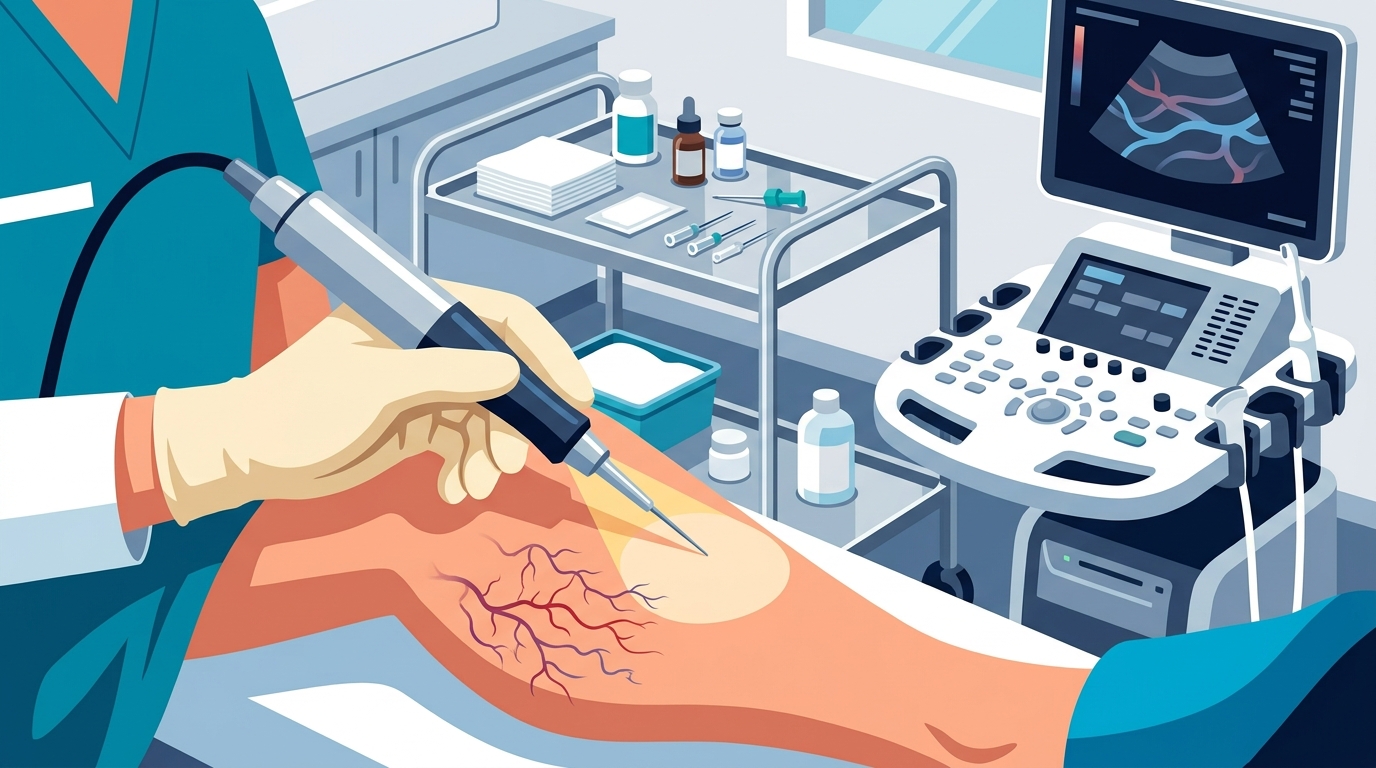
For deeper veins that are not visible to the naked eye, ultrasound guidance is essential. This technique allows specialists to see the vein structure in real-time, ensuring accurate injection and optimal outcomes. This method is critical for treating the root cause of venous insufficiency. You can read more about ultrasound-guided sclerotherapy on our treatment page.
Surface Laser Therapy for Fine Veins
Surface laser therapy is an excellent non-surgical option for patients who prefer to avoid needles. This treatment uses concentrated beams of light to heat and destroy the spider veins. The heat causes the veins to collapse and gradually fade over several weeks. Laser therapy is particularly effective for fine, red spider veins on the face and for patients with smaller leg veins that are difficult to access with needles.
The procedure is generally painless, though some patients report a sensation similar to a rubber band snapping against the skin. Multiple sessions may be required to achieve desired results. Recovery time is minimal, with most patients returning to normal activities immediately. For a detailed comparison of testing and treatment differences, check out our vein testing differences article.
VenaSeal: Adhesive-Based Closure
VenaSeal is a revolutionary non-surgical treatment that uses a medical-grade adhesive to close off diseased veins. Unlike traditional methods that rely on heat or chemical irritation, VenaSeal bonds the vein walls together instantly. This method eliminates the need for tumescent anesthesia, which is typically used to numb the area during radiofrequency or laser ablation. As a result, patients experience significantly less post-procedure pain and bruising.
VenaSeal is FDA-cleared for the treatment of varicose veins and is increasingly used in conjunction with sclerotherapy for spider veins. The procedure is quick, and patients can walk out of the clinic immediately after treatment. Many patients report that VenaSeal offers the most comfortable recovery experience available. Discover the benefits of VenaSeal treatment and why it is a top choice for modern vein care.
Comparing Non-Surgical Treatments
Choosing the right treatment depends on the size, location, and depth of your spider veins, as well as your personal preferences. The table below summarizes the key differences between the most common non-surgical options.
| Treatment Method | Best For | Anesthesia Required | Downtime | Typical Sessions |
|---|---|---|---|---|
| Sclerotherapy | Medium to large spider veins | None | Minimal | 1-3 |
| Laser Therapy | Fine, red facial veins | None | None | 1-4 |
| VenaSeal | Underlying varicose veins | None | Minimal | 1 |
| Radio-Frequency Closure | Larger varicose veins | Tumescent | Minimal | 1 |
The Importance of Diagnostic Ultrasound
Before treating spider veins, it is crucial to perform a comprehensive venous duplex ultrasound. This non-invasive test uses sound waves to create images of the inside of your veins. It allows specialists to identify any underlying venous reflux or insufficiency that may be causing the spider veins. Treating spider veins without addressing the underlying cause often leads to recurrence. At Truffles Vein Specialists, we utilize advanced venous reflux ultrasound technology to ensure accurate diagnosis and effective treatment planning. Our certified vascular technologists, such as Brian Sapp, RVT, RPhS, provide precise imaging that guides our specialists in selecting the best treatment path.
Key Takeaways
- Non-surgical efficacy: Sclerotherapy and laser therapy are highly effective for eliminating spider veins with minimal discomfort.
- Underlying causes: Spider veins are often a symptom of venous insufficiency, requiring diagnostic ultrasound for proper treatment.
- VenaSeal innovation: This adhesive-based method offers a needle-free alternative for closing larger diseased veins.
- Expert care: Truffles Vein Specialists is Georgia's largest independently owned vein practice, ensuring top-tier care.
- Quick recovery: Most non-surgical treatments allow patients to return to daily activities immediately.
- Prevention: Compression stockings and lifestyle changes can help prevent the formation of new spider veins.
- Insurance coverage: Medical necessity for vein treatment may be covered by insurance, unlike purely cosmetic procedures.
Frequently Asked Questions
Are spider veins dangerous?
Spider veins are generally not dangerous and are primarily a cosmetic concern. However, they can indicate underlying venous insufficiency, which may lead to more serious conditions like varicose veins or blood clots if left untreated.
How long does sclerotherapy take?
A typical sclerotherapy session lasts between 15 and 30 minutes, depending on the number of veins being treated. Most patients can resume normal activities immediately after the procedure.
Is laser therapy painful?
Laser therapy is generally well-tolerated. Patients may feel a slight warming sensation or a snap, similar to a rubber band. Cooling devices are often used to minimize discomfort during the procedure.
Can spider veins come back after treatment?
While treated veins will not return, new spider veins can form over time due to genetics, hormonal changes, or lifestyle factors. Maintaining a healthy weight and wearing compression stockings can help prevent recurrence.
What is the difference between foam and liquid sclerotherapy?
Foam sclerotherapy is used for larger veins and provides better contact with the vein wall, while liquid sclerotherapy is ideal for smaller, finer spider veins. The choice depends on the size and depth of the veins.
Do I need anesthesia for VenaSeal?
No, VenaSeal does not require tumescent anesthesia. The medical adhesive itself numbs the area as it is injected, making the procedure more comfortable than traditional methods.
How do I know if I need a vein ultrasound?
If you have visible spider veins, leg pain, swelling, or a family history of vein disease, a venous duplex ultrasound is recommended to assess blood flow and identify any underlying issues.
Schedule Your Consultation
Don't let spider veins affect your confidence or comfort. At Truffles Vein Specialists, we offer personalized, non-surgical treatment plans tailored to your unique needs. Our team of experts, including Dr. Paul Feldman and Dr. Christopher Perez, is dedicated to helping you achieve smooth, clear skin. Schedule your free vein screening today by visiting our appointment page or calling 678-833-1444. Take the first step toward healthier veins and look and feel your best with our comprehensive vein care services.