

Vein disease affects millions of people, yet misinformation often delays effective treatment. According to the American Vein and Lymphatic Society, over 20 million Americans suffer from varicose veins, and many more have spider veins. Despite this prevalence, patients frequently avoid care due to unfounded fears about pain, efficacy, and recovery. At Truffles Vein Specialists, we see these misconceptions daily. This guide addresses the most common myths surrounding sclerotherapy and laser vein ablation, providing clear, evidence-based facts to help you make an informed decision about your vascular health.
Myth 1: The Procedures Are Extremely Painful
One of the most persistent barriers to vein treatment is the fear of pain. Many patients believe that injecting sclerosing agents or inserting laser fibers is akin to a severe injury. This is largely a myth fueled by outdated techniques. Modern vein care prioritizes patient comfort through advanced technology and minimally invasive methods.
Sclerotherapy involves injecting a solution directly into the vein. While some patients report a slight burning or stinging sensation, it is generally well-tolerated. At Truffles Vein Specialists, we use high-quality sclerosing agents that minimize discomfort. Furthermore, our team, including Dr. Paul Feldman and our certified nurse practitioners, ensures the injection process is as gentle as possible.
Laser vein ablation, also known as endovenous laser treatment (EVLT), uses a thin fiber inserted into the vein. The laser energy seals the vein from the inside. Modern lasers are equipped with tumescent anesthesia, which numbs the area around the vein before the procedure begins. This significantly reduces any sensation of heat or pressure. According to the American Vein and Lymphatic Society, patient satisfaction rates for minimally invasive vein procedures are high, largely due to these pain-management advancements.
Myth 2: You Need Weeks of Bed Rest
The idea that vein treatment requires prolonged immobility is another common misconception. In reality, both sclerotherapy and laser ablation are designed for quick recovery. Patients are encouraged to walk immediately after the procedure. Walking helps pump blood through the remaining healthy veins and prevents blood clots.
Most patients return to their normal daily activities within 24 hours. The key to recovery is wearing compression stockings as directed. These stockings support the veins as they heal and close. At Truffles Vein Specialists, we provide detailed post-procedure instructions to ensure optimal results. We advise avoiding heavy lifting and high-impact exercise for a few days, but light walking is not only allowed but recommended.
This rapid return to normalcy is a significant advantage over traditional vein stripping surgery, which required weeks of recovery. The Mayo Clinic notes that minimally invasive vein treatments allow patients to resume work and daily routines almost immediately, making them a practical choice for busy individuals.
Myth 3: Sclerotherapy Is Only for Spider Veins
Many patients assume sclerotherapy is exclusively for cosmetic spider veins. While it is highly effective for these smaller vessels, it is also a primary treatment for larger varicose veins. The technique involves injecting a sclerosing agent that irritates the vein lining, causing it to collapse and seal shut.
For larger veins, we often use foam sclerotherapy. This version of the treatment uses a foam rather than a liquid, which displaces blood more effectively and ensures better contact with the vein walls. This makes it suitable for treating larger varicose veins that are not ideal for laser ablation.
Our team at Truffles Vein Specialists utilizes ultrasound-guided sclerotherapy for complex cases. This ensures precise delivery of the treatment to the problematic veins. According to the American Vein and Lymphatic Society, sclerotherapy is a versatile tool in the vein specialist's arsenal, effective for a wide range of venous conditions.
Myth 4: Laser Ablation Is the Only Effective Option
Some patients believe that laser ablation is superior to all other treatments. While laser ablation is highly effective for sealing larger varicose veins, it is not the only option, nor is it always the best choice for every patient. The effectiveness of a treatment depends on the size, location, and condition of the vein.
Laser ablation works by delivering heat energy to the vein wall. This is excellent for veins that are accessible via a thin fiber. However, for veins that are too small or too tortuous, laser may not be feasible. In these cases, radio-frequency ablation or sclerotherapy may be more appropriate.
At Truffles Vein Specialists, we conduct a thorough venous reflux ultrasound to determine the best treatment plan. This diagnostic step ensures that we do not rely on a one-size-fits-all approach. The American Vein and Lymphatic Society emphasizes that treatment selection should be based on individual vein anatomy and patient goals.
Myth 5: Veins Will Grow Back Immediately
Patients often worry that treated veins will simply return. While it is true that new veins can develop over time, the treated veins themselves do not "grow back." Once a vein is sealed by sclerotherapy or laser ablation, it is permanently closed. The body naturally reroutes blood flow to healthier veins.
However, vein disease is a chronic, progressive condition. This means that if the underlying cause is not addressed, new veins may become problematic in the future. This is why ongoing care and lifestyle changes are important. At Truffles Vein Specialists, we focus on treating the root cause of vein disease, not just the visible symptoms.
Our free vein screening helps identify early signs of venous insufficiency. Early intervention can prevent the progression of the disease and reduce the need for future treatments. According to the Centers for Disease Control and Prevention, maintaining a healthy weight and staying active can help manage the risk of developing new varicose veins.
Sclerotherapy vs. Laser Ablation: Key Differences
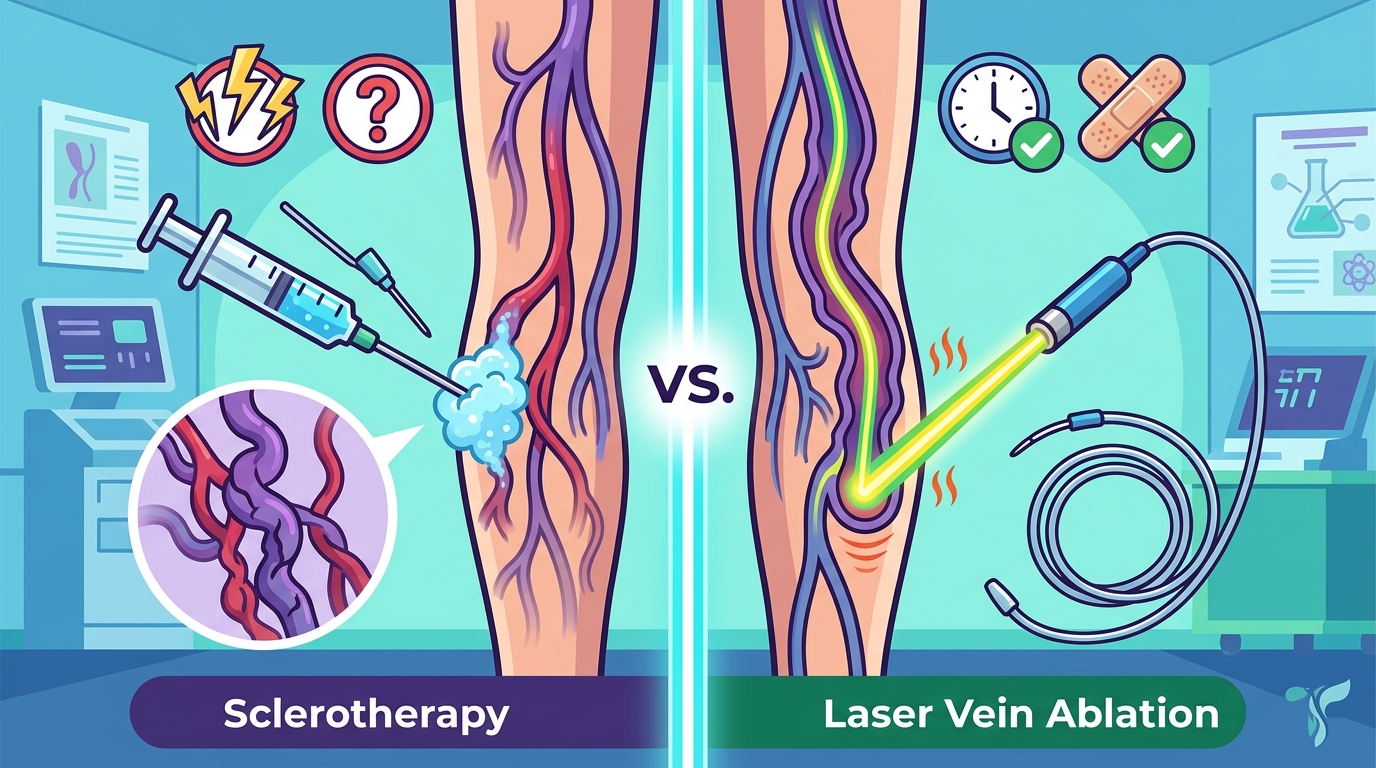
Understanding the differences between these two treatments is crucial for making an informed decision. The table below summarizes the key distinctions.
| Feature | Sclerotherapy | Laser Vein Ablation |
|---|---|---|
| Best For | Spider veins and small varicose veins | Larger varicose veins |
| Method | Injection of sclerosing agent | Heat energy via laser fiber |
| Pain Level | Mild discomfort | Mild discomfort with anesthesia |
| Recovery Time | Minimal | Minimal |
| Number of Sessions | Often requires multiple sessions | Usually one session |
At Truffles Vein Specialists, we offer both treatments to ensure we can tailor the care to your specific needs. Our team includes Dr. Christopher Perez and other certified specialists who are experts in both techniques.
Key Takeaways
- Pain is manageable: Modern techniques and anesthesia ensure minimal discomfort during both sclerotherapy and laser ablation.
- Quick recovery: Most patients return to normal activities within 24 hours, with walking encouraged to aid healing.
- Sclerotherapy versatility: It is effective for both spider veins and larger varicose veins, especially when using foam or ultrasound guidance.
- Laser ablation efficacy: It is highly effective for larger veins but not suitable for all vein types.
- Permanent results: Treated veins do not grow back, but new veins may develop due to the chronic nature of vein disease.
- Diagnostic importance: A venous reflux ultrasound is essential to determine the best treatment plan.
- Expert care: Truffles Vein Specialists offers comprehensive care with board-certified specialists.
Frequently Asked Questions
Is sclerotherapy painful?
Most patients report only mild discomfort, such as a slight burning or stinging sensation. Our team uses techniques to minimize any pain during the procedure.
How long does laser vein ablation take?
The procedure typically takes about 30 to 60 minutes. It is performed in our office, and you can go home immediately afterward.
Can I treat both spider veins and varicose veins?
Yes. Sclerotherapy is often used for spider veins, while laser ablation is better for larger varicose veins. We may use a combination of treatments for optimal results.
Do I need to wear compression stockings?
Yes, wearing compression stockings is crucial for recovery. They help reduce swelling and support the veins as they heal. We provide specific guidelines for your treatment.
How many sessions will I need?
This depends on the severity of your vein disease. Sclerotherapy often requires multiple sessions, while laser ablation is usually a one-time treatment. We will discuss this during your consultation.
Is the treatment covered by insurance?
Insurance may cover treatment for symptomatic varicose veins. Cosmetic treatment for spider veins is typically not covered. We can help you navigate your insurance benefits.
What is the success rate of these treatments?
Both sclerotherapy and laser ablation have high success rates. According to the American Vein and Lymphatic Society, patient satisfaction is high when treatments are performed by experienced specialists.
Can I exercise after the procedure?
Light walking is encouraged immediately. You should avoid high-impact exercise and heavy lifting for a few days. Our post-procedure instructions provide detailed guidance.
Schedule Your Consultation
Do not let myths prevent you from getting the care you deserve. At Truffles Vein Specialists, we provide expert, personalized care to address your vein concerns. Our team is dedicated to helping you look and feel your best. Contact us today to schedule an appointment or request a free vein screening. We serve patients in Atlanta, Fayetteville, Peachtree City, and surrounding areas. Call us at 678-833-1444 to get started.