

Many patients experience uncomfortable sensations in their legs and assume they have Restless Leg Syndrome (RLS). However, data shows that venous insufficiency is a far more common culprit for these symptoms than previously recognized. According to the American Venous Forum, over 23 million Americans suffer from varicose veins, a primary symptom of underlying venous disease. This statistic highlights a critical diagnostic gap. Misdiagnosis leads to ineffective treatments and prolonged suffering. Understanding the specific diagnostic criteria for distinguishing venous insufficiency from true Restless Leg Syndrome is essential for effective care. (Experts in Vein Treatment)
Understanding Venous Insufficiency
Venous insufficiency is a condition where the veins in the legs have trouble sending blood back to the heart. This occurs when the valves within the veins weaken or become damaged. These valves are designed to keep blood flowing upward. When they fail, blood pools in the legs. This pooling causes increased pressure in the veins. The condition is often referred to as chronic venous insufficiency or CVI. (Best Vein Center in)
At Truffles Vein Specialists, we see many patients who mistake the discomfort of venous insufficiency for other neurological conditions. The symptoms often worsen after standing for long periods. Gravity plays a significant role in exacerbating the pressure within the leg veins. Patients frequently report a heavy, aching sensation rather than a tingling one. This distinction is vital for accurate diagnosis.
Dr. Paul Feldman, a renowned expert in vein treatment, emphasizes the importance of early detection. With over 20 years of experience, he has helped thousands of patients identify the root cause of their leg pain. His approach focuses on advanced diagnostic precision to ensure that patients receive the correct treatment. Ignoring the signs of venous insufficiency can lead to more severe complications over time. (Medical Vein Center Vein)
Defining Restless Leg Syndrome
Restless Leg Syndrome is a neurological disorder characterized by an uncontrollable urge to move the legs. This urge is usually accompanied by uncomfortable sensations. The symptoms typically begin or worsen during periods of rest or inactivity. They are partially or totally relieved by movement. This pattern is a hallmark of the condition. (Varicose Vein News in)
The exact cause of RLS is not fully understood. However, research indicates that it may be related to low levels of dopamine in the brain. Dopamine is a chemical messenger that helps control muscle movement. Imbalances in this neurotransmitter can disrupt normal nerve function. Genetic factors also play a role. If your family has a history of RLS, your risk increases significantly.
Unlike venous insufficiency, RLS symptoms are not directly caused by blood flow issues. They are driven by neurological signals. This fundamental difference dictates the treatment approach. Medications that target dopamine levels are often prescribed for RLS. These treatments do not address the underlying vascular problems of venous insufficiency. Therefore, accurate differentiation is crucial for patient relief.
Key Diagnostic Differences
Distinguishing between these two conditions requires a careful analysis of symptom triggers and relief factors. The timing of symptoms is a major differentiator. Venous insufficiency pain often builds up throughout the day. It is worst after prolonged standing or sitting. In contrast, RLS symptoms are typically worse in the evening or at night. They can disrupt sleep patterns significantly.
The nature of the sensation is another key factor. Venous insufficiency often presents as aching, throbbing, or heaviness. Patients may describe their legs as feeling like lead. RLS, on the other hand, is often described as creeping, crawling, or tingling. This paresthesia is distinct from the dull ache of vascular disease. Understanding these nuances helps clinicians make the correct diagnosis.
Physical examination findings also differ. In venous insufficiency, doctors look for visible signs like varicose veins, swelling, or skin discoloration. These are physical markers of blood pooling. RLS has no visible physical signs. The diagnosis is primarily based on patient history and symptom description. This is why a thorough clinical evaluation is necessary.
Symptom Comparison
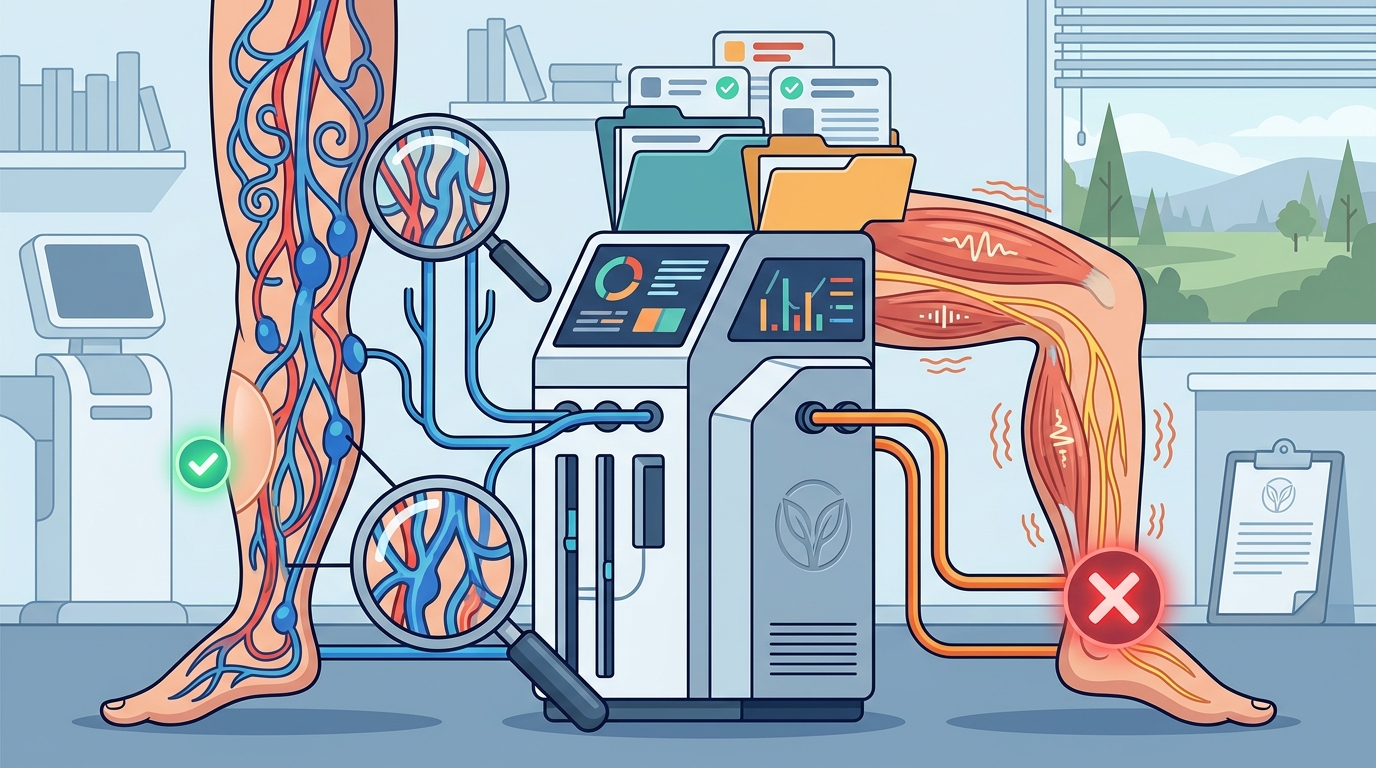
Comparing the specific symptoms of both conditions helps clarify the diagnostic process. Below is a summary of the primary differences.
| Feature | Venous Insufficiency | Restless Leg Syndrome |
|---|---|---|
| Primary Sensation | Aching, heaviness, throbbing | Crawling, tingling, urge to move |
| Timing | Worse after standing/sitting all day | Worse at night or during rest |
| Relief Factor | Elevation, compression stockings | Movement, walking |
| Visible Signs | Varicose veins, swelling, discoloration | None |
| Underlying Cause | Valve failure, blood pooling | Neurological, dopamine imbalance |
This table highlights the distinct clinical presentations. Patients often experience overlapping symptoms, which can lead to confusion. For example, both conditions can cause discomfort that worsens at night. However, the mechanism behind the discomfort is entirely different. Recognizing these patterns is key to effective treatment.
Diagnostic Procedures
Accurate diagnosis requires specialized testing. At Truffles Vein Specialists, we utilize advanced vascular testing to rule out venous disease. The gold standard for diagnosing venous insufficiency is a venous duplex ultrasound. This non-invasive test uses sound waves to create images of the veins. It allows doctors to see blood flow and valve function in real time.
The ultrasound can identify reflux, which is the backward flow of blood. This confirms the diagnosis of venous insufficiency. It also helps determine the severity of the condition. If the ultrasound results are normal, the likelihood of RLS increases. This step is critical for avoiding unnecessary treatments.
For RLS diagnosis, doctors rely on clinical criteria. There is no specific blood test or scan for RLS. The diagnosis is based on the patient's description of symptoms. Doctors may order blood tests to rule out other conditions, such as iron deficiency. Low iron levels can exacerbate RLS symptoms. Addressing these underlying issues can sometimes alleviate the discomfort.
Our team, including Dr. Paul Feldman and Dr. Christopher Perez, is trained to interpret these diagnostic results accurately. We ensure that every patient receives a comprehensive evaluation. This approach prevents misdiagnosis and ensures that patients get the right care. Early intervention can prevent the progression of venous disease.
Treatment Pathways
Treatment for venous insufficiency focuses on improving blood flow and reducing pressure in the veins. Options include lifestyle changes, compression therapy, and minimally invasive procedures. Vein treatments at Truffles include Radio-Frequency Closure, Laser Vein Ablation, and VenaSeal. These procedures seal off damaged veins, redirecting blood to healthy veins.
Compression stockings are often recommended as a first-line treatment. They help squeeze the legs and improve blood flow upward. This can reduce swelling and discomfort. Patients are advised to wear them throughout the day for best results. Elevating the legs above heart level can also provide relief.
In contrast, RLS treatment focuses on managing neurological symptoms. Medications such as dopamine agonists or anticonvulsants may be prescribed. Lifestyle changes, such as avoiding caffeine and alcohol, can also help. Iron supplements are used if deficiency is detected. These treatments do not address the vascular issues of venous insufficiency.
It is possible to have both conditions simultaneously. This complicates the treatment plan. A comprehensive approach is necessary to address both issues. Our specialists work together to create a personalized care plan. This ensures that all aspects of the patient's health are considered. Effective management can significantly improve quality of life.
Key Takeaways
- Venous insufficiency is caused by valve failure and blood pooling, while RLS is a neurological disorder.
- Venous insufficiency symptoms worsen after prolonged standing, whereas RLS symptoms are worse at night.
- A venous duplex ultrasound is the primary diagnostic tool for distinguishing venous disease from RLS.
- Truffles Vein Specialists is Georgia's largest independently owned vein practice with over 1,000+ 5-star patient outcomes.
- Treatments for venous insufficiency include Radio-Frequency Closure, Laser Ablation, and VenaSeal.
- RLS treatment often involves medication and lifestyle changes, not vascular procedures.
- Accurate diagnosis is essential to avoid ineffective treatments and prolonged suffering.
Frequently Asked Questions
Can venous insufficiency cause restless leg syndrome?
No, venous insufficiency does not cause RLS. However, the symptoms can mimic each other. This is why accurate diagnosis is crucial. Treating venous insufficiency may relieve some discomfort, but it will not cure RLS.
What is the best test to diagnose venous insufficiency?
The venous duplex ultrasound is the gold standard. It provides detailed images of blood flow and valve function. This test is non-invasive and highly accurate.
Does RLS cause visible changes in the legs?
No, RLS does not cause visible changes. Venous insufficiency often causes varicose veins, swelling, and skin discoloration. These physical signs help differentiate the two conditions.
How does Truffles Vein Specialists diagnose leg pain?
We use advanced vascular testing, including venous duplex ultrasound, to evaluate blood flow. Our specialists also conduct a thorough clinical examination and review patient history.
What are the treatment options for venous insufficiency?
Treatments include compression stockings, lifestyle changes, and minimally invasive procedures like Radio-Frequency Closure, Laser Ablation, and VenaSeal.
Can I have both venous insufficiency and RLS?
Yes, it is possible to have both conditions. This requires a comprehensive treatment plan that addresses both vascular and neurological issues.
Is VenaSeal a good option for vein disease?
Yes, VenaSeal is a minimally invasive treatment that uses medical adhesive to seal off damaged veins. It is a popular option at Truffles Vein Specialists.
Where is Truffles Vein Specialists located?
We have locations in Atlanta, Fayetteville, Peachtree City, McDonough, Newnan, Griffin, Senoia, Stockbridge, Carrollton, and West Cobb.
Schedule a Consultation
If you are experiencing leg pain, swelling, or uncomfortable sensations, do not assume it is just Restless Leg Syndrome. It could be venous insufficiency. Early diagnosis and treatment can prevent complications and improve your quality of life. Visit Truffles Vein Specialists for a comprehensive evaluation. Our team of experts is ready to help you look and feel your best. Schedule a free vein screening today to get started on your path to relief.