
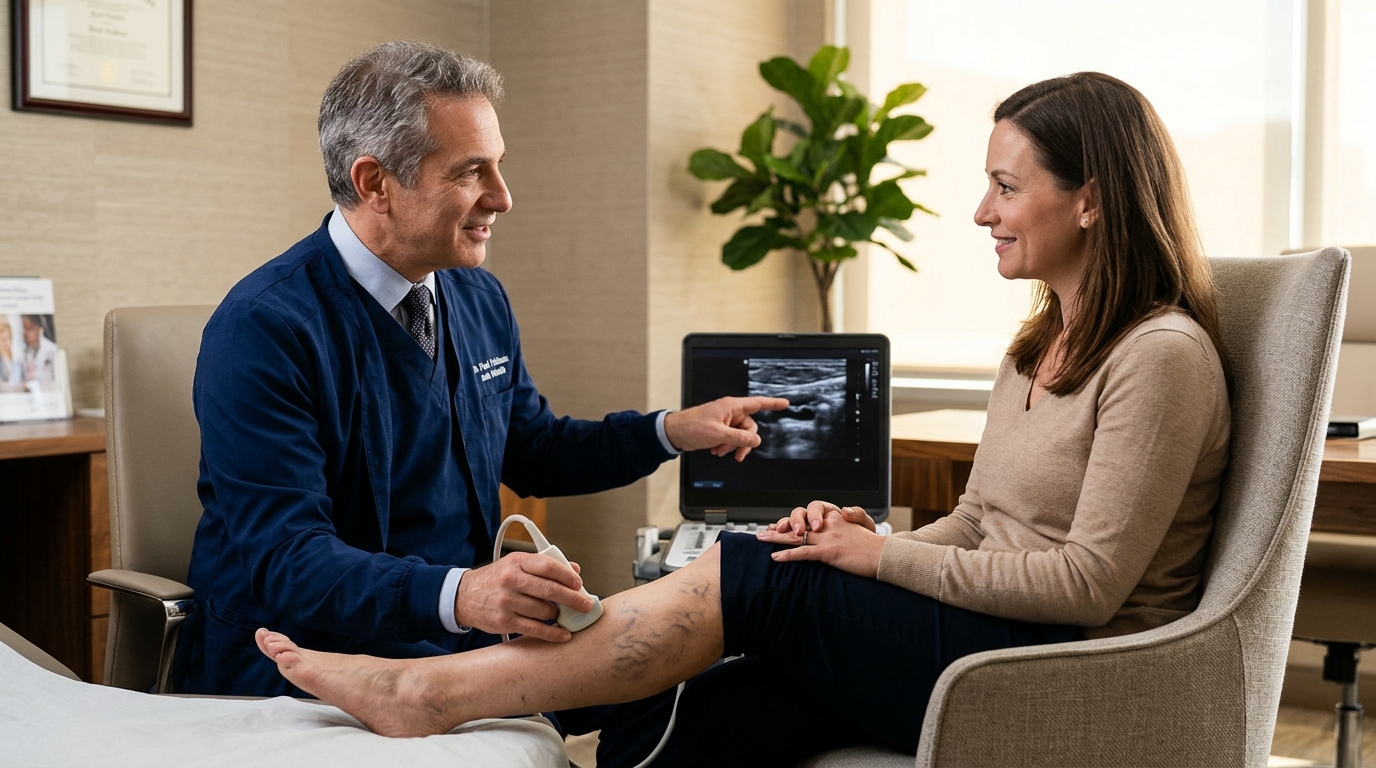
Sclerotherapy is a minimally invasive procedure that injects a solution into veins to cause them to collapse and fade. At Truffles Vein Specialists, our team uses this technique to treat spider veins and smaller varicose veins effectively. The process is quick, outpatient-based, and allows patients to return to daily activities immediately.
The Biological Mechanism of Vein Closure
Sclerotherapy is a medical procedure that involves injecting a chemical solution directly into a targeted vein. This solution acts as an irritant to the inner lining of the vein, known as the endothelium. When the endothelium is irritated, it triggers an inflammatory response that causes the vein walls to stick together. Over time, the body absorbs the closed vein, and it fades from view. For additional details, review the Customer Experience.
The effectiveness of this mechanism depends on the type of sclerosant used. There are two primary categories: foams and liquids. Liquid sclerotherapy is typically used for spider veins, while foam sclerotherapy is often preferred for larger varicose veins. The foam displaces blood in the vein, allowing the solution to contact the entire vein wall. This increases the surface area of irritation and improves the closure rate. For additional details, review the Frequently Asked Questions.
At Truffles Vein Specialists, we tailor the approach to the specific vein anatomy of each patient. Understanding how the body processes these closed vessels is key to setting realistic expectations for cosmetic and medical outcomes.
The Step-by-Step Clinical Process
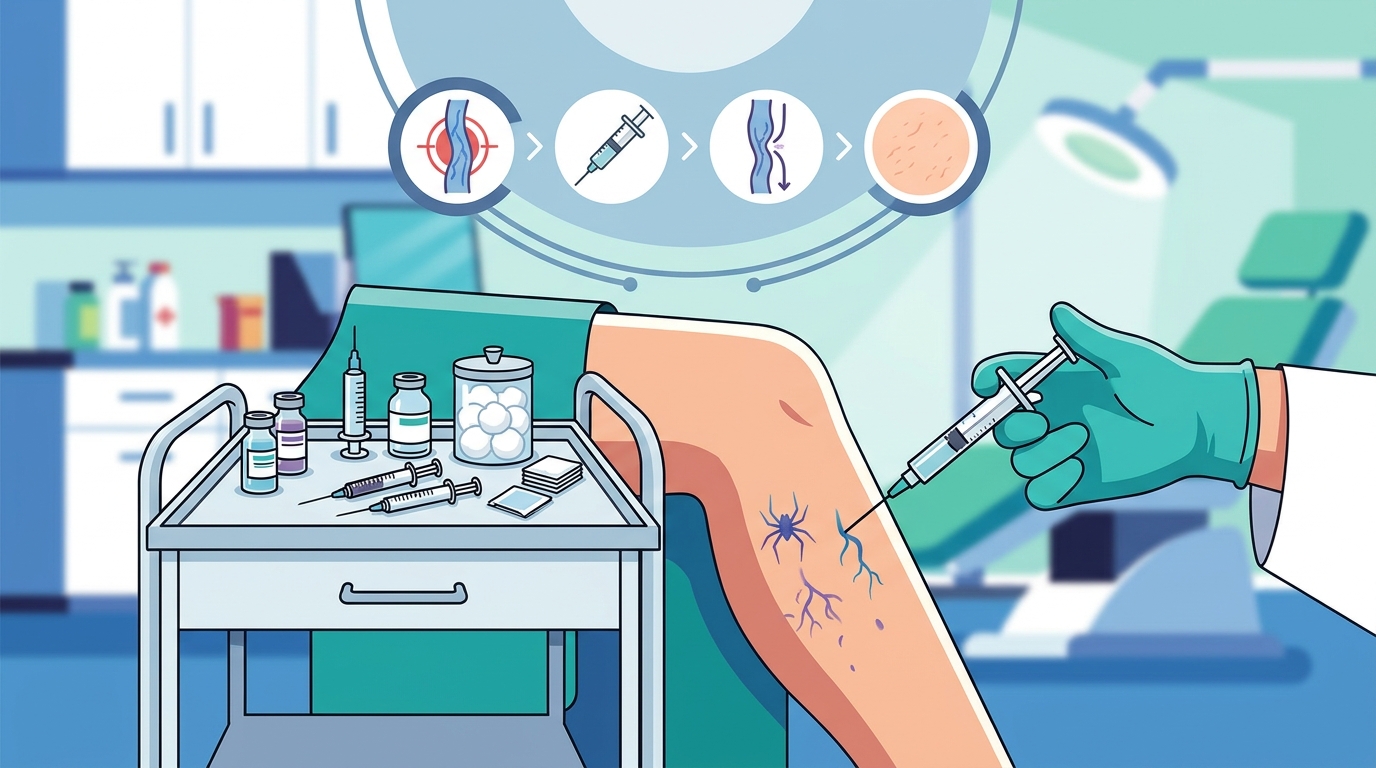
The sclerotherapy procedure is straightforward and usually takes less than an hour. The first step is a consultation where the provider maps the veins to determine the best treatment plan. During the actual treatment, the provider cleans the skin and may apply a local anesthetic or cooling gel for comfort. The injection itself is delivered through a very fine needle, often smaller than those used for blood draws.
Patients may feel a mild stinging or burning sensation during the injection, but this is generally well-tolerated. After the injection, the provider may ask the patient to walk for a short period to help disperse the solution. Compression stockings are often recommended for a few days to support the veins and reduce swelling. The entire process is performed in an outpatient setting, requiring no hospital stay.
Dr. Paul Feldman and the team at Truffles Vein Specialists emphasize precision in every injection. The goal is to target the vein accurately while minimizing impact on surrounding tissue. This careful technique helps ensure a smooth recovery and optimal cosmetic results.
Recovery Timeline and Aftercare
Recovery from sclerotherapy is typically fast, with most patients resuming normal activities immediately. However, the veins do not disappear instantly. It takes several weeks to a few months for the body to fully absorb the treated vessels. During this period, patients may notice darkening or bruising around the treated area, which is a normal part of the healing process.
Aftercare is crucial for maximizing results. Patients are advised to wear compression stockings as directed to prevent blood from pooling in the treated veins. Avoiding prolonged standing or sitting helps improve circulation. Sun exposure should be minimized on treated areas to prevent hyperpigmentation. Regular follow-up appointments allow the provider to assess progress and determine if additional sessions are needed.
At Truffles Vein Specialists, we provide detailed aftercare instructions to ensure patients understand what to expect. Most patients see significant improvement within three to six months, though some may require multiple sessions for complete clearance.
Ideal Candidates and Contraindications
Sclerotherapy is suitable for a wide range of patients, but not everyone is a candidate. Ideal candidates have spider veins or small to medium-sized varicose veins that cause cosmetic concern or mild discomfort. The procedure is generally safe for adults of all ages, provided they have no underlying vascular conditions. Patients with a history of blood clots or severe peripheral artery disease may not be suitable for this treatment.
It is important to distinguish between spider veins and varicose veins. Spider veins are small, red or blue vessels that appear close to the skin surface. Varicose veins are larger, twisted veins that can cause pain, swelling, and fatigue. Sclerotherapy is highly effective for spider veins and can be used for smaller varicose veins, but larger veins may require other treatments like ablation. A thorough evaluation is necessary to determine the best approach.
Truffles Vein Specialists conducts comprehensive vein assessments to identify the best treatment options. This ensures that patients receive care tailored to their specific vascular health needs.
Potential Risks and Side Effects
Choosing an experienced provider is critical to minimizing risks. At Truffles Vein Specialists, our team is trained in the latest techniques and safety protocols. We monitor patients closely during and after treatment to address any complications promptly. Patients should discuss their medical history thoroughly with their provider to ensure they are a good candidate.
Understanding the risks helps patients make informed decisions. The benefits of sclerotherapy, including its minimally invasive nature and high success rate, often outweigh the potential side effects for most patients.
Key Takeaways
- The solution irritates the vein lining, causing it to collapse and be absorbed by the body.
- Recovery is quick, with most patients returning to normal activities immediately.
- Compression stockings and sun protection are essential for optimal results.
- Multiple sessions may be required for complete clearance of spider and varicose veins.
Frequently Asked Questions
Does sclerotherapy hurt?
Most patients experience only mild discomfort, such as a stinging or burning sensation during the injection. The procedure is generally well-tolerated and requires no general anesthesia.
How long does it take to see results?
It takes several weeks to a few months for the treated veins to fade completely. Initial improvement may be visible within a few weeks, but full results are typically seen after three to six months.
Can sclerotherapy treat large varicose veins?
Sclerotherapy is most effective for spider veins and smaller varicose veins. Larger varicose veins may require other treatments, such as radiofrequency ablation or laser therapy, which are also offered at Truffles Vein Specialists.
How many sessions are needed?
The number of sessions varies depending on the extent of the veins. Some patients require only one session, while others may need multiple treatments for complete clearance.
Is sclerotherapy safe for pregnant women?
Sclerotherapy is generally not recommended during pregnancy or breastfeeding. It is best to wait until after these periods to undergo the procedure.
What should I wear after the procedure?
Compression stockings are typically recommended for a few days to support the veins and reduce swelling. Your provider will give you specific instructions on how long to wear them.
Conclusion
Sclerotherapy is a highly effective and minimally invasive option for treating spider veins and smaller varicose veins. By understanding the mechanism, procedure, and aftercare, patients can make informed decisions about their vein health. At Truffles Vein Specialists, we are committed to providing safe, personalized care that helps you achieve the results you want. If you are considering sclerotherapy, to schedule a consultation and take the first step toward healthier, more confident legs.