
Choosing the Right Venous Reflux Ultrasound for Your Varicose Vein Evaluation
Varicose veins affect approximately 23% of adults globally, yet many patients delay evaluation due to confusion about diagnostic procedures. According to the World Health Organization, venous disorders represent a significant public health challenge that requires precise diagnostic intervention. Without accurate imaging, treatment plans often miss the underlying source of venous insufficiency. This guide explains how venous reflux ultrasound works and why it is the gold standard for evaluating varicose veins.
What Is Venous Reflux Ultrasound?
Venous reflux ultrasound is a specialized diagnostic imaging technique used to evaluate the function of your veins. It is not merely a picture of your leg; it is a dynamic assessment of blood flow. Research published in the American Journal of Roentgenology confirms that duplex ultrasound is the most accurate non-invasive method for diagnosing chronic venous insufficiency. (Guidelines for Ultrasound)
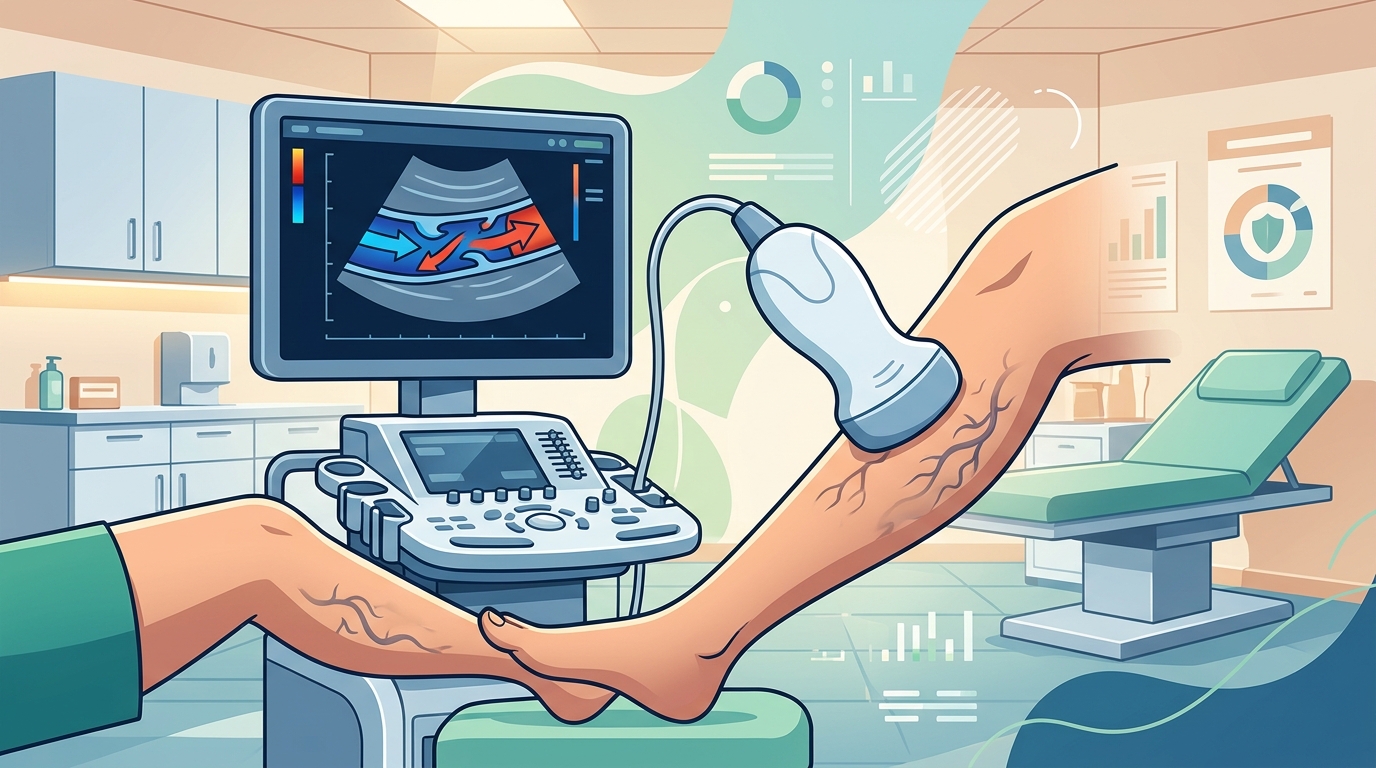
Venous reflux occurs when the valves inside your veins fail to close properly. This allows blood to flow backward and pool in the legs. The ultrasound captures this reverse flow in real-time. It maps the exact location of the failure. This mapping is critical for effective treatment.
Venous reflux is the backward flow of blood due to incompetent valves. This condition leads to increased pressure in the leg veins. The pressure causes veins to stretch and become varicose. Early detection prevents complications like ulcers or blood clots.
How the Diagnostic Process Works
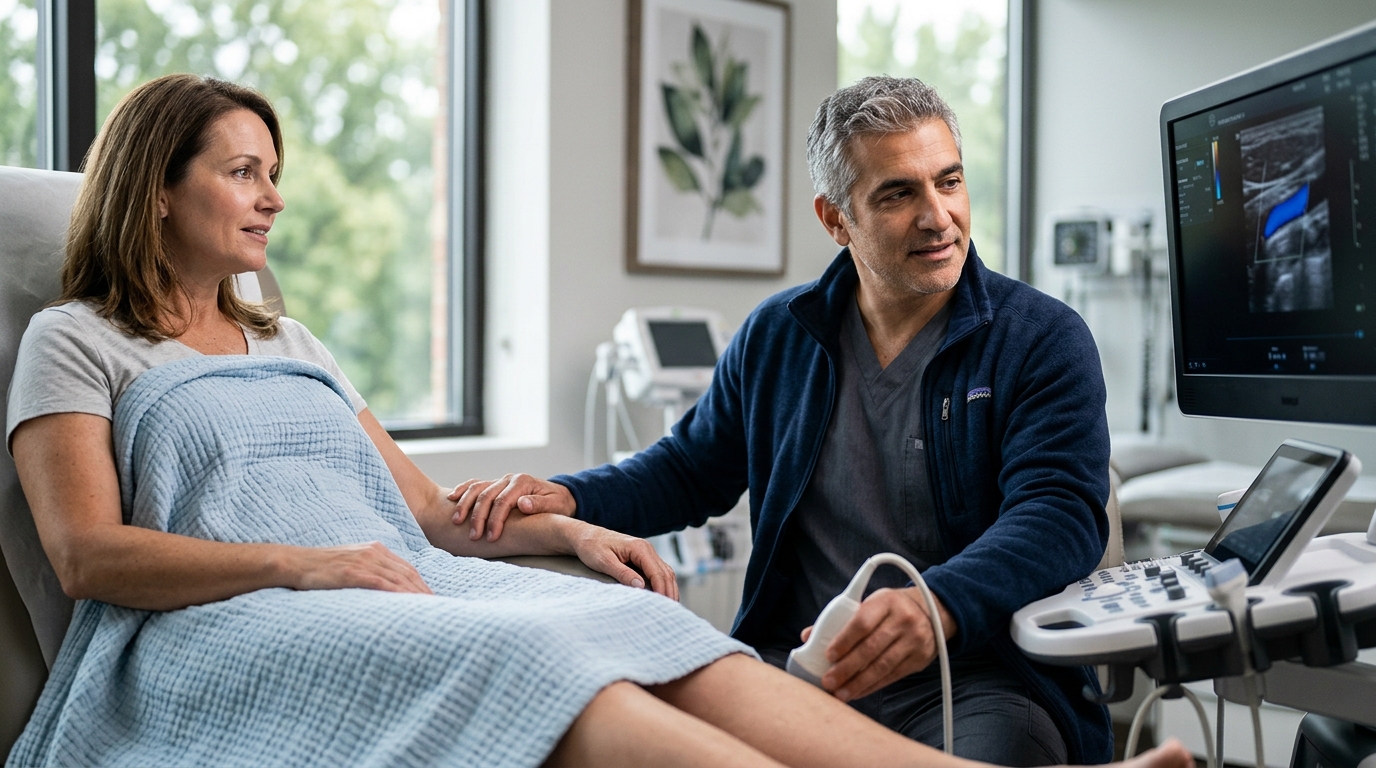
The evaluation begins with a physical exam. Your specialist checks for visible signs of vein disease. They look for swelling, skin changes, and prominent veins. Then, the ultrasound machine is applied to your legs. A gel is used to ensure clear sound wave transmission.
The technician uses a transducer to send high-frequency sound waves into your tissue. These waves bounce off your blood cells and vein walls. The machine converts these echoes into images on a screen. This process is painless and takes about 30 to 45 minutes. (Guidelines for Ultrasound)
During the scan, you may be asked to stand or change positions. Gravity helps reveal hidden reflux that is not visible when lying down. The technician will also use compression maneuvers. These maneuvers simulate the natural muscle pump of your legs. This helps identify weak spots in the venous system.
What the Images Reveal
The resulting images show the direction and speed of blood flow. Normal veins show blood moving upward toward the heart. Abnormal veins show blood moving downward toward the feet. This downward movement is called reflux. The duration of the reflux is measured in seconds.
Reflux lasting longer than 0.5 seconds in the superficial veins is considered abnormal. This threshold helps doctors determine the severity of your condition. It also guides the choice of treatment. Some treatments require precise mapping of the saphenous vein. Others focus on smaller tributary veins.
Reflux Ultrasound vs. Standard Ultrasound
Many patients confuse a standard venous ultrasound with a venous reflux study. A standard ultrasound primarily looks for blood clots. It checks for Deep Vein Thrombosis (DVT). DVT is a serious condition where a clot forms in a deep vein.
A venous reflux ultrasound focuses on valve function. It evaluates the superficial venous system. This system includes the great saphenous vein and small saphenous vein. These veins are close to the skin surface. They are the primary cause of varicose veins.
| Feature | Standard Venous Ultrasound | Venous Reflux Ultrasound |
|---|---|---|
| Primary Goal | Detect blood clots (DVT) | Evaluate valve function and reflux |
| Target Veins | Deep veins (e.g., femoral, popliteal) | Superficial veins (e.g., saphenous system) |
| Technique | Static imaging and basic flow checks | Duplex imaging with compression and gravity tests |
| Treatment Guidance | Anticoagulation therapy | Ablation, sclerotherapy, or surgery planning |
Choosing the right test ensures you get the correct diagnosis. A standard ultrasound might miss the source of your varicose veins. It might only find a clot if one exists. It would not explain why your veins are bulging. A reflux study provides the complete picture.
Why Precision Matters for Treatment
Treating varicose veins without a reflux study is like building a house without a blueprint. You might remove the visible veins. But the underlying pressure remains. This leads to recurrence. New veins will appear in the same area. Patients often report that their symptoms return within months.
Accurate mapping allows for targeted therapy. For example, if the great saphenous vein is the source, endovenous ablation may be recommended. This procedure seals the vein shut. Blood is rerouted to healthy veins. The procedure is minimally invasive. Recovery is quick.
If the reflux is in a smaller tributary, sclerotherapy might be better. This involves injecting a solution into the vein. The solution causes the vein to collapse. It is ideal for spider veins and small varicose veins. The ultrasound guides the injection. This ensures precision and safety.
According to the American Heart Association, precise diagnosis reduces the risk of complications. It also improves long-term outcomes. Patients report less pain and better cosmetic results. The confidence in the treatment plan increases. You know exactly what will be done.
The Truffles Vein Specialists Approach
At Truffles Vein Specialists, we prioritize diagnostic accuracy. We are Georgia's largest independently owned vein practice. Our team includes board-certified specialists and registered vascular technologists. We use advanced duplex ultrasound technology. This ensures the highest level of precision.
Our specialists, including Dr. Paul Feldman and Dr. Christopher Perez, have decades of combined experience. They have treated thousands of patients with vein disease. Our approach is patient-centered. We explain every step of the process. We answer all your questions.
We offer a free vein screening for new patients. This initial consultation helps determine if you need a full reflux study. We evaluate your medical history and symptoms. We then recommend the appropriate diagnostic path. This ensures you only undergo necessary tests.
Our diagnostic lab is equipped with state-of-the-art ultrasound machines. The technologists, such as Brian Sapp, RVT, RPhS, are experts in vascular imaging. They ensure that every image is clear and accurate. This allows our physicians to make informed decisions. We do not guess. We use data to guide treatment.
Key Takeaways
- Diagnostic Gold Standard: Venous reflux ultrasound is the most accurate non-invasive test for varicose veins.
- Reflux Definition: Reflux is the backward flow of blood due to failed valves, causing vein dilation.
- Distinction: Standard ultrasounds check for clots; reflux studies check for valve function.
- Treatment Planning: Accurate mapping prevents recurrence and guides minimally invasive therapies.
- Expert Care: Truffles Vein Specialists offers Georgia's largest independent vein practice with advanced diagnostics.
- Free Screening: New patients can access a free vein screening to assess their risk.
- Specialist Team: Our team includes board-certified physicians and registered vascular technologists.
Frequently Asked Questions
Is venous reflux ultrasound painful?
No, the procedure is painless. You may feel slight pressure from the transducer. The gel might feel cold. The process is similar to an ultrasound during pregnancy. Most patients find it relaxing.
How long does the test take?
A complete venous reflux study typically takes 30 to 45 minutes. This includes preparation and the actual scanning time. The duration depends on the complexity of your vein anatomy.
Do I need to fast before the test?
No fasting is required for a venous reflux ultrasound. You can eat and drink normally. Wear loose-fitting clothing to your appointment. This makes it easier for the technician to access your legs.
What happens if reflux is found?
If reflux is found, your specialist will discuss treatment options. These may include ablation, sclerotherapy, or surgery. The goal is to seal the faulty veins. This improves blood flow and reduces symptoms.
Can insurance cover the ultrasound?
Most insurance plans cover venous reflux ultrasounds. They are considered medically necessary for diagnosing vein disease. Our office can help verify your coverage. We work with most major insurance providers.
How accurate is the ultrasound?
Venous reflux ultrasound is highly accurate. It is considered the gold standard for diagnosis. It can detect even small amounts of reflux. The accuracy depends on the skill of the technologist and physician.
What is the difference between varicose and spider veins?
Varicose veins are larger, swollen, and twisted. They often cause pain. Spider veins are smaller, red or blue, and closer to the skin. They are often cosmetic. Both can be evaluated with ultrasound.
Schedule Your Evaluation
Do not let varicose veins control your life. Early diagnosis leads to better outcomes. Schedule an appointment with Truffles Vein Specialists today. We are Georgia's most trusted vein center. We offer advanced diagnostic precision and compassionate care. Visit our contact page to learn more. Take the first step toward healthier legs.