

Spider veins affect millions of individuals across the United States, yet widespread misinformation often prevents patients from seeking timely care. According to the American Academy of Dermatology, approximately 22 percent of adults in the U.S. have spider veins, making them a highly prevalent vascular condition. Despite their commonality, many people delay treatment due to unfounded fears about pain, efficacy, or long-term results. At Truffles Vein Specialists, we believe that accurate information is the first step toward restoring confidence and comfort. This guide addresses the most persistent myths and frequently asked questions regarding non-surgical spider vein removal to help you make informed decisions about your vascular health.
Myth: Spider Vein Treatment Is Painful
One of the most significant barriers to seeking care is the fear of pain. Many patients assume that removing visible veins will involve needles, incisions, or significant discomfort. This is a myth. Modern non-surgical techniques are designed to be minimally invasive and highly tolerable. For instance, laser vein ablation uses targeted light energy to seal the vein without breaking the skin. Similarly, radio-frequency closure utilizes heat energy delivered through a tiny catheter to collapse the vein from the inside. At Truffles Vein Specialists, we prioritize patient comfort during every step of the process. Our team uses advanced cooling techniques and precise application methods to ensure that the experience is manageable for most patients. If you are concerned about discomfort, our specialists can discuss local anesthesia options or topical numbing creams during your consultation. The goal is to provide effective results with minimal disruption to your daily life.
Myth: Natural Remedies Can Eliminate Spider Veins
You may encounter claims online suggesting that green tomatoes, apple cider vinegar, or essential oils can permanently remove spider veins. While some natural remedies may help reduce leg swelling or improve circulation slightly, they cannot eliminate the structural damage in the vein valves that causes spider veins. Spider veins are dilated capillaries near the skin's surface that have lost their ability to function correctly. No topical application can reverse this physical dilation. According to vascular health experts, only medical interventions such as sclerotherapy or laser therapy can effectively collapse and seal these vessels. Relying on unproven home remedies often leads to wasted time and money while the underlying condition persists or worsens. It is crucial to consult with a certified vein specialist to determine the appropriate medical treatment for your specific vascular anatomy.
FAQ: What Is the Most Effective Non-Surgical Treatment?
The effectiveness of a treatment depends on the size, location, and color of the veins. There is no single "best" treatment for everyone. However, two primary non-surgical options dominate the field: sclerotherapy and laser therapy. Sclerotherapy involves injecting a solution directly into the vein, causing it to collapse and fade. It is particularly effective for smaller veins on the legs. Laser vein ablation is often preferred for facial veins or smaller, finer spider veins that are difficult to inject. At Truffles Vein Specialists, we utilize a combination of these techniques, along with foam sclerotherapy for larger veins, to create a customized treatment plan. Our diagnostic precision ensures that we select the modality that offers the highest success rate for your unique case. We also offer varithena, a newer foam-based treatment that provides an alternative for patients seeking non-thermal, non-tumescent options.
FAQ: How Long Is the Recovery Time?
One of the primary advantages of non-surgical vein removal is the minimal downtime. Most patients can return to their normal activities immediately after the procedure. However, there are specific post-procedure guidelines to ensure optimal results. You will typically be asked to wear compression stockings for a specified period, usually ranging from a few days to a few weeks. This compression helps guide the blood flow to healthier veins and reduces swelling. You should avoid strenuous exercise, hot tubs, and prolonged sun exposure for a short period after treatment. Our post procedure instructions provide detailed guidance tailored to your specific treatment type. Most patients report that the recovery process is straightforward and does not interfere significantly with their work or social obligations. The visible results often appear within a few weeks as the body naturally absorbs the treated veins.
FAQ: Will Spider Veins Come Back?
While treated spider veins will not return, new veins can develop over time. Vein disease is a progressive condition influenced by genetics, age, and lifestyle factors. Vein disease occurs when the valves in your veins weaken, allowing blood to pool and stretch the vein walls. Even after successful removal of existing veins, new veins may become visible due to these underlying factors. However, this does not mean the treatment was ineffective. The treated veins are permanently closed and will not reopen. Maintaining a healthy weight, exercising regularly, and avoiding prolonged standing can help slow the progression of new vein formation. Regular follow-up appointments with your vein specialist can help monitor your vascular health and address any new concerns early. At Truffles Vein Specialists, we focus on long-term management and patient education to help you maintain your results.
FAQ: Is Treatment Covered by Insurance?
Insurance coverage for vein treatment depends on whether the procedure is deemed medically necessary or cosmetic. Spider veins are often considered a cosmetic concern if they do not cause symptoms. However, if you experience pain, swelling, or skin changes due to varicose veins or underlying venous insufficiency, insurance may cover the diagnostic testing and treatment. Our team at Truffles Vein Specialists assists patients in navigating the insurance process. We can help determine if your symptoms qualify for coverage and provide the necessary documentation for your provider. For purely cosmetic treatments, we offer flexible payment plans to make care accessible. It is important to have a thorough consultation to understand the financial aspects of your treatment plan before proceeding.
FAQ: What Is Sclerotherapy?
Sclerotherapy is a widely used, minimally invasive procedure for treating spider veins and small varicose veins. During the procedure, a healthcare provider injects a special solution directly into the affected vein. This solution irritates the lining of the vein, causing it to collapse and stick together. Over time, the vein fades and is reabsorbed by the body. There are different types of sclerotherapy, including visible sclerotherapy for smaller veins and ultrasound guided sclerotherapy for larger veins. The procedure is typically performed in an office setting and takes about 30 to 60 minutes. Patients may experience mild discomfort or bruising at the injection sites, but these side effects are usually temporary. Sclerotherapy is highly effective and has been used for decades with a strong safety profile.
FAQ: How Does Laser Therapy Work?
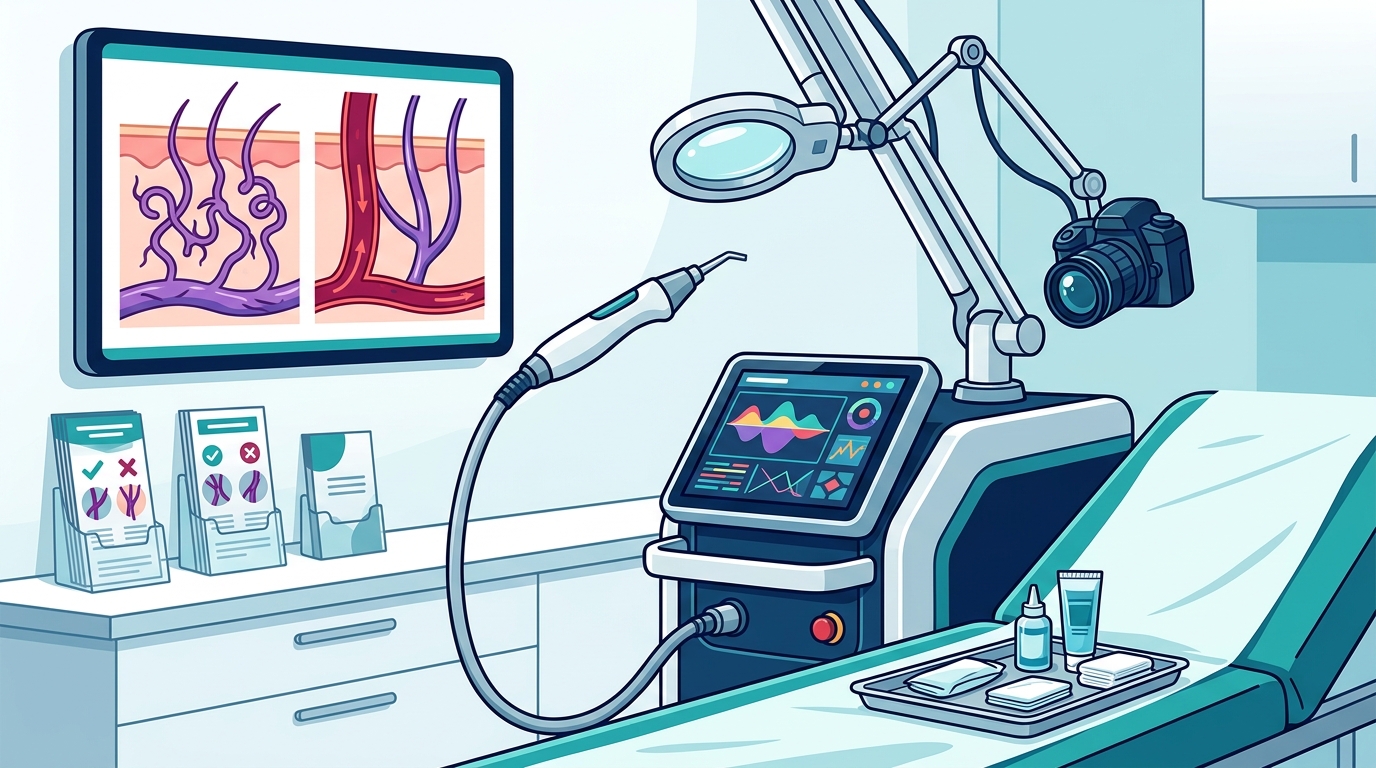
Laser vein ablation uses concentrated beams of light to target and destroy spider veins. The laser energy is absorbed by the blood in the vein, which generates heat and causes the vein to collapse. Unlike sclerotherapy, laser therapy does not require needles. This makes it an attractive option for patients who are needle-phobic or have veins that are difficult to access. Laser therapy is particularly effective for facial veins and smaller leg veins. The procedure is quick, often taking only a few minutes per area. Patients may feel a slight snapping sensation during the treatment, which is generally well-tolerated. After the procedure, the treated veins will gradually fade over several weeks. Laser therapy is a safe and effective alternative to sclerotherapy for specific types of vascular conditions.
Comparison of Non-Surgical Vein Treatments
Understanding the differences between treatment options can help you make an informed decision. The table below summarizes the key characteristics of common non-surgical vein removal methods.
| Treatment Type | Best For | Invasiveness | Downtime | Typical Sessions |
|---|---|---|---|---|
| Sclerotherapy | Leg spider veins, small varicose veins | Minimally Invasive (Injection) | Minimal | 1-3 |
| Laser Vein Ablation | Facial veins, fine leg veins | Non-Invasive (Light Energy) | None | 1-2 |
| Foam Sclerotherapy | Larger varicose veins | Minimally Invasive (Injection) | Minimal | 1-4 |
| VenaSeal | Larger saphenous veins | Minimally Invasive (Glue) | Minimal | 1 |
Key Takeaways
- Spider veins are a common condition affecting approximately 22 percent of U.S. adults, according to the American Academy of Dermatology.
- Non-surgical treatments like sclerotherapy and laser therapy are minimally invasive with minimal downtime.
- Natural remedies cannot eliminate spider veins; only medical interventions can collapse and seal the affected vessels.
- Treated veins do not return, but new veins may develop due to genetic and lifestyle factors.
- Insurance may cover treatment if symptoms like pain or swelling are present, not just for cosmetic reasons.
- Truffles Vein Specialists offers a range of treatments including VenaSeal and Varithena for comprehensive care.
- Georgia's largest independently owned vein practice provides advanced diagnostic precision and patient-centered care.
Frequently Asked Questions
Is sclerotherapy painful?
Most patients report minimal discomfort during sclerotherapy. The injection may feel like a small pinch, but the procedure is generally well-tolerated. Our team uses fine needles to minimize any sensation.
How many sessions of laser therapy are needed?
The number of sessions depends on the size and number of veins. Most patients see significant improvement after one or two sessions. A consultation can provide a more accurate estimate.
Can I wear makeup after laser treatment?
It is generally recommended to avoid makeup on the treated area for 24 to 48 hours to prevent irritation. Follow your specific post-procedure instructions for guidance.
What is the difference between spider veins and varicose veins?
Spider veins are smaller, closer to the skin surface, and often red or blue. Varicose veins are larger, swollen, and twisted, often appearing blue or dark purple. Both can be treated with non-surgical methods.
Do I need a referral to see a vein specialist?
At Truffles Vein Specialists, you can schedule a free vein screening without a referral. However, some insurance plans may require a referral for coverage.
How long do results from vein treatment last?
Treated veins are permanently removed. However, new veins may develop over time. Maintaining a healthy lifestyle can help prolong your results.
Is VenaSeal better than sclerotherapy?
VenaSeal uses a medical adhesive to seal veins, eliminating the need for compression stockings in many cases. Sclerotherapy uses a solution. The best option depends on your specific vein anatomy and medical history.
Take the Next Step Toward Confidence
Don't let myths or fear prevent you from addressing your vein concerns. At Truffles Vein Specialists, we provide expert care tailored to your needs. Our team of certified specialists, including Dr. Paul Feldman and Dr. Christopher Perez, is dedicated to helping you look and feel your best. Schedule your free vein screening today to discuss your options and take control of your vascular health. Visit our contact page to book an appointment or call us at 678-833-1444.