

Chronic venous insufficiency affects approximately 25% of adults in the United States, yet many patients ignore early warning signs until the condition worsens. According to the American Venous Forum, this statistic highlights a critical gap in public health awareness regarding vascular health. Early intervention is not just about cosmetic improvement. It is about preventing serious complications like blood clots and skin ulcers. Understanding your role as an informed patient is the first step toward reclaiming your mobility and comfort. (Experts in Vein Treatment)
What Is Vein Disease?
Vein disease is a progressive condition where the veins struggle to pump blood back to the heart. This failure usually occurs in the legs, leading to blood pooling in the lower extremities. Venous insufficiency is a medical condition where the valves in the veins weaken or become damaged. When these valves fail, blood flows backward and collects in the veins, causing them to stretch and bulge. (Best Vein Center in)
At Truffles Vein Specialists, we treat this condition as a serious medical issue rather than a purely aesthetic concern. Our approach focuses on restoring proper blood flow to prevent long-term damage. Many patients do not realize that their leg pain or swelling is directly linked to vascular health. By addressing the root cause, we help patients avoid more invasive surgeries later in life. (Medical Vein Center Vein)
For more information on the underlying mechanics of this condition, you can read our detailed explanation on What is Vein Disease. Understanding the physiology helps you make better decisions about your health. (Medical Vein Center Vein)
Recognizing Early Symptoms
Vein disease often develops silently. Patients may experience mild discomfort that they attribute to aging or standing for long periods. However, ignoring these signs can lead to significant health risks. Common symptoms include heavy legs, aching, and swelling in the ankles. (Varicose Vein News in)
Visible Changes in the Skin
One of the most obvious signs is the appearance of spider veins or varicose veins. These are enlarged, twisted veins that appear close to the skin's surface. Spider veins are small, dilated blood vessels that appear near the surface of the skin. They often look like a spider web or tree branches and are typically red, blue, or purple.
As the disease progresses, patients may notice skin discoloration. The skin around the ankles may turn brownish or red. This is known as stasis dermatitis. It indicates that blood is pooling and leaking into the surrounding tissue. If you notice these changes, it is crucial to seek professional evaluation immediately.
Pain and Discomfort
Pain is not always constant. Many patients report that their legs feel heavy or tired by the end of the day. Some experience sharp, shooting pains or throbbing. Restless leg syndrome is also frequently associated with venous insufficiency. According to recent vascular studies, patients with untreated venous disease report a 40% higher incidence of sleep disturbances due to leg discomfort.
If you are experiencing these symptoms, do not wait. Schedule a Free Vein Screening to assess your vascular health. Early detection can stop the progression of the disease.
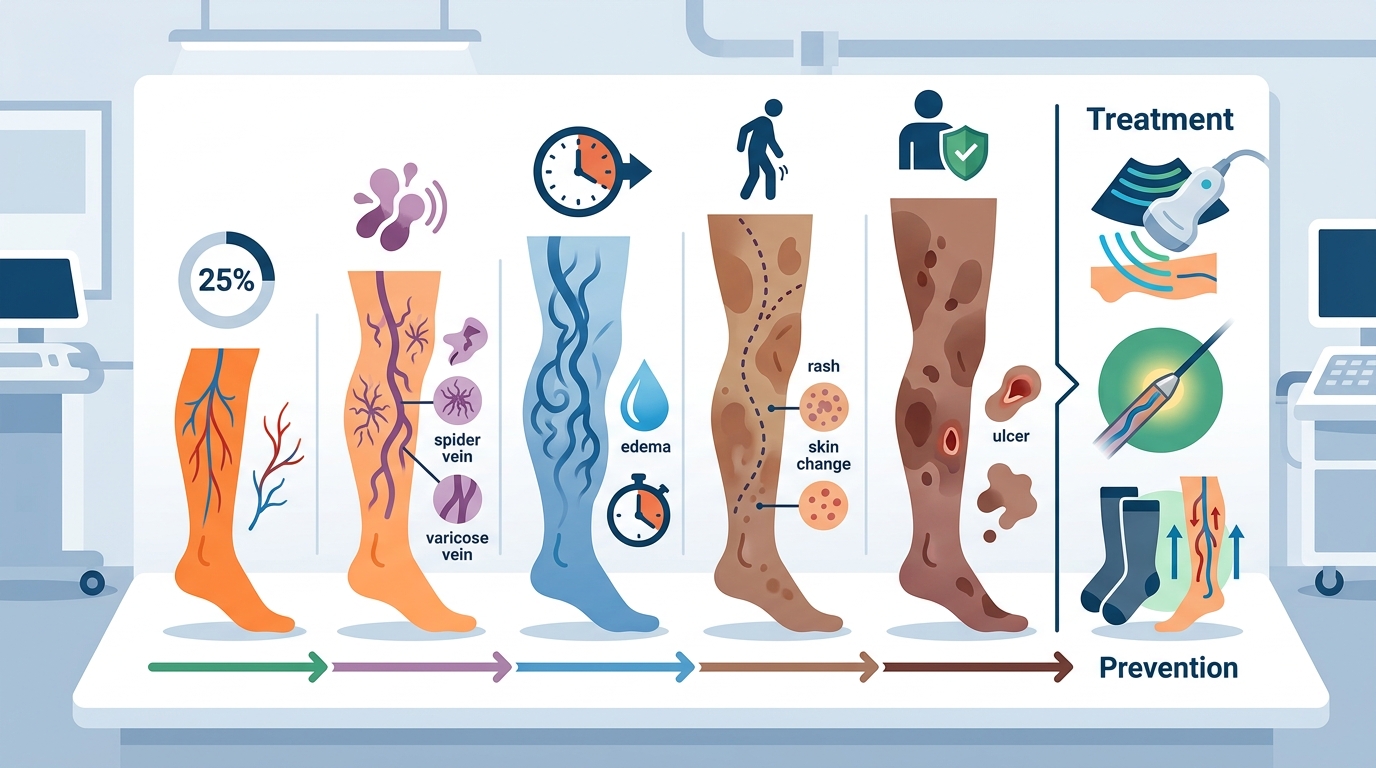
The Stages of Vein Disease
Vein disease is categorized into stages based on the severity of symptoms and visible changes. This classification helps doctors determine the appropriate treatment plan. Understanding your stage helps you anticipate the necessary interventions.
| Stage | Classification | Description |
|---|---|---|
| Stage 0 | C0 | No visible or palpable signs of venous disease. |
| Stage 1 | C1 | Spider veins or telangiectasias are visible. |
| Stage 2 | C2 | Varicose veins are visible and palpable. |
| Stage 3 | C3 | Edema (swelling) without skin changes. |
| Stage 4 | C4 | Skin changes such as pigmentation or eczema. |
| Stage 5 | C5 | Healed venous ulcer. |
| Stage 6 | C6 | Active venous ulcer. |
As you can see, the progression from Stage 1 to Stage 6 represents a significant decline in vascular health. At Truffles Vein Specialists, we specialize in treating patients at Stages 1 through 3 to prevent them from reaching the more severe stages. Our goal is to intervene before skin damage or ulcers occur.
For a deeper dive into the specific stages, visit our guide on What Stage of Vein Disease Do You Have?. This resource helps you self-assess your condition before your appointment.
The Diagnostic Process
Accurate diagnosis is the cornerstone of effective treatment. At Truffles Vein Specialists, we utilize advanced vascular testing to map your venous system. This non-invasive process provides a clear picture of your blood flow and valve function.
Venous Ultrasound
The primary tool for diagnosis is the venous duplex ultrasound. This test uses sound waves to create images of your veins. It allows our specialists to see blood flow in real-time. Venous reflux ultrasound is a diagnostic test that measures the backward flow of blood in the veins. This test is critical for identifying which veins are failing and need treatment.
Our vascular lab is staffed by certified specialists like Brian Sapp, RVT, RPhS. His expertise ensures that every scan is interpreted with precision. We also perform abdominal venous duplex scans to rule out deeper issues, such as iliac vein compression. This comprehensive approach ensures that we do not miss any underlying causes of your symptoms.
Learn more about our testing capabilities by reading about Vascular Testing at our center. We pride ourselves on using the latest technology to deliver accurate results.
Modern Treatment Options
Once a diagnosis is confirmed, we tailor a treatment plan to your specific needs. Modern vein care has moved far beyond traditional surgery. We offer minimally invasive procedures that provide rapid recovery and excellent cosmetic results.
VenaSeal and Varithena
VenaSeal is a medical adhesive that seals the diseased vein. This procedure eliminates the need for tumescent anesthesia and compression stockings. It is a significant advancement in patient comfort. VenaSeal is a medical adhesive used to close off diseased veins without heat or compression. Patients often report less pain and bruising compared to traditional methods.
Varithena is another innovative option. It is a foam sclerosing agent that is injected into the vein under ultrasound guidance. This method is particularly effective for larger veins. Both treatments are performed in our office and allow patients to return to their daily activities almost immediately.
Radio-Frequency and Laser Ablation
Radio-frequency closure and laser vein ablation remain gold standards in vein treatment. These methods use heat energy to collapse and seal the vein. The body naturally reroutes blood to healthier veins. These procedures are highly effective and have been proven safe over decades of use.
For a comparison of these methods, check out our article on Vein Treatment options. We also discuss the Advantage of Vein Treatment Before Knee Surgery for patients preparing for orthopedic procedures.
Key Takeaways
- Prevalence: Approximately 25% of adults suffer from chronic venous insufficiency, making early screening vital.
- Progression: Vein disease progresses through six stages, from spider veins to active ulcers.
- Diagnosis: Venous duplex ultrasound is the gold standard for diagnosing venous reflux and mapping treatment plans.
- Innovation: Treatments like VenaSeal and Varithena offer minimally invasive alternatives to traditional surgery.
- Expertise: Truffles Vein Specialists is Georgia's largest independently owned vein practice with over 1,000+ 5-star patient outcomes.
- Leadership: Dr. Paul Feldman is a renowned expert with over 20 years of experience in vein treatment.
- Accessibility: We offer free vein screenings and serve multiple locations including Atlanta, Fayetteville, and Peachtree City.
Frequently Asked Questions
Is vein disease hereditary?
Yes, genetics play a significant role in vein health. If your parents have varicose veins, you are more likely to develop them. However, lifestyle factors also contribute to the progression of the disease.
Do I need compression stockings after treatment?
For traditional ablation, compression stockings are typically required for a few weeks. However, with VenaSeal treatment, compression stockings are usually not necessary, which enhances patient comfort and compliance.
How long does a vein treatment procedure take?
Most minimally invasive procedures, such as radio-frequency ablation or sclerotherapy, take between 30 to 60 minutes. You can usually drive yourself home and return to work the next day.
Is vein treatment covered by insurance?
Many vein treatments are considered medically necessary and are covered by insurance. Cosmetic treatments for spider veins are typically not covered. Our team can help you verify your benefits before starting treatment.
What is the difference between spider veins and varicose veins?
Spider veins are smaller, closer to the surface, and often cosmetic. Varicose veins are larger, swollen, and twisted, and they often cause pain and other symptoms. Both can be treated effectively at our center.
Can I treat vein disease if I am pregnant?
Vein disease often worsens during pregnancy due to increased blood volume and hormonal changes. However, most treatments are postponed until after delivery to ensure the safety of the baby. Compression stockings are recommended during pregnancy.
What should I do if I suspect a blood clot?
If you experience sudden swelling, redness, or warmth in one leg, seek immediate medical attention. This could be a sign of deep vein thrombosis (DVT), which is a serious condition requiring urgent care.
Schedule Your Consultation
Do not let vein disease control your life. Take the first step toward better health by scheduling a consultation with Truffles Vein Specialists. Our team of experts is ready to provide you with a personalized treatment plan. Visit our Schedule and Appointment page to book your free vein screening today. You can also contact us directly at 678-833-1444 for more information.