

Chronic venous insufficiency affects millions of people, causing visible bulging veins and persistent discomfort. According to the American Venous Forum, approximately 23% of adults in the United States have visible varicose veins, with many experiencing pain that disrupts daily activities. While professional intervention is often the definitive solution, understanding how to manage symptoms at home is crucial for immediate relief and long-term vein health. This guide provides evidence-based strategies to alleviate pain, reduce swelling, and prevent further progression of vein disease. (Experts in Vein Treatment)
Understanding the Root Cause of Vein Pain
Before implementing home remedies, it is essential to understand what is happening beneath the skin. Varicose veins are enlarged, twisted veins that form when the valves inside your veins weaken or become damaged. These valves normally keep blood flowing upward toward the heart. When they fail, blood pools in the legs, increasing pressure and causing the veins to bulge. This condition is medically known as chronic venous insufficiency.
Varicose veins is a term used to describe the visible, enlarged veins that often appear blue or dark purple. They are most commonly found on the legs because standing and walking upright increases the pressure in the veins of the lower body. The pain associated with these veins is often described as a heavy, aching sensation, accompanied by throbbing, muscle cramping, and swelling. Ignoring these symptoms can lead to more serious complications, such as skin changes, ulcers, or blood clots.
At Truffles Vein Specialists, we emphasize that while home management provides relief, it does not cure the underlying valve failure. However, consistent home care can significantly improve quality of life and slow the progression of the disease. For those seeking advanced diagnostic precision, we offer comprehensive vascular testing to determine the exact stage of your vein disease.
Step 1: Mastering Compression Therapy
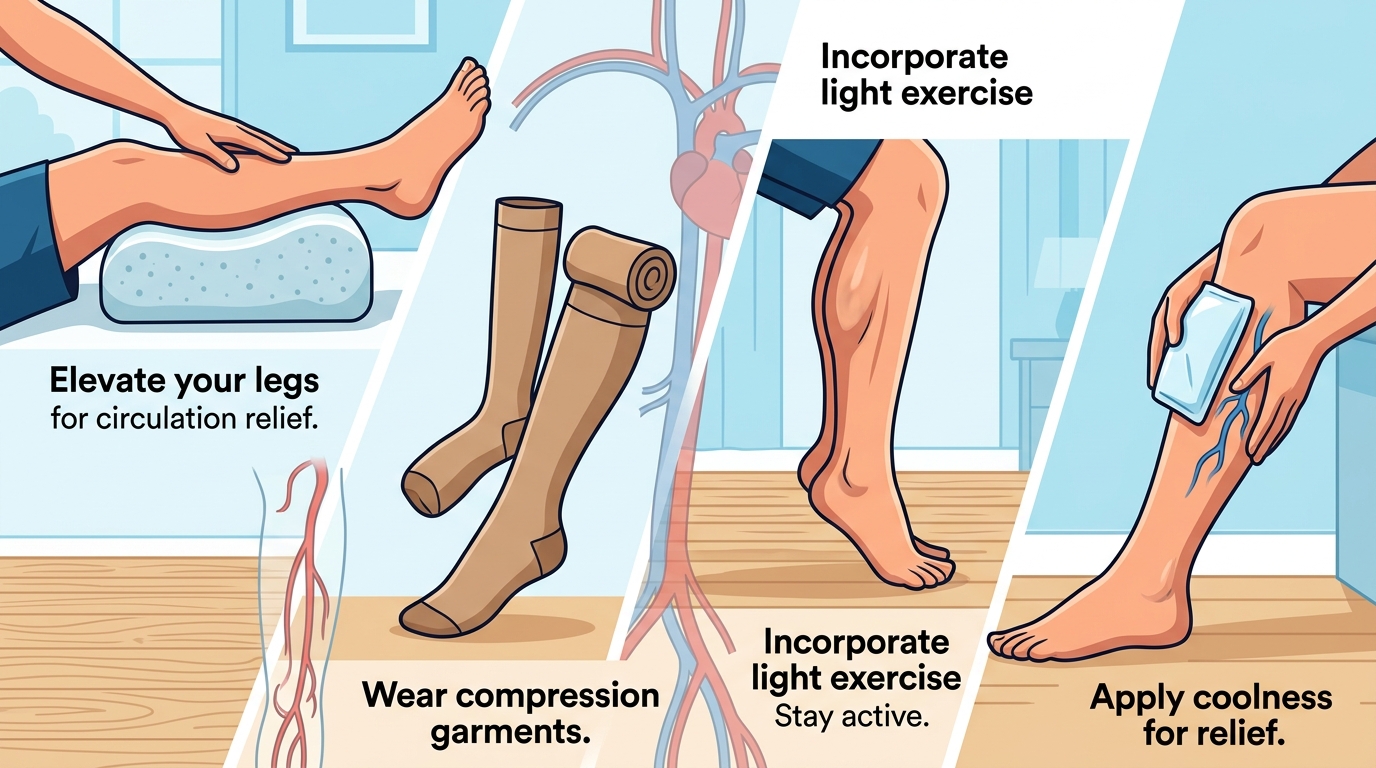
Compression stockings are the gold standard for at-home vein management. They work by applying graduated pressure to your legs, which is tightest at the ankle and gradually decreases up the leg. This pressure helps your leg muscles and vein walls move blood more efficiently toward your heart.
Choosing the Right Compression Level
Not all compression stockings are created equal. For mild symptoms, over-the-counter stockings with 15-20 mmHg of pressure may suffice. For more significant pain and swelling, your provider may recommend medical-grade stockings with 20-30 mmHg or 30-40 mmHg pressure. It is critical to get properly fitted for these garments to ensure they are effective without cutting off circulation.
Proper Usage Guidelines
Put on your compression stockings first thing in the morning before you get out of bed. This is when swelling is minimal, making it easier to slide the stockings on. Wear them throughout the day and remove them before sleeping. Consistency is key; sporadic use will not yield the desired therapeutic benefits. If you struggle with putting them on, consider using donning aids or gloves designed for compression garments.
Step 2: Strategic Elevation for Drainage
Elevating your legs is a simple yet powerful way to combat the effects of gravity on your venous system. By raising your legs above the level of your heart, you allow blood to drain back toward your core, reducing pressure in the leg veins.
The 15-Minute Rule
Aim to elevate your legs for at least 15 minutes, three to four times a day. Lie down on a flat surface and prop your legs up on pillows or a wedge cushion. Ensure that your feet are higher than your knees and your knees are higher than your hips. This position maximizes venous return and helps reduce the pooling of blood that causes bulging and pain.
Timing Matters
Try to elevate your legs after periods of prolonged standing or sitting. For example, if you have been on your feet all day at work, elevate your legs as soon as you get home. This practice can prevent the accumulation of fluid and reduce the likelihood of evening swelling.
Step 3: Targeted Movement and Exercise
Movement is medicine for your veins. The calf muscle pump in your lower legs acts as a secondary heart, pumping blood upward against gravity. When you are inactive, this pump fails, leading to blood pooling.
Low-Impact Cardio
Activities like walking, swimming, and cycling are excellent for vein health. Walking is particularly effective because it engages the calf muscles with every step. Aim for at least 30 minutes of moderate exercise most days of the week. Avoid high-impact activities that put excessive strain on your legs if you have severe vein disease.
Specific Vein Exercises
Incorporate specific exercises into your routine to target the calf muscles. Try toe raises, where you stand on your tiptoes and then lower your heels. Another effective exercise is ankle circles, which help improve circulation in the lower legs. These simple movements can be done while watching TV or during commercial breaks.
Step 4: Lifestyle Adjustments for Vein Health
Diet and daily habits play a significant role in managing vein pain. Small changes can lead to substantial improvements in your symptoms.
Dietary Considerations
Eating a low-sodium diet helps reduce water retention and swelling. Focus on foods rich in fiber to prevent constipation, which can increase abdominal pressure and worsen vein issues. Flavonoids, found in berries, citrus fruits, and leafy greens, may help strengthen vein walls and improve circulation. Stay hydrated to keep your blood less viscous and easier to pump.
Weight Management
Excess weight puts additional pressure on your veins, particularly in the legs and pelvis. Maintaining a healthy weight can significantly reduce the strain on your venous system. Even a modest weight loss can lead to noticeable improvements in vein pain and swelling.
Avoid Prolonged Standing or Sitting
If your job requires you to stand or sit for long periods, take regular breaks to move around. If you must sit for extended periods, avoid crossing your legs, as this can restrict blood flow. Stand up and walk around for a few minutes every hour to keep blood moving.
When to Seek Professional Care
While home management is effective for many, there are signs that indicate you need professional medical attention. Ignoring these symptoms can lead to serious complications.
Red Flags for Deep Vein Thrombosis
Deep vein thrombosis (DVT) is a blood clot that forms in a deep vein, usually in the leg. Symptoms include sudden swelling in one leg, pain or tenderness in the leg (often starting in the calf), warm skin over the painful area, and red or discolored skin. If you experience these symptoms, seek immediate medical attention.
Signs of Ulceration or Infection
Untreated vein disease can lead to skin changes, including discoloration and thickening. In severe cases, skin ulcers may form near the ankles. These ulcers are difficult to heal and are prone to infection. If you notice any open sores or signs of infection, such as increased redness, warmth, or pus, contact your healthcare provider immediately.
Comparison of Treatment Options
For those considering professional treatment, it is helpful to understand the available options. The table below summarizes common vein treatments and their characteristics.
| Treatment Type | Description | Best For | Downtime |
|---|---|---|---|
| Radio-Frequency Closure | Uses heat energy to seal off the affected vein. | Large varicose veins | Minimal |
| Laser Vein Ablation | Uses laser energy to heat and close veins. | Medium to large veins | Minimal |
| Sclerotherapy | Injects a solution to collapse small veins. | Spider veins and small varicose veins | None |
| VenaSeal | Uses medical adhesive to seal the vein. | Patients seeking no compression stockings | Minimal |
Key Takeaways
- Compression is Key: Wear graduated compression stockings daily, putting them on before swelling occurs.
- Elevate Regularly: Raise your legs above heart level for 15 minutes, three to four times a day.
- Stay Active: Engage in low-impact exercises like walking to activate the calf muscle pump.
- Monitor Symptoms: Watch for signs of DVT, such as sudden swelling and pain, and seek immediate care.
- Professional Diagnosis: Use advanced diagnostic tools to determine the stage of your vein disease.
- Lifestyle Changes: Maintain a healthy weight and low-sodium diet to reduce venous pressure.
- Early Intervention: Treating vein disease early can prevent complications like ulcers and blood clots.
Frequently Asked Questions
Can varicose veins go away on their own?
No, varicose veins do not go away on their own. They are a chronic condition caused by weakened valves. However, symptoms can be managed effectively with home care and professional treatment.
How long should I wear compression stockings?
Wear compression stockings throughout the day, removing them only for bathing and sleeping. Consistent daily use is necessary to maintain their therapeutic benefits.
Is walking good for varicose veins?
Yes, walking is one of the best exercises for vein health. It engages the calf muscles, which help pump blood back to the heart, reducing pooling and pressure in the veins.
What are the signs of a blood clot in the leg?
Sudden swelling in one leg, pain or tenderness (often in the calf), warm skin over the affected area, and red or discolored skin are common signs of a blood clot. Seek immediate medical attention if you experience these symptoms.
Can diet affect vein health?
Yes, a low-sodium diet helps reduce swelling, while a high-fiber diet prevents constipation, which can increase abdominal pressure. Foods rich in flavonoids may also help strengthen vein walls.
When is the best time to elevate my legs?
Elevate your legs after periods of prolonged standing or sitting, and before bed. Aim for 15-minute sessions, three to four times a day, with your feet above heart level.
Do spider veins cause pain?
Spider veins are typically cosmetic and do not cause pain. However, they can be associated with underlying venous insufficiency, which may cause discomfort. If you experience pain, it is likely due to larger varicose veins or venous reflux.
How do I know if I need a vein specialist?
If you experience persistent pain, swelling, skin changes, or visible bulging veins that affect your quality of life, consult a vein specialist. Early diagnosis can prevent complications and improve treatment outcomes.
Schedule Your Consultation
Managing painful bulging leg veins at home is a vital first step, but professional care is often necessary for long-term relief. Truffles Vein Specialists offers Georgia's most trusted vein care, with over 1,000+ 5-star patient outcomes. Our team of experts, including Dr. Paul Feldman and Dr. Christopher Perez, provides advanced diagnostic precision and personalized treatment plans.
Do not let vein disease control your life. Take the first step toward relief by scheduling a free vein screening today. Visit our Free Vein Screening page to learn more or call us at 678-833-1444 to book your appointment. We serve patients in Atlanta, Fayetteville, Peachtree City, McDonough, Newnan, Griffin, Senoia, Stockbridge, Carrollton, and West Cobb.