

Understanding the preparation for an abdominal venous duplex scan is critical for ensuring accurate diagnostic results. This non-invasive imaging test evaluates blood flow in the major veins of your abdomen, including the inferior vena cava and renal veins. Proper preparation minimizes artifacts caused by bowel gas and ensures your vascular lab team captures clear, high-resolution images. At Truffles Vein Specialists, we prioritize patient comfort and diagnostic precision across our Georgia locations. (Experts in Vein Treatment)
What Is an Abdominal Venous Duplex Scan?
An abdominal venous duplex scan is a specialized ultrasound examination that combines traditional ultrasound imaging with Doppler technology. This dual approach allows physicians to visualize the structure of your veins while simultaneously assessing the speed and direction of blood flow. The primary goal is to identify blockages, clots, or compression issues within the abdominal vasculature.
Abdominal venous duplex scan is a non-invasive diagnostic imaging procedure used to evaluate blood flow and structural integrity of the veins in the abdomen. This test is particularly vital for patients experiencing unexplained leg swelling, abdominal pain, or signs of deep vein thrombosis (DVT) that may originate from the pelvic or abdominal regions.
According to the American College of Radiology, ultrasound is the preferred initial imaging modality for evaluating venous disease due to its high sensitivity and lack of ionizing radiation. The procedure helps clinicians diagnose conditions such as iliac vein compression, renal vein thrombosis, and inferior vena cava obstruction. Early detection of these issues is crucial for preventing complications like pulmonary embolism.
Essential Preparation Guidelines
Preparation for your appointment at Truffles Vein Specialists involves specific steps to ensure the clarity of the ultrasound images. The abdominal cavity contains gas-filled intestines that can interfere with sound waves, making proper fasting a key component of the process.
Fasting Requirements
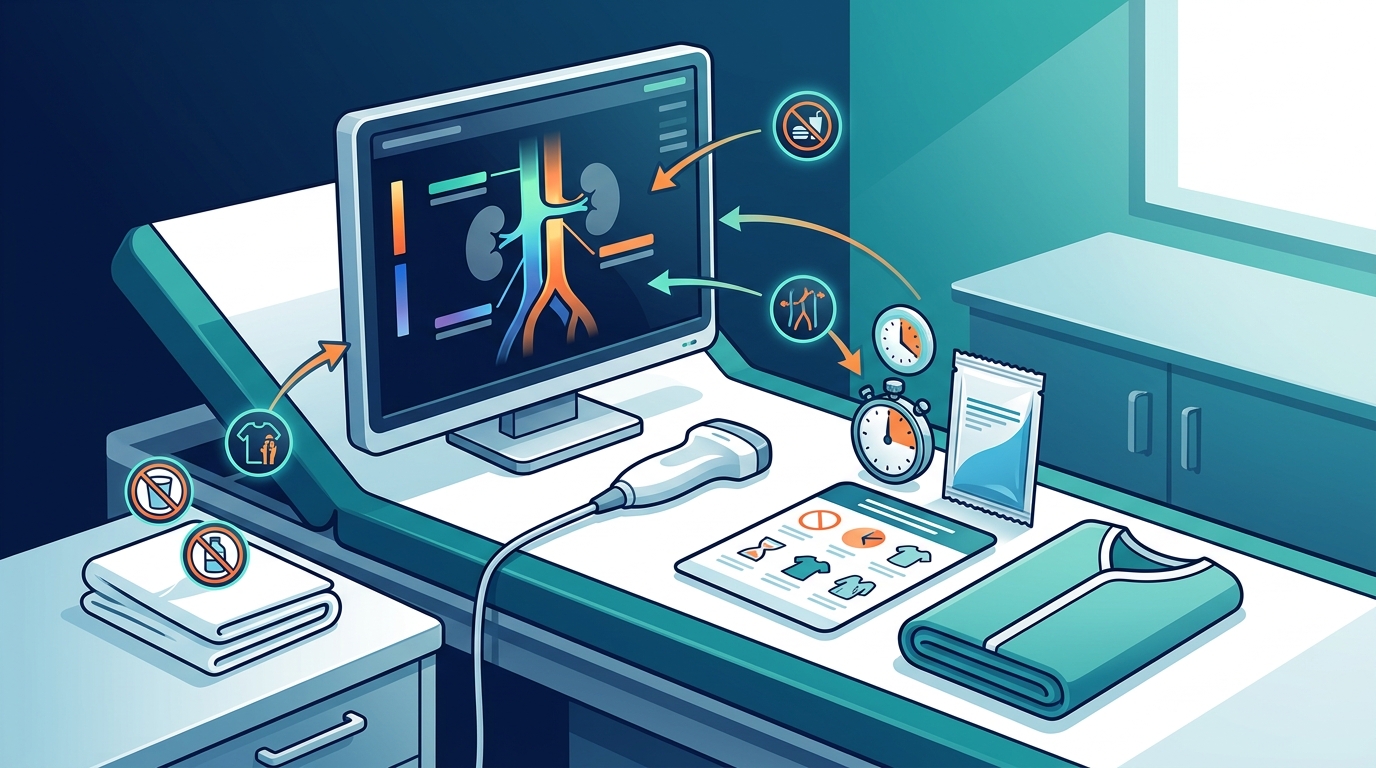
You will typically be instructed to fast for 6 to 8 hours prior to your appointment. This means no food or drink after midnight the night before your scan. Fasting reduces the amount of gas in your stomach and intestines, allowing the sonographer to get a clearer view of the deep abdominal veins. Dehydration can also thicken the blood, potentially affecting flow dynamics, so while you must fast, you should avoid becoming overly dehydrated unless instructed otherwise by your provider.
Clothing and Comfort
Wear loose, comfortable clothing to your appointment. You will likely need to change into a hospital gown that opens in the front or back, depending on the specific veins being examined. Removing jewelry and belts from your waist area will facilitate the process. At our Fayetteville and Atlanta locations, we ensure our exam rooms are warm and private to help you relax during the scan.
Medication and Dietary Considerations
While fasting is the primary preparation step, your medication regimen requires careful attention. Do not stop taking any prescribed medications without explicit approval from your primary care physician or vascular specialist.
Managing Medications
If you take blood thinners, such as warfarin or apixaban, continue taking them as prescribed. These medications do not interfere with the ultrasound imaging process. However, if you have diabetes and take insulin or oral hypoglycemics, you must coordinate with your doctor regarding your dosage on the day of the fast. Skipping meals while taking these drugs can lead to dangerous hypoglycemia.
Hydration Strategy
Although you must fast, staying hydrated in the days leading up to the test is beneficial. Well-hydrated veins are easier to visualize and compress during the exam. If you are scheduled for a renal artery duplex or abdominal venous duplex, your provider may ask you to drink a specific amount of water before the test to distend your bladder, which acts as an acoustic window for viewing pelvic veins.
What to Expect During the Procedure
The abdominal venous duplex scan is performed in our vascular lab by certified vascular technologists, such as Brian Sapp, RVT, RPhS, who specializes in advanced venous imaging. The entire process typically takes between 30 to 60 minutes, depending on the complexity of your case. (Duplex ultrasound MedlinePlus)
The Imaging Process
You will lie on your back on the examination table. The sonographer will apply a warm, water-based gel to your abdomen. This gel eliminates air pockets between the skin and the transducer, ensuring optimal sound wave transmission. The technologist will then press a handheld device called a transducer against your skin, moving it in specific patterns to capture images of the inferior vena cava, renal veins, and iliac veins.
Venous reflux ultrasound is a technique used to assess the backward flow of blood in veins, which is critical for diagnosing venous insufficiency. During the scan, you may be asked to hold your breath or change positions to help the technologist visualize different angles. You might also feel slight pressure as the transducer compresses the veins to check for patency.
Diagnostic Accuracy
The accuracy of this scan relies heavily on the skill of the technologist and the quality of the equipment. At Truffles Vein Specialists, we utilize state-of-the-art ultrasound technology to ensure high-resolution imaging. Our team is trained to distinguish between arterial and venous flow, as well as to identify subtle compressions that might be missed by less experienced operators.
Post-Procedure Care and Results
One of the significant advantages of an abdominal venous duplex scan is the minimal recovery time required. Because the procedure is non-invasive, you can resume your normal activities immediately after the appointment.
Immediate Aftercare
Once the scan is complete, the sonographer will wipe off the gel. You can get dressed and leave the facility right away. There are no restrictions on driving, eating, or working following the test. If you were fasting, it is advisable to have a light meal ready for when you return home to stabilize your blood sugar levels.
Interpreting Results
Your physician will review the images and generate a detailed report. If the scan reveals normal blood flow, you can be reassured that your abdominal veins are functioning correctly. If abnormalities are detected, such as a blood clot or compression, your doctor will discuss the next steps. This may include further testing, medication management, or referral to a vein specialist for treatment options like sclerotherapy or VenaSeal.
According to the Society for Vascular Surgery, early diagnosis of venous thromboembolism through duplex ultrasound significantly reduces the risk of long-term complications. Timely intervention can prevent the progression of chronic venous disease and improve your overall quality of life. (Venous Duplex I)
Key Takeaways
- Fasting is mandatory: Avoid food and drink for 6-8 hours before your scan to reduce bowel gas interference.
- Wear loose clothing: This facilitates easy access to your abdomen and ensures comfort during the exam.
- Continue medications: Do not stop blood thinners or other prescriptions without consulting your doctor first.
- Non-invasive nature: The procedure requires no needles, incisions, or anesthesia, allowing for immediate return to daily activities.
- Certified expertise: Our vascular lab is staffed by RVT and RPhS certified professionals ensuring diagnostic precision.
- Comprehensive coverage: The scan evaluates the inferior vena cava, renal veins, and iliac veins for clots or compression.
- Georgia's premier care: Truffles Vein Specialists is the highest-rated and largest independently owned vein practice in the state.
Frequently Asked Questions
Do I need to fast for an abdominal venous duplex scan?
Yes, fasting for 6 to 8 hours prior to the appointment is standard. This reduces gas in the digestive tract, which can obscure the ultrasound images of the deep abdominal veins. (Duplex ultrasound MedlinePlus)
Is the abdominal venous duplex scan painful?
No, the procedure is painless. You may feel slight pressure from the transducer, but it is generally well-tolerated. The gel used is warm and comfortable.
How long does the scan take?
The scan typically takes between 30 to 60 minutes. The duration depends on the specific veins being examined and the clarity of the images obtained.
Can I drive myself home after the scan?
Yes, you can drive yourself home. There are no sedatives or anesthesia involved in the procedure, so your reflexes and judgment remain unaffected.
What conditions does this scan diagnose?
This scan diagnoses deep vein thrombosis (DVT), iliac vein compression, renal vein thrombosis, and inferior vena cava obstruction. It is also used to evaluate unexplained leg swelling.
Do I need a referral for this test?
While a referral from your primary care physician is helpful, you can also schedule a free vein screening at Truffles Vein Specialists. Our specialists will determine if an abdominal venous duplex is necessary for your specific symptoms.
Are there any risks associated with the scan?
There are no known risks associated with abdominal venous duplex scans. It does not use ionizing radiation, making it safe for repeated use if monitoring is required.
Schedule Your Screening
Do not let abdominal vein issues go undiagnosed. Early detection is key to preventing serious complications like blood clots and chronic swelling. Truffles Vein Specialists offers advanced diagnostic precision and compassionate care across Georgia. Our team of experts, including Dr. Paul Feldman and Dr. Christopher Perez, is dedicated to helping you look and feel your best.
Take the first step toward better vascular health. Schedule your abdominal venous duplex scan today at one of our convenient locations in Atlanta, Fayetteville, Peachtree City, or Newnan. Contact us at 678-833-1444 to book your appointment or request a free vein screening to assess your risk.