

Vein disease affects millions of people across the United States, with estimates suggesting that up to 23% of adults may suffer from varicose or spider veins. Medical research indicates that early intervention not only improves cosmetic appearance but also prevents progression to more serious conditions like chronic venous insufficiency. Understanding the specific mechanisms of treatment is crucial for making an informed decision about your vascular health.
What Is Sclerotherapy?
Sclerotherapy is a minimally invasive procedure that has been the gold standard for treating spider veins and small varicose veins for decades. The term sclerotherapy is defined as the injection of a chemical solution into a vein to cause it to collapse and fade.
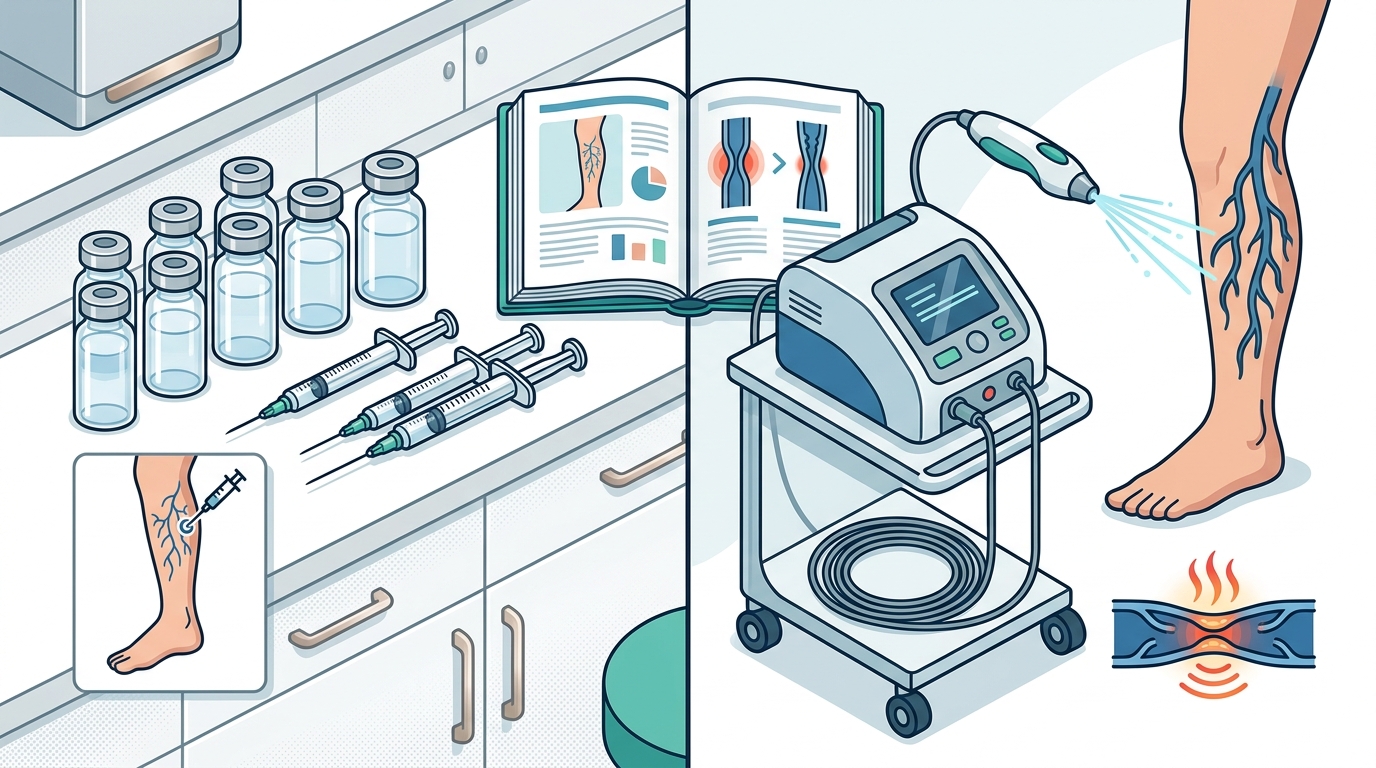
During this treatment, a specialist injects a specialized sclerosing agent directly into the affected vein. This solution irritates the vein lining, causing it to stick together and close. Over time, the body naturally absorbs the closed vein, and blood is rerouted to healthier veins nearby. This method is particularly effective for superficial veins that are close to the skin's surface.
At Truffles Vein Specialists, we utilize advanced techniques including Foam Sclerotherapy and Ultrasound Guided Sclerotherapy to ensure precision and comfort. Foam sclerotherapy is often preferred for larger veins because the foam displaces blood more effectively than liquid solutions, allowing the sclerosing agent to contact the vein walls more thoroughly.
What Is Laser Vein Ablation?
Laser vein ablation, often referred to as endovenous laser treatment (EVLT), uses thermal energy to seal off diseased veins. Laser vein ablation is defined as the use of concentrated light energy to generate heat that damages and closes the vein wall from the inside.
This procedure involves inserting a tiny fiber optic cable into the vein under ultrasound guidance. The laser emits energy that heats the vein, causing the collagen in the vein wall to contract and the vein to seal shut. Unlike sclerotherapy, which relies on a chemical reaction, laser ablation relies on thermal energy to achieve closure.
This method is typically reserved for larger varicose veins, such as the great saphenous vein, which is the most common source of venous insufficiency. Clinical studies show that laser ablation has a high success rate in treating these larger truncal veins with minimal downtime.
Key Differences: Procedure and Recovery
While both treatments aim to improve venous health, the patient experience differs significantly between the two.
Procedure Experience
Sclerotherapy is performed entirely with injections. Patients may feel a slight sting or burning sensation during the injection, but the procedure is generally quick and can be done in an office setting without anesthesia. In contrast, laser ablation requires a small incision to insert the laser fiber. It is often performed under local anesthesia or tumescent anesthesia to numb the area around the vein.
Recovery and Downtime
Recovery from sclerotherapy is typically faster. Patients can usually resume normal activities immediately, though they are advised to wear compression stockings for a specified period to aid healing. Walking is encouraged to promote blood flow. Laser ablation also offers a quick recovery, but patients may experience more bruising and tenderness along the treated vein path. Both procedures require avoiding strenuous exercise for a short period.
Compression Requirements
Compression therapy is critical for both treatments. However, the duration and type of compression may vary. Post-procedure instructions at Truffles Vein Specialists emphasize the importance of compliance with compression guidelines to prevent recurrence and ensure optimal results.
Efficacy and Ideal Candidates
Choosing the right treatment depends on the size, location, and severity of your veins.
| Feature | Sclerotherapy | Laser Vein Ablation |
|---|---|---|
| Best For | Spider veins, small varicose veins | Larger varicose veins, truncal veins |
| Method | Chemical injection | Thermal energy (heat) |
| Invasiveness | Minimally invasive (injections) | Minimally invasive (fiber insertion) |
| Recovery Time | Immediate return to activities | Short downtime, possible bruising |
| Success Rate | High for superficial veins | Very high for larger veins |
For patients with spider veins, sclerotherapy is often the first line of defense. However, if the underlying cause is venous reflux in a larger vein, laser ablation or Radio-Frequency Closure may be necessary to address the root problem. Expert consensus suggests that a comprehensive venous ultrasound is essential to determine the correct treatment path.
Cost and Insurance Considerations
The cost of vein treatment varies based on the number of veins treated and the complexity of the case. Generally, sclerotherapy is less expensive per session than laser ablation because it does not require specialized laser equipment or anesthesia.
Insurance coverage often depends on medical necessity. If the vein disease causes symptoms like pain, swelling, or skin changes, insurance may cover the treatment. Cosmetic treatments for purely aesthetic concerns are typically out-of-pocket. Payment plans are available to help manage costs.
At Truffles Vein Specialists, we provide transparent pricing and help patients navigate insurance claims. Our team ensures that you understand the financial implications before proceeding with any treatment.
Key Takeaways
- Treatment Mechanism: Sclerotherapy uses chemical injections, while laser ablation uses thermal energy to close veins.
- Target Veins: Sclerotherapy is ideal for spider veins and small varicose veins. Laser ablation is better for larger, deeper veins.
- Recovery: Both procedures offer quick recovery, but sclerotherapy typically has less bruising and tenderness.
- Diagnostic Importance: A venous ultrasound is required to determine the underlying cause of vein disease before treatment.
- Expert Care: Truffles Vein Specialists offers both treatments, ensuring personalized care for every patient.
- Insurance: Medically necessary treatments may be covered by insurance, while cosmetic treatments are not.
- Long-term Results: Both treatments are highly effective, but new veins can develop over time, requiring maintenance.
Frequently Asked Questions
Is sclerotherapy painful?
Most patients report minimal discomfort during sclerotherapy. The injection may cause a brief sting or burning sensation, but it is generally well-tolerated. Compression stockings help reduce post-procedure soreness.
How long does laser vein ablation take?
Laser vein ablation is a relatively quick procedure, typically taking 30 to 60 minutes depending on the number of veins being treated. It is performed in an outpatient setting.
Can I combine sclerotherapy and laser treatment?
Yes, it is common to combine both treatments. Laser ablation may be used to treat the larger underlying veins, while sclerotherapy addresses the smaller spider veins that remain. This comprehensive approach yields the best cosmetic and functional results.
What is the success rate of sclerotherapy?
Sclerotherapy has a high success rate, with many patients seeing significant improvement after just one or two sessions. However, multiple sessions may be needed for optimal results, especially for extensive vein disease.
Do I need a referral to see a vein specialist?
At Truffles Vein Specialists, you can schedule a free vein screening without a referral. Our team will evaluate your condition and recommend the appropriate treatment plan.
Are there any risks associated with these treatments?
Both treatments are safe when performed by qualified specialists. Potential risks include bruising, swelling, and temporary discoloration of the skin. Rare complications include blood clots or allergic reactions to the sclerosing agent.
How soon can I exercise after treatment?
Light walking is encouraged immediately after both procedures to promote circulation. Strenuous exercise, such as running or heavy lifting, should be avoided for about one to two weeks, depending on your doctor's advice.
Schedule Your Consultation
Don't let vein disease impact your quality of life. Whether you need sclerotherapy for spider veins or laser ablation for larger varicose veins, Truffles Vein Specialists is here to help. As Georgia's premier vein treatment center, we provide advanced diagnostic precision and compassionate care.
Contact us today to schedule an appointment and take the first step toward healthier, more confident legs. Our team of experts, including Dr. Paul Feldman and Dr. Christopher Perez, is dedicated to helping you look and feel your best.