
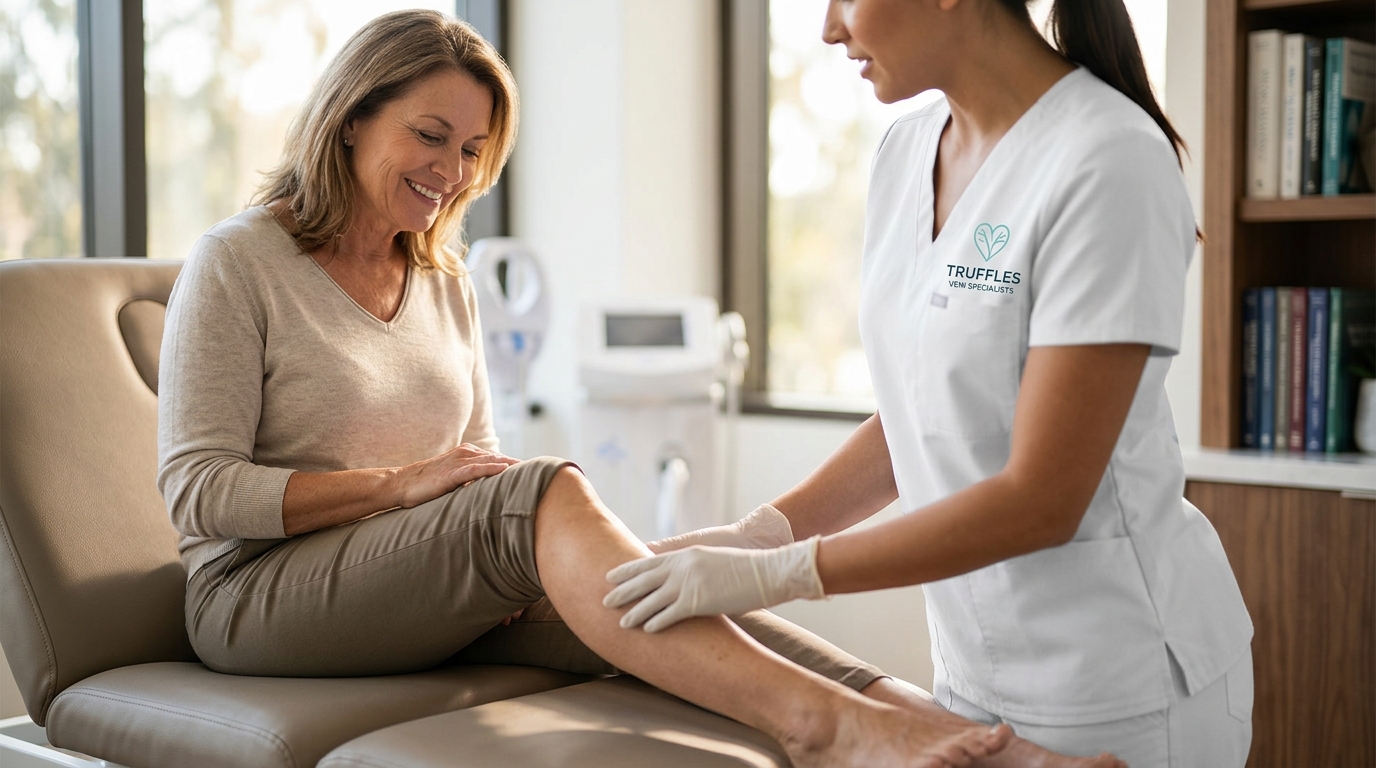
Spider veins, medically known as telangiectasias, affect millions of individuals across the United States, creating visible, web-like patterns on the legs and face. According to the American Academy of Dermatology, these minor blood vessels become visible when they dilate and sit closer to the skin surface. While they are often considered a cosmetic concern, they can sometimes signal underlying venous insufficiency. At Truffles Vein Specialists, we prioritize advanced, minimally invasive solutions that restore comfort and confidence without the downtime associated with traditional surgery. Our approach focuses on precision diagnostics and targeted therapies tailored to your unique vascular anatomy. (Experts in Vein Treatment)
Understanding Spider Veins and Their Causes
Spider veins are small, dilated blood vessels that appear near the surface of the skin. They often look like red, blue, or purple web-like patterns. Telangiectasia is the medical term for these tiny, damaged veins. While genetics play a significant role, other factors include hormonal changes, prolonged standing, and obesity. Unlike varicose veins, which are larger and swollen, spider veins are typically smaller and flatter. However, they can still cause discomfort, itching, or a burning sensation.
Many patients assume that spider veins are purely cosmetic. This is a common misconception. In many cases, spider veins are a symptom of underlying venous reflux. When the valves in your veins fail to close properly, blood pools in the lower extremities. This increased pressure forces blood into smaller surface vessels, causing them to expand. Addressing the root cause is essential for long-term results. Our team at Truffles Vein Specialists uses advanced imaging to map your venous system before recommending any treatment.
The Role of Advanced Diagnostic Ultrasound
Effective treatment begins with an accurate diagnosis. You cannot treat what you cannot see. Traditional visual inspection is insufficient for diagnosing the source of venous pressure. Venous Ultrasound for DVT and reflux is the standard for evaluating blood flow in the legs. This non-invasive test uses sound waves to create images of your veins. It helps us identify any underlying venous insufficiency that may be contributing to your spider veins.
At Truffles Vein Specialists, we utilize high-resolution venous duplex imaging. This technology allows our specialists to visualize blood flow in real-time. We can detect even minor valve failures in the deep or superficial venous systems. This precision ensures that we do not just treat the symptom but also address the cause. Treating spider veins without addressing underlying reflux often leads to recurrence. Our diagnostic process is thorough, ensuring that every patient receives a personalized treatment plan based on their specific vascular health.
Sclerotherapy: The Gold Standard for Removal
Sclerotherapy remains the most effective and widely used treatment for spider veins. This procedure involves injecting a specialized solution directly into the affected vein. The solution irritates the vein lining, causing it to collapse and seal shut. Over time, the body naturally absorbs the treated vein, and blood is rerouted to healthier veins. Foam Sclerotherapy is often used for larger veins, while Visible Sclerotherapy is ideal for finer spider veins.
One of the primary advantages of sclerotherapy is its minimal invasiveness. The procedure is performed in our office with no general anesthesia required. Patients typically experience only minor discomfort during the injection. Post-procedure, we recommend wearing compression stockings to support the healing process. Most patients see significant improvement after just one or two sessions. For those with more complex venous issues, Ultrasound Guided Sclerotherapy provides an added layer of precision, ensuring the solution reaches the exact target area.
Surface Laser and Radiofrequency Treatments
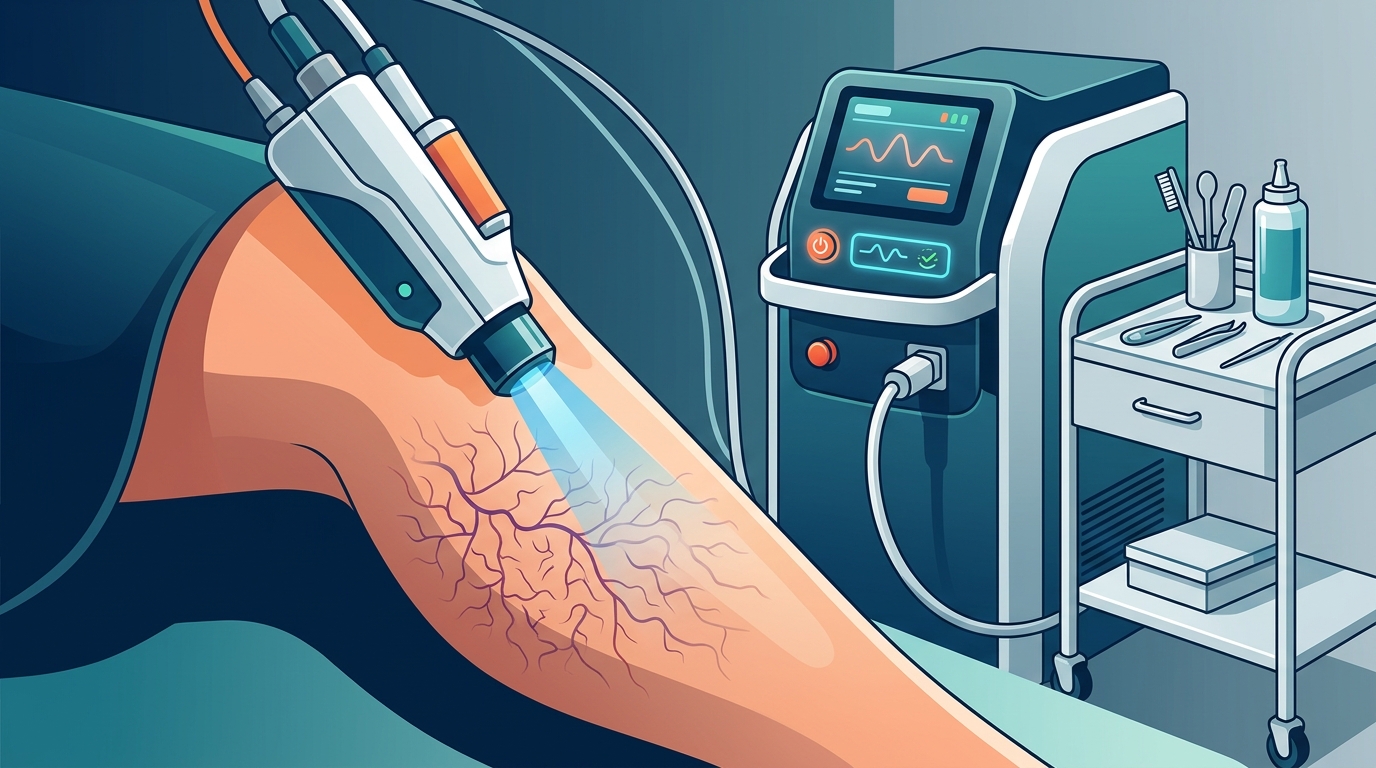
For patients who prefer needle-free options, laser therapy offers an effective alternative. Laser Vein Ablation uses concentrated light energy to heat and destroy the spider veins. The heat causes the veins to collapse and fade away. This method is particularly useful for facial spider veins or areas where sclerotherapy injections are difficult to administer. Radio-Frequency Closure is another advanced option that uses radiofrequency energy to heat and seal the vein from the inside.
Laser treatments are generally well-tolerated, with minimal downtime. Some patients may experience temporary redness or swelling at the treatment site. The number of sessions required depends on the size and location of the veins. While sclerotherapy is often the first line of defense for leg veins, laser therapy provides excellent results for smaller, more superficial vessels. Our specialists will help you determine which modality is best suited for your skin type and vein characteristics. We also offer Varithena, a newer foam-based treatment that offers a minimally invasive alternative for certain venous conditions.
Comparing Treatment Modalities
Choosing the right treatment depends on several factors, including the size of the veins, their location, and your medical history. The table below provides a general comparison of the most common non-surgical options available at Truffles Vein Specialists.
| Treatment Type | Best For | Invasiveness | Downtime | Typical Sessions |
|---|---|---|---|---|
| Sclerotherapy | Leg spider veins and reticular veins | Minimally Invasive (Injection) | Minimal | 1-3 |
| Laser Vein Ablation | Facial veins and small leg veins | Non-Invasive (External) | None | 1-2 |
| Radio-Frequency Closure | Larger varicose veins | Minimally Invasive (Catheter) | Minimal | 1 |
| Varithena | Great Saphenous Vein insufficiency | Minimally Invasive (Injection) | Minimal | 1 |
Key Takeaways
- Spider veins are often a sign of underlying venous insufficiency, not just a cosmetic issue.
- Advanced diagnostic ultrasound is critical for identifying the root cause of venous pressure.
- Sclerotherapy is the most effective treatment for most leg spider veins, with high success rates.
- Laser therapy offers a needle-free alternative, particularly for facial veins or sensitive areas.
- Truffles Vein Specialists is Georgia's largest independently owned vein practice, ensuring comprehensive care.
- Treatment plans are personalized based on ultrasound results and patient goals.
- Early intervention can prevent the progression of vein disease and reduce long-term complications.
Frequently Asked Questions
Are spider veins dangerous?
Spider veins are generally not dangerous, but they can indicate underlying venous insufficiency. If left untreated, this condition can progress to more serious issues like varicose veins or blood clots. Early diagnosis is key to preventing complications.
Does sclerotherapy hurt?
Most patients report minimal discomfort during sclerotherapy. The injections are very fine, and the sensation is often described as a slight pinch or sting. We take steps to ensure your comfort throughout the procedure.
How long does it take to see results?
Results from sclerotherapy typically appear within three to six weeks. Laser treatments may show improvement immediately, but full results can take several weeks as the body heals. Multiple sessions may be required for optimal outcomes.
Can spider veins come back after treatment?
While treated veins will not return, new spider veins can develop over time. This is often due to genetic predisposition or lifestyle factors. Maintaining a healthy weight and staying active can help reduce the risk of new veins forming.
Is there downtime after treatment?
There is minimal to no downtime for most non-surgical treatments. You can typically resume normal activities immediately, though we recommend avoiding strenuous exercise for a few days. Compression stockings are often prescribed to aid healing.
What is the difference between foam and liquid sclerotherapy?
Liquid sclerotherapy is used for smaller spider veins, while foam sclerotherapy is used for larger veins. The foam form allows the solution to stay in contact with the vein wall longer, making it more effective for larger vessels.
Do you offer free vein screenings?
Yes, we offer free vein screenings to help you understand your venous health. These screenings include a physical exam and often a diagnostic ultrasound to assess blood flow. Contact us to schedule your appointment.
Schedule Your Consultation
Don't let spider veins hold you back. At Truffles Vein Specialists, we provide Georgia's most trusted vein care with advanced diagnostic precision. Our team of specialists, including Dr. Paul Feldman and Dr. Christopher Perez, is dedicated to helping you look and feel your best. We invite you to schedule an appointment today to discuss your treatment options. You can also schedule a free vein screening to get started on your journey to healthier legs. For more information about our services, visit our vein treatments page or read our blog for expert insights on vein health.