

Chronic Restless Leg Syndrome (RLS) affects millions of people, causing an uncontrollable urge to move the legs, often accompanied by uncomfortable sensations. While many patients seek neurological solutions, a significant subset of cases stems from underlying venous insufficiency. According to the National Institutes of Health, venous disease is a primary contributor to leg discomfort that mimics RLS, highlighting the need for vascular evaluation before assuming a neurological origin. (Experts in Vein Treatment)
Understanding the Link Between Veins and RLS
Restless Leg Syndrome, also known as Willis-Ekbom Disease, is characterized by an overwhelming urge to move the legs, usually due to uncomfortable or unpleasant sensations in the limbs. These sensations typically worsen during periods of rest or inactivity, such as sitting or lying down, and are partially or totally relieved by movement.
However, the line between neurological RLS and venous-related leg discomfort can be blurry. Venous RLS is a condition where symptoms identical to classic RLS are caused by poor blood flow in the legs. When veins fail to pump blood efficiently back to the heart, blood pools in the lower extremities. This pooling increases pressure in the leg tissues, leading to the exact tingling, crawling, and aching sensations that patients describe as RLS.
Many individuals suffer for years, visiting neurologists and trying various medications, only to find little relief. The root cause remains untreated because the focus is on the brain rather than the veins. Recognizing that vein disease can mimic neurological disorders is the first step toward effective treatment.
Venous Reflux and RLS Symptoms
Venous reflux occurs when the valves in your leg veins weaken or become damaged. These valves are designed to keep blood flowing upward toward the heart. When they fail, blood flows backward and pools in the legs. This condition, known as chronic venous insufficiency, is a leading cause of leg pain and swelling.
The symptoms of venous reflux often overlap significantly with RLS. Patients may experience:
- A throbbing or cramping feeling in the legs.
- Burning or itching sensations, particularly below the knee.
- Swelling in the lower legs and feet.
- Worsening discomfort after prolonged sitting or standing.
According to the American Venous Forum, venous insufficiency affects approximately 25% of adults in the United States. This high prevalence means that a substantial number of RLS diagnoses may actually be misdiagnosed venous issues. If your leg discomfort improves with elevation or compression, it is highly likely that the source is vascular rather than neurological.
The Diagnostic Process at Truffles
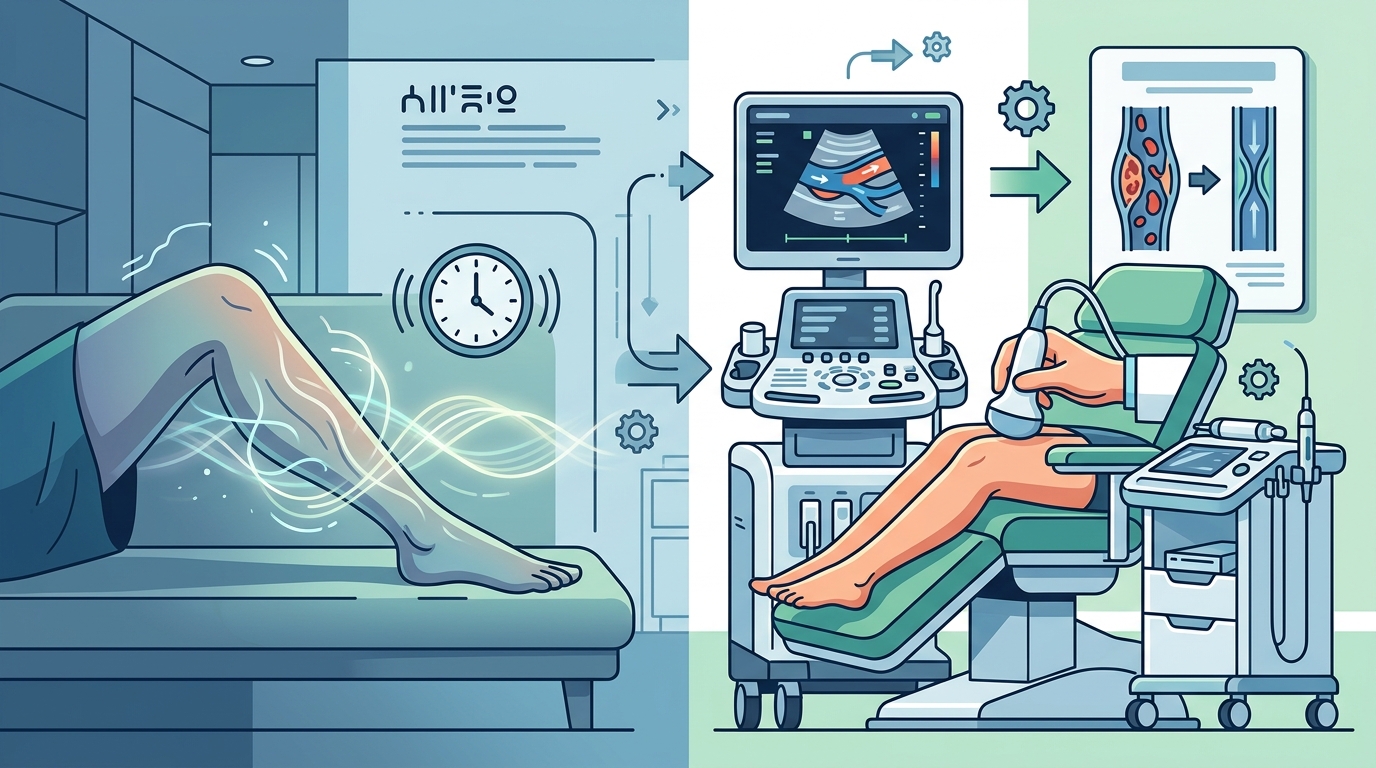
At Truffles Vein Specialists, we utilize advanced diagnostic tools to distinguish between neurological RLS and venous-related symptoms. The cornerstone of our evaluation is the Venous Duplex Ultrasound. This non-invasive test uses sound waves to create images of your veins and assess blood flow.
The process involves:
- Physical Examination: We check for visible varicose veins, swelling, and skin changes.
- Ultrasound Mapping: We map the entire venous system in your legs to identify any areas of reflux or blockage.
- Reflux Analysis: We measure the duration and severity of blood flow reversal in your veins.
This precise diagnostic approach allows us to pinpoint the exact source of your discomfort. If we find significant venous reflux, we can confidently attribute your RLS-like symptoms to vein disease. This clarity is crucial for determining the right treatment path. For more information on our testing methods, visit our Vascular Testing page.
Treatment Options for Venous RLS
If your RLS symptoms are caused by venous insufficiency, treating the underlying vein disease can provide significant relief. Truffles Vein Specialists offers a range of minimally invasive treatments designed to restore healthy blood flow and eliminate symptoms.
Radio-Frequency Closure (RFA)
RFA is a gold-standard treatment for varicose veins. It uses heat energy to seal off the affected vein, redirecting blood flow to healthier veins. The procedure is performed under local anesthesia, and most patients return to normal activities within 24 hours.
Laser Vein Ablation
Similar to RFA, laser ablation uses laser energy to close diseased veins. This method is highly effective for larger veins and offers precise control over the treatment area. It is a safe and efficient option for patients seeking long-term relief from venous symptoms.
VenaSeal and Varithena
For patients who prefer needle-free or foam-based options, we offer VenaSeal and Varithena. VenaSeal uses a medical-grade adhesive to seal the vein, eliminating the need for tumescent anesthesia. Varithena uses a foam sclerosant to collapse the vein. Both options provide excellent outcomes with minimal downtime.
Treating the vein disease not only resolves the physical symptoms of RLS but also prevents further complications such as blood clots and skin ulcers. By addressing the root cause, we help patients regain their quality of life. Learn more about our Vein Treatments to see which option is best for you.
Key Takeaways
- Vein Disease Mimics RLS: Venous insufficiency can cause symptoms identical to Restless Leg Syndrome, including tingling, aching, and an urge to move.
- Diagnostic Accuracy: A Venous Duplex Ultrasound is essential to distinguish between neurological and vascular causes of leg discomfort.
- High Prevalence: Chronic venous insufficiency affects a significant portion of the adult population, making it a common culprit for misdiagnosed RLS.
- Effective Treatments: Minimally invasive procedures like RFA, Laser Ablation, VenaSeal, and Varithena can resolve venous RLS symptoms.
- Truffles Expertise: As Georgia's largest independently owned vein practice, Truffles Vein Specialists has over 20 years of experience in advanced vein care.
- Early Intervention: Treating venous disease early can prevent progression to more severe conditions like deep vein thrombosis (DVT).
- Comprehensive Care: Our team includes board-certified specialists and certified sonographers to ensure accurate diagnosis and treatment.
Frequently Asked Questions
Can vein treatment cure Restless Leg Syndrome?
If your RLS symptoms are caused by venous insufficiency, treating the underlying vein disease can effectively resolve the symptoms. However, if the cause is purely neurological, vein treatment may not provide relief. A proper diagnosis is essential to determine the cause.
How is venous RLS different from neurological RLS?
Venous RLS is caused by poor blood flow and pooling in the legs, often accompanied by swelling and visible varicose veins. Neurological RLS is related to brain chemistry and nerve function, typically without the physical signs of venous disease.
Is a Venous Duplex Ultrasound painful?
No, the Venous Duplex Ultrasound is a non-invasive and painless procedure. It uses sound waves to create images of your veins, allowing us to assess blood flow without any needles or incisions.
What are the benefits of VenaSeal for RLS patients?
VenaSeal offers a needle-free option for treating varicose veins. It uses a medical adhesive to seal the vein, which can help alleviate symptoms caused by venous reflux without the discomfort of traditional anesthesia.
How long does it take to recover from vein treatment?
Most patients experience minimal downtime. You can typically return to normal activities within 24 hours. However, strenuous exercise may need to be avoided for a short period. Our team will provide specific post-procedure instructions.
Does insurance cover vein treatment for RLS?
Insurance coverage depends on the medical necessity of the treatment. If your vein disease is causing symptoms like pain or swelling, it is often covered. We can help you navigate the insurance process to ensure you receive the care you need.
Can compression stockings help with venous RLS?
Compression stockings can provide temporary relief by improving blood flow and reducing swelling. However, they do not cure the underlying vein disease. Treating the source of the reflux is the only way to achieve long-term relief.
Schedule Your Consultation
If you are suffering from Restless Leg Syndrome, do not assume it is purely neurological. Schedule a free vein screening with Truffles Vein Specialists to determine if vein disease is the cause. Our expert team is ready to help you find relief and improve your quality of life. Visit our Schedule and Appointment page to book your consultation today.