

Varicose veins affect approximately 23% of adults globally, often progressing from cosmetic concerns to sources of significant physical discomfort. According to the American Venous Forum, early intervention is critical to preventing chronic venous insufficiency and reducing long-term healthcare costs. Ignoring the pain, swelling, and heaviness associated with vein disease can lead to more severe complications, including skin changes and ulcers. This guide details the most effective, evidence-based treatments available today, with a focus on advanced, minimally invasive options that provide rapid relief and lasting results.
Understanding the Root Cause of Vein Pain
Before selecting a treatment, it is vital to understand the mechanism behind the pain. Varicose veins are enlarged, twisted veins that typically appear in the legs. They occur when the tiny valves within the veins weaken and allow blood to flow backward or pool. This condition is medically defined as Chronic Venous Insufficiency.
When blood pools in the veins, the pressure increases, causing the vein walls to stretch and bulge. This pressure leads to the characteristic symptoms of pain, throbbing, and swelling. Without proper diagnosis, patients often mistake these symptoms for general fatigue or arthritis. However, the underlying issue is vascular. A comprehensive venous ultrasound is the gold standard for diagnosis. This non-invasive test maps the blood flow and identifies exactly where the valve failure is occurring. At Truffles Vein Specialists, we utilize advanced diagnostic precision to ensure every treatment plan is tailored to the specific anatomy of the patient.
VenaSeal: The Glue Solution
VenaSeal is a revolutionary, non-thermal, non-tumescent technique for closing varicose veins. Unlike traditional methods that rely on heat or chemical irritation, VenaSeal uses a medical-grade cyanoacrylate adhesive to seal the affected vein shut. This approach has gained significant traction among patients seeking the most comfortable recovery experience possible.
Why Choose VenaSeal?
The primary advantage of VenaSeal is the elimination of tumescent anesthesia. Traditional treatments require injecting large amounts of fluid around the vein to protect surrounding tissues from heat. This injection process can be painful and cause significant bruising. VenaSeal bypasses this step entirely. Patients typically report minimal discomfort during the procedure and do not require compression stockings afterward, which is a major quality-of-life improvement. The adhesive creates an immediate seal, stopping the reflux of blood instantly. This makes it an ideal option for patients with needle phobias or those who cannot tolerate compression therapy.
Recovery and Efficacy
Recovery from VenaSeal is remarkably fast. Most patients return to their normal activities within 24 hours. The treated vein is gradually absorbed by the body, and blood is rerouted to healthier veins. Clinical studies have shown high closure rates comparable to thermal ablation methods, but with significantly less post-procedure pain. For more details on this specific technology, you can explore our VenaSeal treatment page.
Radio-Frequency Closure (RFA)
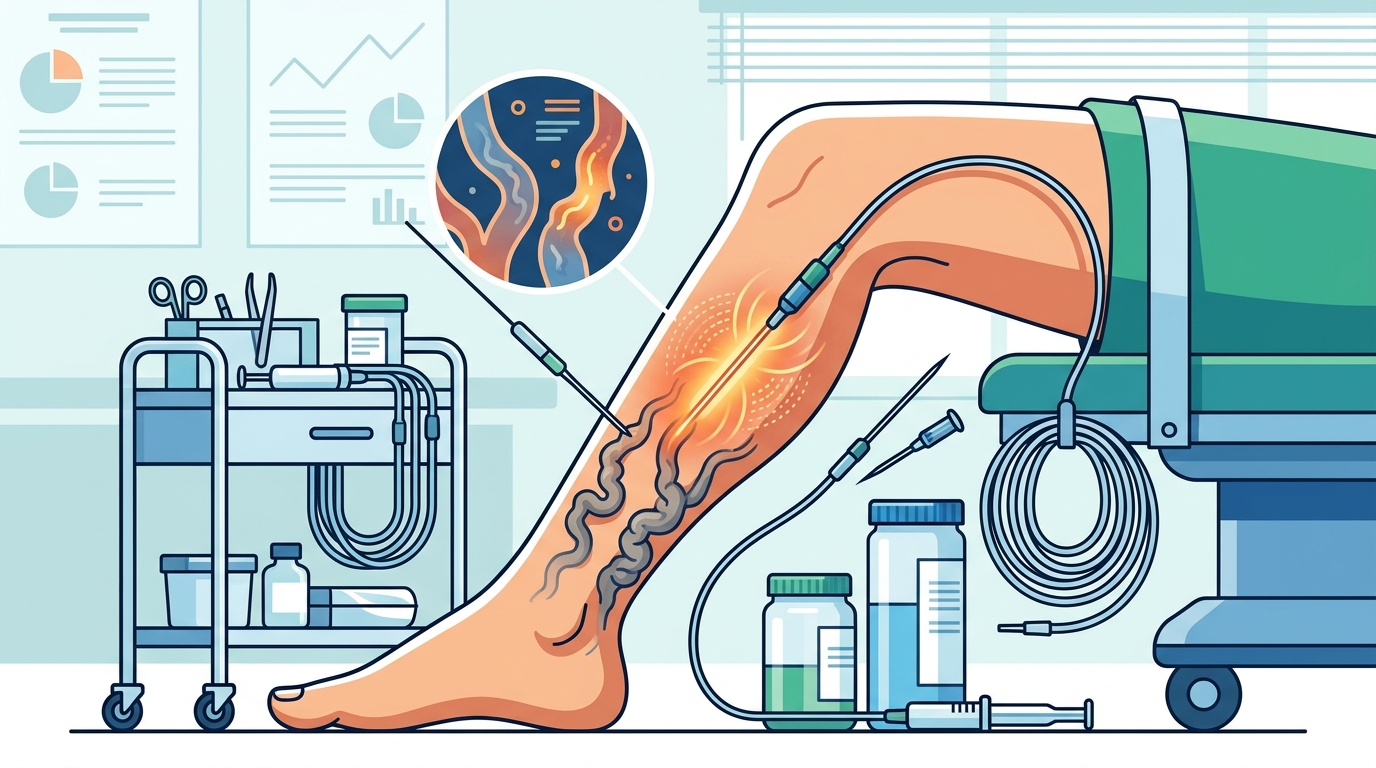
Radio-Frequency Closure, often referred to as RFA, is one of the most established and widely used treatments for varicose veins. It utilizes thermal energy to heat the vein wall, causing it to collapse and seal shut. This procedure is performed under local anesthesia and is typically completed in under an hour.
The Procedure Process
During RFA, a catheter is inserted into the diseased vein through a small incision. The catheter delivers radiofrequency energy to the vein wall. As the catheter is withdrawn, the heat causes the collagen in the vein wall to contract and the vein to close. The body then naturally reroutes blood flow to adjacent healthy veins. This process is highly effective for treating the great saphenous vein, which is a common source of reflux.
Pain Management and Compression
While RFA is minimally invasive, it does require tumescent anesthesia to protect the skin from thermal injury. This involves injecting a solution of saline, lidocaine, and epinephrine around the vein. While this ensures safety, it can cause temporary soreness or bruising. Patients are required to wear compression stockings for a specified period post-procedure to aid in healing and reduce swelling. Despite the need for compression, RFA remains a gold standard due to its long-term success rates and extensive clinical data supporting its efficacy.
Laser Vein Ablation
Laser Vein Ablation, or EVLA (Endovenous Laser Ablation), is another thermal ablation technique similar to RFA. It uses laser energy instead of radiofrequency to close the vein. The choice between RFA and laser often depends on the specific characteristics of the vein and the physician's preference.
How Laser Ablation Works
A laser fiber is inserted into the vein, and laser energy is delivered in pulses. The heat from the laser causes the vein walls to stick together and seal. Like RFA, this procedure requires tumescent anesthesia. The laser energy is absorbed by the blood and the vein wall, generating heat that destroys the vein tissue. This method is particularly effective for veins that are difficult to access with other catheters.
Comparative Efficacy
Studies indicate that both RFA and laser ablation have similar long-term closure rates, typically exceeding 95%. The choice between the two often comes down to patient comfort and specific anatomical considerations. Some patients find RFA to be slightly more comfortable due to the nature of the energy delivery, while others may prefer the precision of laser. For a deeper dive into our diagnostic capabilities, visit our Vascular Testing section.
Sclerotherapy for Spider and Varicose Veins
Sclerotherapy is a cornerstone treatment for smaller varicose veins and spider veins. It involves injecting a sclerosing agent directly into the vein, which irritates the lining, causing it to collapse and scar. Over time, the vein fades and is absorbed by the body.
Foam Sclerotherapy
For larger varicose veins, foam sclerotherapy is often preferred. The sclerosing agent is mixed with air to create a foam, which displaces blood more effectively and ensures better contact with the vein wall. This method is particularly useful for treating veins that are too large for traditional liquid sclerotherapy but too small for catheter-based ablation. Foam sclerotherapy is highly effective for treating varicose veins in the lower legs.
Ultrasound-Guided Sclerotherapy
Ultrasound-guided sclerotherapy allows physicians to visualize the vein in real-time during the injection. This precision ensures that the sclerosing agent is delivered exactly where it is needed, maximizing efficacy and minimizing the risk of complications. This technique is essential for treating deep perforator veins or veins that are not visible on the surface. For more information on our treatment options, check out our Vein Treatments page.
Treatment Comparison Matrix
Choosing the right treatment depends on the size and location of your veins, your pain tolerance, and your lifestyle. The following table summarizes the key differences between the most effective treatments.
| Treatment | Best For | Anesthesia Type | Compression Stockings | Recovery Time |
|---|---|---|---|---|
| VenaSeal | Great Saphenous Vein | Minimal (Local) | Not Required | 1-2 Days |
| Radio-Frequency Closure | Great Saphenous Vein | Tumescent (Local) | Required (1-2 Weeks) | 2-3 Days |
| Laser Vein Ablation | Great Saphenous Vein | Tumescent (Local) | Required (1-2 Weeks) | 2-3 Days |
| Foam Sclerotherapy | Medium Veins | None | Optional | 1 Day |
| Visible Sclerotherapy | Spider Veins | None | Not Required | Same Day |
Key Takeaways
- Early Diagnosis is Critical: A venous ultrasound can identify valve failure before symptoms worsen, preventing complications like ulcers.
- VenaSeal Offers Unique Comfort: It eliminates the need for tumescent anesthesia and compression stockings, offering the fastest recovery.
- Thermal Ablation is Highly Effective: Both Radio-Frequency Closure and Laser Ablation have closure rates exceeding 95% and are considered gold standards.
- Sclerotherapy Targets Smaller Veins: Foam and visible sclerotherapy are essential for treating spider veins and smaller varicose veins that catheters cannot reach.
- Georgia's Premier Care: Truffles Vein Specialists is the highest-rated and largest independently owned vein practice in Georgia, with over 1,000+ 5-star patient outcomes.
- Expert Leadership: Dr. Paul Feldman brings over 20 years of expertise to the field, ensuring top-tier diagnostic and treatment standards.
- Comprehensive Locations: Services are available in Atlanta, Fayetteville, Peachtree City, McDonough, Newnan, Griffin, Senoia, Stockbridge, Carrollton, and West Cobb.
Frequently Asked Questions
Which treatment is the least painful?
VenaSeal is widely considered the least painful option because it does not require tumescent anesthesia or compression stockings. Patients typically report minimal discomfort during and after the procedure.
How long does it take to recover from vein ablation?
Most patients can return to work and normal activities within 24 to 48 hours after thermal ablation or VenaSeal. Full resolution of bruising and swelling may take a few weeks.
Are varicose vein treatments covered by insurance?
Many insurance plans cover vein treatments if they are deemed medically necessary due to symptoms like pain, swelling, or skin changes. Cosmetic treatments for spider veins are typically not covered. You can check your eligibility by contacting our contact team.
What is the difference between foam and visible sclerotherapy?
Visible sclerotherapy uses a liquid solution and is best for tiny spider veins. Foam sclerotherapy uses a foamed solution that displaces blood, making it more effective for larger varicose veins.
Can I treat varicose veins if I have a history of blood clots?
Patients with a history of deep vein thrombosis (DVT) require careful evaluation. A thorough vascular assessment is necessary to determine if treatment is safe. Learn more about Deep Vein Thrombosis and its management.
How do I know what stage of vein disease I have?
Vein disease is staged from 0 to 6 based on visible symptoms and ultrasound findings. A free vein screening can help determine your stage and appropriate treatment. Schedule your free vein screening today.
What makes Truffles Vein Specialists different?
As Georgia's largest independently owned vein practice, we combine advanced diagnostic technology with a team of highly qualified specialists, including board-certified physicians and certified nurse practitioners.
Schedule Your Consultation
Do not let painful varicose veins dictate your daily life. Effective treatments are available that can restore comfort and confidence. Truffles Vein Specialists offers comprehensive care across multiple Georgia locations. Take the first step toward relief by scheduling your consultation today. Visit our Schedule and Appointment page to book your free vein screening and discover the best treatment plan for your unique needs.