

Spider veins, medically known as telangiectasias, affect millions of people globally, causing cosmetic concerns and occasional discomfort. According to the American Academy of Dermatology, these small, dilated blood vessels near the skin surface are extremely common, with estimates suggesting that up to 50 percent of adults may experience them at some point in their lives. While many individuals assume surgical intervention is the only path to clearance, modern vascular medicine offers several highly effective, minimally invasive alternatives. These non-surgical options provide faster recovery times and reduced risk profiles compared to traditional vein stripping procedures. Understanding the specific mechanisms of each treatment allows patients to make informed decisions about their vascular health and aesthetic goals.
Sclerotherapy: The Gold Standard
Sclerotherapy is widely recognized as the most common and effective treatment for spider veins. This procedure involves injecting a specialized solution directly into the affected vein. The solution irritates the vein lining, causing it to collapse and stick together. Over time, the body naturally absorbs the treated vein, and blood flow is rerouted to healthier veins nearby.
At Truffles Vein Specialists, this technique is performed with precision to ensure optimal cosmetic results. The treatment is particularly effective for smaller veins that are close to the skin surface. Patients typically experience minimal discomfort during the procedure, often described as a slight pinching sensation. Most individuals can return to their daily activities immediately after treatment, although wearing compression stockings is often recommended to support the healing process.
The efficacy of sclerotherapy is supported by extensive clinical data. Research published in the Journal of the American Academy of Dermatology indicates that sclerotherapy has a high success rate, with many patients seeing significant clearance after just a few sessions. This makes it a preferred choice for those seeking reliable, long-term results without the downtime associated with surgery.
Laser Vein Ablation
Laser vein ablation, also known as laser therapy, uses focused light energy to treat spider veins. This non-invasive technique is particularly useful for patients who have a fear of needles or prefer a treatment that does not involve injections. The laser emits a specific wavelength of light that is absorbed by the hemoglobin in the blood vessels. This absorption generates heat, which damages the vein wall and causes it to collapse.
One of the primary advantages of laser therapy is its precision. The laser can target very small veins with minimal impact on the surrounding skin. This makes it an excellent option for treating facial spider veins, which are often more delicate and sensitive than those on the legs. However, laser therapy may require multiple sessions to achieve desired results, especially for larger or more numerous veins.
According to the American Society for Dermatologic Surgery, laser treatment is a safe and effective option for telangiectasias. The procedure is generally well-tolerated, with most patients reporting only mild discomfort during the treatment. Recovery time is minimal, although some temporary redness or swelling may occur at the treatment site.
Foam Sclerotherapy
Foam sclerotherapy is a variation of traditional sclerotherapy that uses a foamed version of the sclerosing agent. The foam is created by mixing the liquid solution with air or gas, which allows it to displace blood more effectively within the vein. This displacement ensures that the sclerosing agent comes into direct contact with the vein walls, enhancing the treatment's effectiveness.
This method is particularly useful for treating larger veins that may not respond well to traditional liquid sclerotherapy. The foam form allows the medication to stay in contact with the vein wall for a longer period, increasing the likelihood of successful vein closure. Additionally, the foam is visible under ultrasound, allowing physicians to monitor the treatment in real-time.
Studies have shown that foam sclerotherapy can be more effective than liquid sclerotherapy for certain types of veins. A review in the Journal of Vascular Surgery highlights that foam sclerotherapy offers comparable or superior results for larger varicose veins, with a lower risk of recurrence. This makes it a valuable tool in the vascular specialist's arsenal.
Ultrasound-Guided Sclerotherapy
Ultrasound-guided sclerotherapy combines the benefits of sclerotherapy with the precision of real-time imaging. This technique uses high-frequency sound waves to visualize the veins beneath the skin. The physician can then guide the needle directly into the target vein with greater accuracy.
This approach is essential for treating deeper veins that are not visible on the surface. By using ultrasound guidance, physicians can ensure that the sclerosing agent is delivered precisely where it is needed, minimizing the risk of complications and maximizing treatment efficacy. This method is particularly important for patients with complex venous anatomy or those who have undergone previous vein treatments.
The use of ultrasound guidance has become a standard of care in many vascular clinics. According to the Society for Vascular Surgery, ultrasound-guided techniques improve the safety and outcomes of sclerotherapy, particularly for larger veins. This technology allows for a more personalized treatment plan, tailored to the individual's specific venous structure.
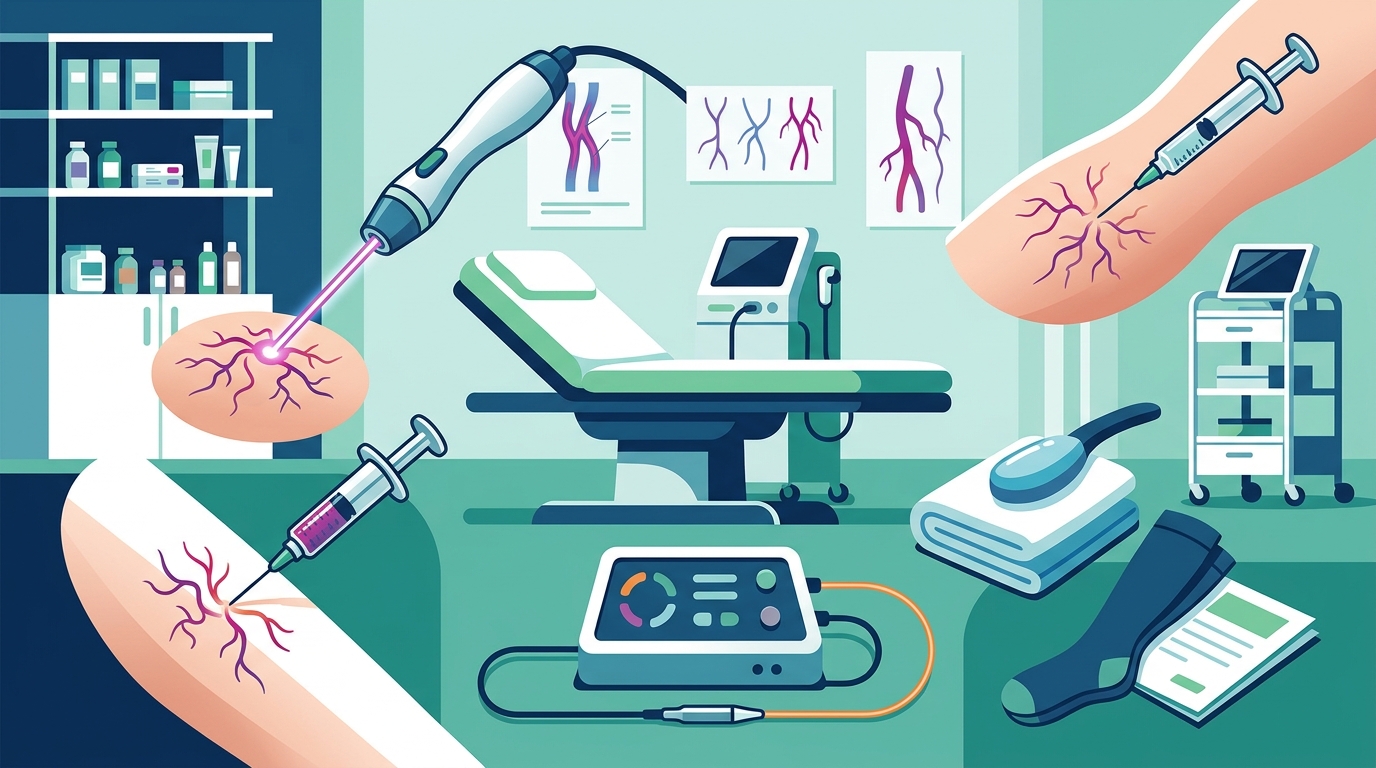
VenaSeal and Varithena
VenaSeal and Varithena represent the latest advancements in non-surgical vein treatment. VenaSeal uses a medical-grade adhesive to seal the affected vein shut. This adhesive is injected into the vein, causing it to close immediately. The body then naturally absorbs the sealed vein over time. One of the key benefits of VenaSeal is that it often eliminates the need for compression stockings post-treatment, which is a significant advantage for patient comfort and compliance.
Varithena, on the other hand, is a foam-based treatment that uses a unique sclerosing agent designed to be injected into the vein under ultrasound guidance. This treatment is particularly effective for treating the great saphenous vein, a common source of varicose veins. Varithena offers a minimally invasive alternative to traditional vein stripping, with a faster recovery time and less post-procedure pain.
Both VenaSeal and Varithena are part of the innovative treatment portfolio at Truffles Vein Specialists. These technologies reflect the clinic's commitment to providing cutting-edge care. Clinical data supports their efficacy, with studies showing high patient satisfaction rates and low complication rates. For more information on these advanced treatments, you can visit our Vein Treatments page.
Treatment Comparison
Choosing the right treatment depends on various factors, including the size and location of the veins, your medical history, and your personal preferences. The following table summarizes the key characteristics of each non-surgical option.
| Treatment | Best For | Invasiveness | Recovery Time | Typical Sessions |
|---|---|---|---|---|
| Sclerotherapy | Small to medium spider veins | Minimally Invasive | Immediate | 1-3 |
| Laser Therapy | Fine facial veins, needle-phobic patients | Non-Invasive | Immediate | 1-5 |
| Foam Sclerotherapy | Larger veins, deeper vessels | Minimally Invasive | Immediate | 1-3 |
| Ultrasound-Guided Sclerotherapy | Deep, non-visible veins | Minimally Invasive | Immediate | 1-3 |
| VenaSeal | Large varicose veins, no compression | Minimally Invasive | Immediate | 1-2 |
Key Takeaways
- Sclerotherapy is the most established treatment for spider veins, with a high success rate and minimal downtime.
- Laser therapy is ideal for needle-phobic patients or those with fine facial veins, offering a non-invasive alternative.
- Foam sclerotherapy displaces blood more effectively, making it suitable for larger veins that liquid solutions cannot treat.
- Ultrasound guidance ensures precision for deeper veins, reducing the risk of complications and improving outcomes.
- VenaSeal uses medical adhesive to seal veins, often eliminating the need for post-procedure compression stockings.
- Varithena is a foam-based option for treating the great saphenous vein, offering a minimally invasive alternative to surgery.
- Consultation is essential to determine the best treatment plan based on individual vein anatomy and medical history.
Frequently Asked Questions
Are non-surgical spider vein treatments painful?
Most non-surgical treatments are well-tolerated. Sclerotherapy may cause a slight pinching sensation, while laser therapy feels like a quick snap. Local anesthesia or cooling devices are often used to minimize discomfort.
How many sessions are typically required?
The number of sessions varies depending on the severity of the veins and the treatment type. Sclerotherapy often requires 1 to 3 sessions, while laser therapy may require more. Your provider at Truffles Vein Specialists will provide a personalized estimate.
Is there downtime after treatment?
There is typically no downtime. Patients can usually return to normal activities immediately. However, strenuous exercise and hot baths should be avoided for a few days to allow the veins to heal.
Can spider veins come back after treatment?
While treated veins are permanently removed, new spider veins can develop over time due to genetics, hormonal changes, or prolonged standing. Maintenance treatments may be necessary to sustain results.
Who is a good candidate for non-surgical treatment?
Most individuals with spider veins are good candidates. However, pregnant women, individuals with certain blood clotting disorders, or those with active infections may need to postpone treatment. A thorough evaluation is necessary.
What is the difference between spider veins and varicose veins?
Spider veins are smaller, closer to the skin surface, and often appear red or blue. Varicose veins are larger, swollen, and twisted, often appearing dark purple or blue. Both can be treated with non-surgical methods.
Do insurance plans cover these treatments?
Cosmetic treatments for spider veins are typically not covered by insurance. However, if the veins cause medical symptoms like pain or swelling, some procedures may be covered. It is best to check with your provider.
Schedule Your Consultation
If you are considering non-surgical options for removing spider veins, the first step is a comprehensive evaluation. At Truffles Vein Specialists, our team of experts, including Dr. Paul Feldman and Dr. Christopher Perez, is dedicated to providing personalized care. We utilize advanced diagnostic tools to assess your venous health and recommend the most effective treatment plan for your needs.
Do not let spider veins hold you back. Take control of your vascular health today. Contact us to schedule your consultation and discover how we can help you achieve smoother, healthier-looking skin.