

Chronic venous insufficiency affects millions of people, often manifesting as unsightly or painful varicose and spider veins. According to the American Venous Forum, approximately 23% of adults in the United States suffer from visible vein disease. This statistic highlights the widespread nature of the condition and the critical need for effective, minimally invasive treatments. Choosing the right therapy depends heavily on the size, location, and severity of the affected veins. At Truffles Vein Specialists, we utilize advanced diagnostic tools to determine whether sclerotherapy or laser vein ablation offers the best outcome for your specific vascular profile. (Best Vein Center in)
Mechanism of Action
Understanding how each treatment works is the first step in making an informed decision. The fundamental difference lies in the energy source and the method of vein closure.
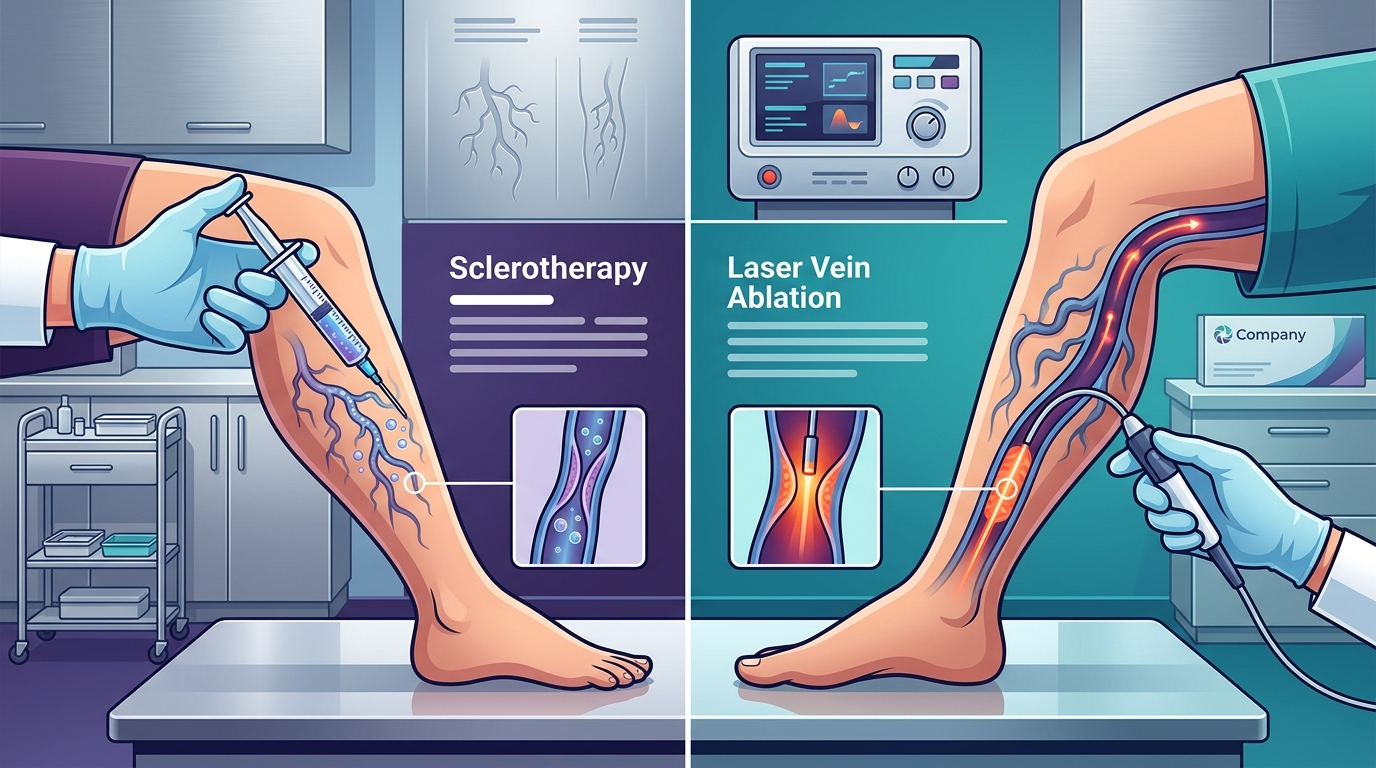
Sclerotherapy is a chemical injection technique. A specialized solution, known as a sclerosant, is injected directly into the vein. This solution irritates the vein lining, causing it to collapse, stick together, and eventually turn into scar tissue. The body then naturally absorbs the treated vein, redirecting blood flow to healthier surrounding veins. This method is highly effective for smaller vessels and is considered the gold standard for spider veins.
Laser vein ablation is a thermal energy technique. This procedure uses heat energy to seal the vein shut. There are two primary forms: endovenous laser ablation (EVLA) for larger varicose veins and surface laser therapy for smaller spider veins. In EVLA, a thin fiber is inserted into the vein under ultrasound guidance. The laser emits heat that damages the vein wall, causing it to collapse and seal. This is particularly effective for larger, deeper varicose veins that are not suitable for injection.
Ideal Candidates for Each Treatment
Not all veins are treated the same way. The anatomy of your venous system dictates the appropriate intervention. At Truffles Vein Specialists, we conduct comprehensive venous ultrasounds to map your venous reflux and determine the root cause of your symptoms.
When to Choose Sclerotherapy
Sclerotherapy is typically recommended for:
- Spider veins (telangiectasias) that are less than 1 millimeter in diameter.
- Small reticular veins (blue-green feeder veins).
- Pelvic congestion syndrome, where foam sclerotherapy can target pelvic veins.
- Patients seeking a non-thermal, needle-based approach.
When to Choose Laser Vein Ablation
Laser ablation is generally preferred for:
- Larger varicose veins (greater than 3 millimeters).
- The great saphenous vein or small saphenous vein insufficiency.
- Cases where thermal coagulation provides better long-term closure rates.
- Patients who wish to avoid multiple injection sites.
The Procedure Experience
Both procedures are performed in an outpatient setting. However, the patient experience differs significantly in terms of sensation and duration.
Sclerotherapy Process
The sclerotherapy procedure is quick, often taking only 15 to 30 minutes. Your provider will clean the treatment area and inject the sclerosant solution using a very fine needle. You may feel a slight burning or stinging sensation during the injection. Afterward, compression stockings are applied to help keep the vein closed. The procedure is minimally invasive and requires no anesthesia beyond topical numbing cream if needed.
Laser Ablation Process
Endovenous laser ablation is a more involved procedure, typically lasting 45 to 60 minutes. It is performed under local tumescent anesthesia, which numbs the area around the vein. A small incision is made, and the laser fiber is inserted. As the laser is withdrawn, the heat seals the vein. You will wear compression stockings for a specified period post-procedure. This method is highly effective for treating the underlying source of venous reflux.
Recovery and Long-Term Results
Recovery times and results vary based on the treatment type and individual healing rates. According to vascular health guidelines, both procedures offer high success rates with minimal downtime.
Sclerotherapy Recovery: Most patients can return to normal activities immediately. However, strenuous exercise and hot tubs should be avoided for a few days. Bruising and mild swelling are common. Results for spider veins typically appear within 3 to 6 weeks. Multiple sessions may be required for optimal clearance.
Laser Ablation Recovery: Patients are advised to walk immediately after the procedure to promote circulation. Compression stockings are worn for 1 to 2 weeks. Some tenderness along the treated vein is normal. The sealed vein is absorbed by the body over several months. Long-term results are generally permanent, though new veins may develop over time due to genetics or lifestyle factors.
Cost and Insurance Considerations
Financial planning is a crucial aspect of vein treatment. It is important to distinguish between cosmetic and medical necessity.
Insurance Coverage: Laser vein ablation for symptomatic varicose veins is often covered by insurance if medical necessity is documented. This includes symptoms like leg pain, swelling, or skin changes. Sclerotherapy for spider veins is frequently considered cosmetic and may not be covered. However, if sclerotherapy is used to treat underlying venous insufficiency or pelvic congestion, partial coverage may be available.
Out-of-Pocket Costs: Without insurance, costs vary by region and provider. Sclerotherapy sessions typically range from $300 to $600 per session. Laser ablation procedures can range from $1,500 to $3,000 or more, depending on the extent of the treatment. At Truffles Vein Specialists, we offer free vein screenings to help you understand your options and potential costs.
Key Takeaways
- Vein Size Matters: Sclerotherapy targets small spider veins, while laser ablation treats larger varicose veins.
- Mechanism Difference: Sclerotherapy uses chemical irritation; laser ablation uses thermal energy.
- Diagnostic Necessity: A venous ultrasound is required to determine the correct treatment path.
- Recovery Time: Both procedures offer minimal downtime, with immediate return to light activities.
- Insurance Factors: Medical necessity documentation is key for insurance coverage of laser ablation.
- Provider Expertise: Treatment by certified specialists like Dr. Paul Feldman ensures optimal outcomes.
- Long-Term Health: Treating vein disease prevents complications like ulcers and blood clots.
Frequently Asked Questions
Which treatment is less painful?
Sclerotherapy involves needle injections, which can cause a stinging sensation. Laser ablation uses local anesthesia, so you feel pressure but minimal pain during the procedure. Post-procedure discomfort is generally mild for both.
Can I combine sclerotherapy and laser ablation?
Yes, many patients undergo both treatments. Laser ablation treats the underlying reflux in larger veins, while sclerotherapy cleans up remaining spider veins. This combined approach offers the most comprehensive aesthetic and functional results.
How long do the results last?
Results are typically permanent for the treated veins. However, new veins may develop over time due to genetic predisposition or hormonal changes. Maintaining a healthy weight and exercising regularly can help prevent new vein formation.
Is sclerotherapy safe for all skin types?
Sclerotherapy is generally safe for all skin types. However, patients with darker skin tones may be at higher risk for hyperpigmentation (darkening of the skin at the injection site). This usually fades over several months. Your provider will take precautions to minimize this risk.
What is foam sclerotherapy?
Foam sclerotherapy converts the liquid sclerosant into a foam. This allows the solution to displace blood more effectively and treat larger veins or deeper veins, such as those involved in pelvic congestion syndrome.
Do I need to wear compression stockings?
Yes, compression stockings are essential for both treatments. They help reduce swelling, prevent blood clots, and keep the treated veins closed during the healing process. Your provider will specify the duration and compression level.
When can I exercise after treatment?
Light walking is encouraged immediately after both procedures. Strenuous exercise, heavy lifting, and high-impact activities should be avoided for 1 to 2 weeks, depending on your provider's recommendations.
Schedule Your Consultation
Don't let vein disease impact your quality of life. Whether you need sclerotherapy for cosmetic improvement or laser ablation for medical relief, expert care is available. Contact Truffles Vein Specialists today to schedule your free vein screening and discover the best treatment plan for your needs. Our team of specialists, including Dr. Christopher Perez and our dedicated nursing staff, is committed to helping you look and feel your best.