

Chronic leg discomfort often mimics several distinct medical conditions, leading to misdiagnosis and ineffective treatment plans. Restless Leg Syndrome (RLS) is a neurological disorder characterized by an uncontrollable urge to move the legs, typically worsening at night. However, many patients suffering from this condition actually have underlying venous insufficiency. According to the American Academy of Sleep Medicine, venous disease is frequently overlooked in patients presenting with RLS-like symptoms, with studies suggesting that up to 30% of RLS diagnoses may be secondary to venous reflux. Understanding the difference between neurological RLS and venous-related leg discomfort is critical for finding lasting relief.
Understanding the Symptoms: RLS vs. Venous Insufficiency
Restless Leg Syndrome, also known as Willis-Ekbom Disease, is defined as a neurological sensorimotor disorder. The primary symptom is an irresistible urge to move the legs, often accompanied by uncomfortable sensations described as creeping, pulling, or throbbing. These sensations usually begin or worsen during periods of rest or inactivity, particularly in the evening or night hours. Relief is typically achieved through movement, such as walking or stretching.
In contrast, venous insufficiency causes leg discomfort due to poor blood flow. When the valves in your leg veins weaken, blood pools in the lower extremities. This condition, known as Chronic Venous Insufficiency (CVI), leads to increased pressure in the veins. The resulting symptoms include heavy, aching legs, swelling in the ankles, and skin changes. While both conditions cause leg discomfort, the triggers and nature of the pain differ significantly.
Patients often confuse the two because both can cause nighttime discomfort. However, venous pain is often described as a deep ache or heaviness that improves with leg elevation. Neurological RLS is more of a sensory disturbance that demands movement. Distinguishing between these two is the first step toward effective treatment.
The Venous-RLS Connection
Recent medical research has highlighted a strong correlation between venous disease and symptoms that mimic Restless Leg Syndrome. When blood pools in the legs due to venous reflux, it can irritate the nerves in the lower extremities. This nerve irritation can create sensations that feel identical to RLS, leading to what is sometimes called "secondary RLS" or "venogenic RLS."
If you have venous insufficiency, the accumulated blood increases the temperature and pressure in your legs. This environment can trigger nerve endings to send false signals to the brain, resulting in the urge to move. Treating the underlying venous issue often resolves these RLS-like symptoms. Many patients who undergo vein treatment report a significant reduction or complete elimination of their restless leg sensations.
It is important to note that not all RLS is caused by vein disease. Primary RLS is linked to brain chemistry, specifically dopamine regulation and iron levels. However, if you have visible varicose veins, spider veins, or a history of leg swelling, your symptoms are more likely venous in origin. Addressing the venous component can provide relief even if you have a co-existing neurological condition.
The Diagnostic Process at Truffles
At Truffles Vein Specialists, we utilize advanced diagnostic tools to determine the root cause of your leg discomfort. A standard physical exam is often insufficient for diagnosing venous issues. We rely on non-invasive vascular testing to visualize blood flow and valve function.
Venous Ultrasound Imaging
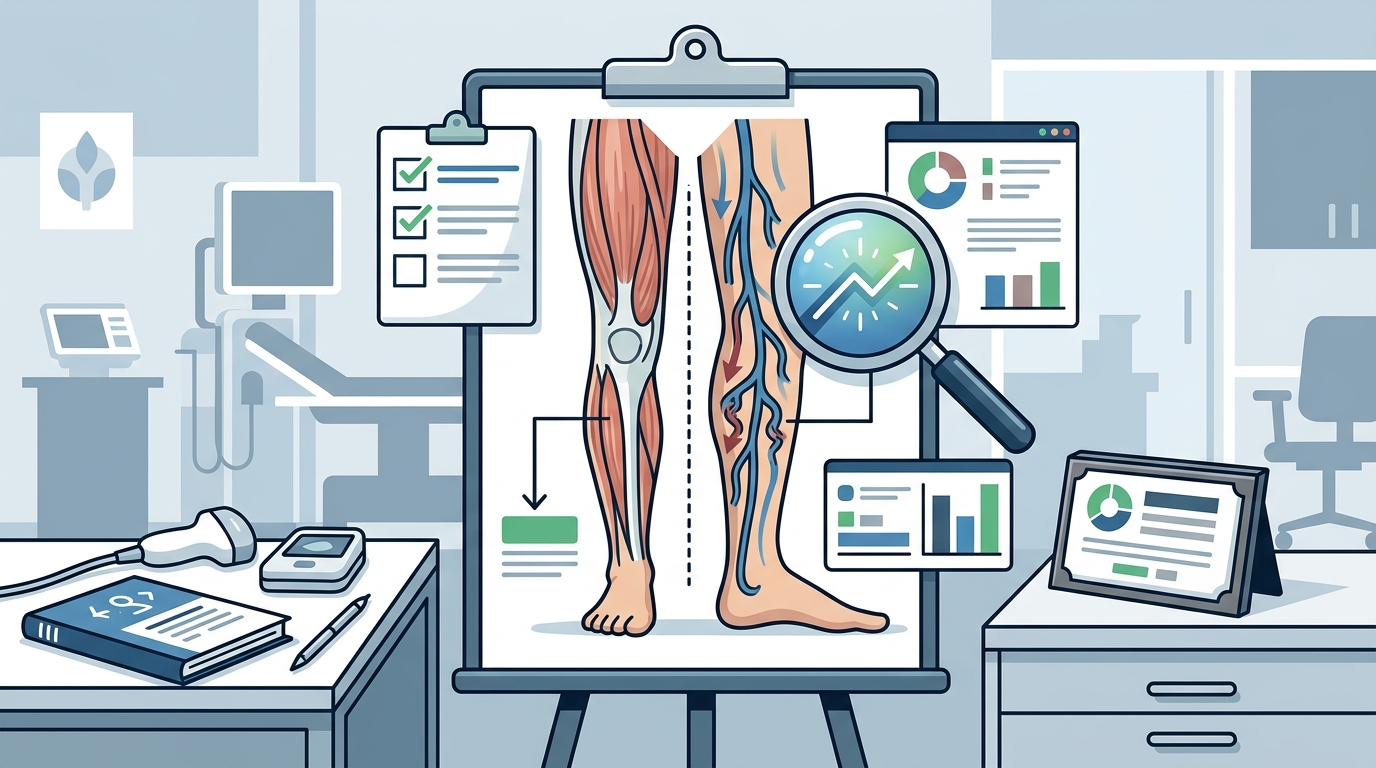
The cornerstone of our diagnostic process is the Venous Duplex Ultrasound. This test uses high-frequency sound waves to create images of your veins. It allows our specialists to see exactly where blood is flowing backward (reflux) and which valves are failing. This imaging is crucial for distinguishing between neurological RLS and venous-related discomfort.
During the ultrasound, we measure the speed and direction of blood flow. If we detect significant reflux, it confirms that venous insufficiency is contributing to your symptoms. This data-driven approach ensures that we do not miss underlying vascular issues that could be causing your leg restlessness.
Clinical Evaluation
Our team, including board-certified specialists and certified vascular technologists, conducts a thorough clinical evaluation. We review your medical history, family history of vein disease, and lifestyle factors. We also assess for other potential causes of RLS, such as iron deficiency or kidney issues. This comprehensive approach ensures that we address all contributing factors to your discomfort.
Treatment Options for Venous-Related Discomfort
If your diagnosis reveals that venous insufficiency is causing your RLS-like symptoms, several effective treatment options are available. These treatments aim to close off diseased veins, redirecting blood flow to healthier veins. This reduces pressure and alleviates the nerve irritation causing your discomfort.
| Treatment Method | Description | Best For |
|---|---|---|
| Radio-Frequency Closure | Uses heat energy to seal diseased veins shut. | Large saphenous veins with significant reflux. |
| Laser Vein Ablation | Delivers laser energy to collapse and close veins. | Patients seeking a minimally invasive option. |
| VenaSeal | Uses a medical-grade adhesive to seal veins. | Patients wanting to avoid tumescent anesthesia. |
| Sclerotherapy | Injects a solution to collapse smaller veins. | Spider veins and smaller varicose veins. |
Radio-Frequency Ablation (RFA) is a common treatment for larger veins. It involves inserting a catheter into the affected vein and applying heat to close it. This procedure is performed under local anesthesia and has a quick recovery time. Many patients see immediate improvement in leg heaviness and discomfort.
VenaSeal is a newer, adhesive-based treatment. It eliminates the need for tumescent anesthesia, which can be painful for some patients. The medical glue seals the vein, and the body naturally absorbs it over time. This option is ideal for patients who want a comfortable, minimally invasive experience.
Sclerotherapy is effective for smaller veins and spider veins. It involves injecting a solution directly into the vein, causing it to collapse. This treatment is often used in conjunction with other procedures to address all visible and symptomatic veins.
Key Takeaways
- Symptom Overlap: Venous insufficiency can mimic Restless Leg Syndrome, causing nighttime leg discomfort and an urge to move.
- Diagnostic Accuracy: A venous duplex ultrasound is essential to distinguish between neurological RLS and venous-related symptoms.
- Treatment Efficacy: Treating underlying venous disease can significantly reduce or eliminate RLS-like symptoms in many patients.
- Expert Care: Truffles Vein Specialists offers comprehensive vascular testing and minimally invasive treatment options.
- Early Intervention: Addressing venous issues early can prevent progression to more severe conditions like ulcers or blood clots.
- Personalized Plans: Treatment options like VenaSeal, RFA, and sclerotherapy are tailored to individual vein anatomy and symptom severity.
Frequently Asked Questions
Can vein treatment cure Restless Leg Syndrome?
If your RLS symptoms are caused by venous insufficiency, treating the vein disease can resolve or significantly improve your symptoms. However, if your RLS is neurological in origin, vein treatment may not cure it but can still improve overall leg comfort.
How do I know if my leg discomfort is from veins or RLS?
A venous duplex ultrasound can determine if you have venous reflux. If the test shows significant vein disease, your symptoms are likely venous. If the test is normal, your symptoms may be neurological, and further evaluation by a neurologist may be needed.
Is vein treatment painful?
Modern vein treatments are minimally invasive and performed under local anesthesia. Most patients report minimal discomfort during the procedure. Recovery is quick, with most patients returning to normal activities within a day.
What is VenaSeal and how does it differ from other treatments?
VenaSeal uses a medical-grade adhesive to seal diseased veins. Unlike traditional methods, it does not require tumescent anesthesia, making it a more comfortable option for many patients. It is effective for closing large saphenous veins.
How long does it take to see results from vein treatment?
Many patients experience immediate relief from symptoms like heaviness and swelling. However, full recovery and optimal results may take a few weeks as the body absorbs the treated veins and blood flow redirects to healthy veins.
Are spider veins related to Restless Leg Syndrome?
Spider veins are often a sign of underlying venous insufficiency. While they are primarily a cosmetic concern, they can indicate deeper vein issues that may contribute to leg discomfort. Treating spider veins can be part of a comprehensive plan to alleviate symptoms.
What should I expect during a consultation at Truffles Vein Specialists?
During your consultation, we will perform a thorough medical history review and a non-invasive venous ultrasound. We will discuss your symptoms, explain our findings, and recommend a personalized treatment plan based on your specific needs.
Schedule Your Consultation
If you are suffering from chronic leg discomfort or suspect that your Restless Leg Syndrome symptoms are linked to vein disease, do not wait for relief. Early diagnosis and treatment can prevent further complications and improve your quality of life. Contact Truffles Vein Specialists today to schedule your comprehensive vein evaluation. Our expert team is dedicated to helping you look and feel your best. Visit our free vein screening page to learn more about our services and how we can help you achieve lasting comfort.