

Spider veins, medically known as telangiectasias, affect millions of people globally, causing cosmetic concern and occasional discomfort. According to the American Academy of Dermatology, these small, dilated blood vessels near the skin's surface are extremely common and often hereditary. While they may seem harmless, untreated spider veins can sometimes progress to more serious venous insufficiency. Fortunately, modern medicine offers several minimally invasive, non-surgical solutions that provide rapid results with minimal downtime. This guide explores the most effective non-surgical options available today. (Experts in Vein Treatment)
Understanding Spider Veins and Their Causes
Before diving into treatments, it is essential to understand what spider veins are. Spider veins are small, damaged veins that appear close to the surface of the skin, often looking like a spider web or tree branches. They are typically red, blue, or purple and are most commonly found on the legs and face. Unlike varicose veins, which are larger and swollen, spider veins are smaller and flatter.
Several factors contribute to the development of spider veins. Genetics play a significant role, as does age. Hormonal changes during pregnancy or menopause can also weaken vein walls. Prolonged standing or sitting increases pressure in the leg veins, leading to dilation. Understanding these causes helps in selecting the right treatment plan. For more information on the progression of vein disease, visit our What is Vein Disease resource page.
Sclerotherapy: The Gold Standard Treatment
Sclerotherapy is widely considered the most effective non-surgical treatment for spider veins. This procedure involves injecting a specialized solution directly into the affected vein. The solution irritates the vein lining, causing it to collapse and stick together. Over time, the vein fades and is reabsorbed by the body.
Types of Sclerotherapy
There are two main types of sclerotherapy available. Visible sclerotherapy uses a liquid solution for smaller veins. Foam sclerotherapy uses a foamed version of the solution, which is often more effective for larger veins or those deeper under the skin. At Truffles Vein Specialists, we utilize Foam Sclerotherapy and Ultrasound Guided Sclerotherapy to ensure precise targeting and optimal results.
Benefits and Recovery
The primary benefit of sclerotherapy is its high success rate. Most patients see significant improvement after just one session, though multiple sessions may be needed for extensive cases. Recovery is minimal. Patients can usually return to normal activities immediately but are advised to wear compression stockings for a short period to aid healing. The procedure is performed in-office and does not require anesthesia.
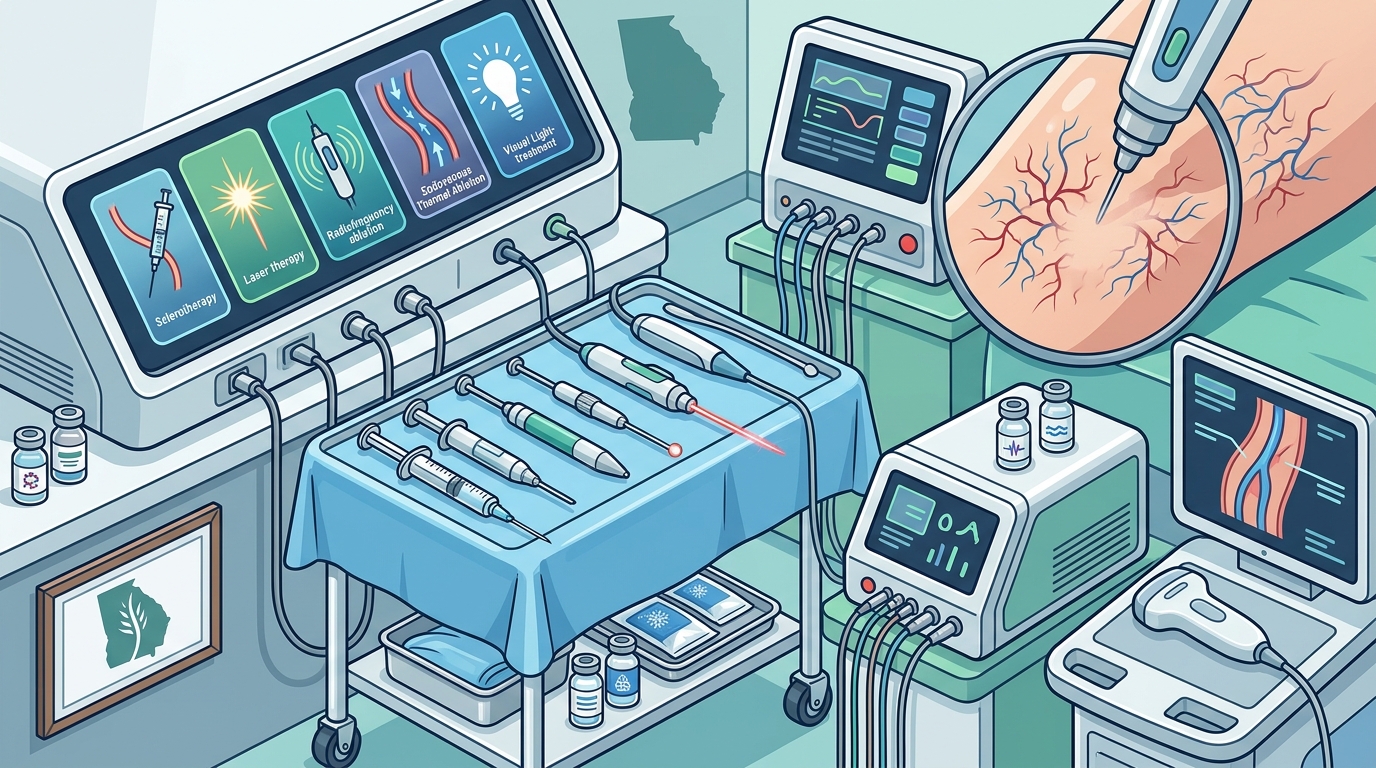
Surface Laser Therapy
Laser therapy is a popular non-invasive option, particularly for facial spider veins or very small leg veins. This treatment uses concentrated beams of light to heat and destroy the veins without damaging the surrounding skin. The body naturally absorbs the dead tissue over the following weeks.
How It Works
During a laser treatment session, the doctor applies a cooling gel to the skin. A handheld device delivers pulses of light to the spider veins. The heat from the light causes the veins to collapse. The procedure is generally well-tolerated, with most patients describing the sensation as a slight snap or sting. For detailed insights into our Laser Vein Ablation techniques, please review our treatment guides.
Ideal Candidates
Laser therapy is ideal for patients with fine, red spider veins that are too small for sclerotherapy. It is also preferred for those who wish to avoid needles entirely. However, it may require more sessions than sclerotherapy to achieve complete clearance. Results typically appear within a few weeks to a few months.
Radiofrequency Ablation
Radiofrequency ablation (RFA) is a minimally invasive procedure that uses heat energy to close off diseased veins. While often associated with larger varicose veins, it can be adapted for certain spider vein cases, particularly those associated with underlying venous insufficiency. This method is highly effective and has a low risk of complications.
The Procedure
A small catheter is inserted into the vein under ultrasound guidance. Radiofrequency energy is delivered through the catheter, heating the vein wall and causing it to collapse. The vein is then sealed shut. Blood flow is naturally redirected to healthier veins. This procedure is performed under local anesthesia and takes about an hour. Learn more about our Radio-Frequency Closure technology.
Advantages
Radiofrequency ablation offers precise control over the energy delivery, minimizing damage to surrounding tissues. Patients experience less pain and bruising compared to traditional surgical stripping. Recovery is quick, with most patients returning to work within a day. This method is particularly beneficial for those with larger veins that have not responded to sclerotherapy.
VenaSeal Closure System
VenaSeal is a revolutionary adhesive-based closure system that eliminates the need for tumescent anesthesia and compression stockings. This system uses a medical-grade cyanoacrylate glue to seal the vein shut. It is a non-surgical option that offers significant comfort benefits for patients.
How VenaSeal Works
The VenaSeal device delivers a small amount of adhesive into the vein. The adhesive bonds the vein walls together, closing the vein immediately. Blood flow is rerouted to healthy veins. The procedure is quick and requires no post-procedure compression stockings, which is a major advantage for many patients. For more details, explore our VenaSeal treatment page.
Patient Comfort
One of the biggest advantages of VenaSeal is patient comfort. Traditional vein treatments often require numbing injections (tumescent anesthesia) that can be painful. VenaSeal eliminates this step. Additionally, the absence of compression stockings makes the recovery process much more convenient. This is particularly appealing for active individuals or those who find compression difficult to tolerate.
Comparison of Non-Surgical Options
Choosing the right treatment depends on various factors, including the size and location of the veins, your medical history, and your personal preferences. The following table summarizes the key differences between the top non-surgical options.
| Treatment | Invasiveness | Anesthesia Required | Compression Stockings | Best For |
|---|---|---|---|---|
| Sclerotherapy | Minimally Invasive | None | Yes, typically | Leg spider veins and varicose veins |
| Laser Therapy | Non-Invasive | None | No | Fine facial veins and small leg veins |
| Radiofrequency Ablation | Minimally Invasive | Local | Yes, typically | Larger veins and venous insufficiency |
| VenaSeal | Minimally Invasive | None | No | Patients seeking comfort and no compression |
Key Takeaways
- Sclerotherapy remains the most common and effective treatment for spider veins, with a high success rate after multiple sessions.
- Laser therapy is ideal for facial veins or very small leg veins where needles are not desired.
- VenaSeal offers a unique advantage by eliminating the need for compression stockings and tumescent anesthesia.
- Radiofrequency ablation provides precise heat energy delivery, minimizing damage to surrounding tissues.
- Early intervention can prevent spider veins from progressing to more serious venous insufficiency.
- Personalized care is crucial. A consultation with a specialist like Dr. Paul Feldman ensures the best treatment plan.
- Recovery is generally quick for all non-surgical options, allowing patients to resume normal activities promptly.
Frequently Asked Questions
Are non-surgical spider vein treatments painful?
Most non-surgical treatments are well-tolerated. Sclerotherapy may cause a slight pinching sensation. Laser therapy feels like a quick snap. VenaSeal and radiofrequency ablation use local anesthesia or no anesthesia, minimizing discomfort significantly.
How many sessions are needed for spider vein removal?
The number of sessions varies. Sclerotherapy often requires 2 to 4 sessions. Laser therapy may need 1 to 3 sessions. VenaSeal is typically a single-session procedure. Your specialist will determine the exact number based on your vein condition.
Is there downtime after non-surgical vein treatments?
Downtime is minimal. Most patients return to work the same day. However, strenuous exercise should be avoided for a few days. Compression stockings may be required for sclerotherapy and radiofrequency ablation.
Can spider veins come back after treatment?
Treated veins will not return. However, new spider veins can develop over time due to genetics, age, or hormonal changes. Maintaining a healthy lifestyle and wearing compression stockings can help prevent new veins.
Are these treatments covered by insurance?
Cosmetic spider vein removal is typically not covered by insurance. However, if the veins cause medical symptoms like pain or swelling, some treatments may be covered. Check with your provider for specifics.
What is the best treatment for facial spider veins?
Laser therapy is generally the best option for facial spider veins. It is precise and effective for the delicate skin on the face. Sclerotherapy is rarely used on the face due to the risk of tissue damage.
How long do results last?
Results from non-surgical treatments are long-lasting. Treated veins are permanently removed. However, new veins may appear. Regular follow-ups with a specialist can help manage new developments.
Schedule Your Consultation
Don't let spider veins hold you back. Take the first step towards smoother, healthier skin with expert care from Truffles Vein Specialists. Our team of specialists, including Dr. Christopher Perez and our dedicated nursing staff, is here to provide personalized care. Contact us today to schedule your free vein screening and discover the best non-surgical option for you.