

Understanding your body's vascular health is critical for preventing serious complications. According to the Centers for Disease Control and Prevention, venous thromboembolism affects millions of people annually, making early detection through imaging like the abdominal venous duplex scan essential for patient safety. This non-invasive test allows specialists to visualize blood flow in the major veins of your abdomen, identifying blockages, clots, or compression issues that could lead to deep vein thrombosis or other vascular disorders. Proper preparation ensures the ultrasound waves penetrate effectively, providing the clear images your doctor needs to make an accurate diagnosis. At Truffles Vein Specialists, we prioritize patient comfort and diagnostic precision, guiding you through every step of this important evaluation.
Understanding the Abdominal Venous Duplex Scan
An abdominal venous duplex scan is a specialized ultrasound examination that combines traditional ultrasound imaging with Doppler technology. Venous Ultrasound for DVT detection is a primary reason patients undergo this test, as it allows physicians to see both the structure of the veins and the speed and direction of blood flow within them. This dual approach is vital for diagnosing conditions such as iliac vein compression, renal artery issues, and deep vein thrombosis in the abdominal region.
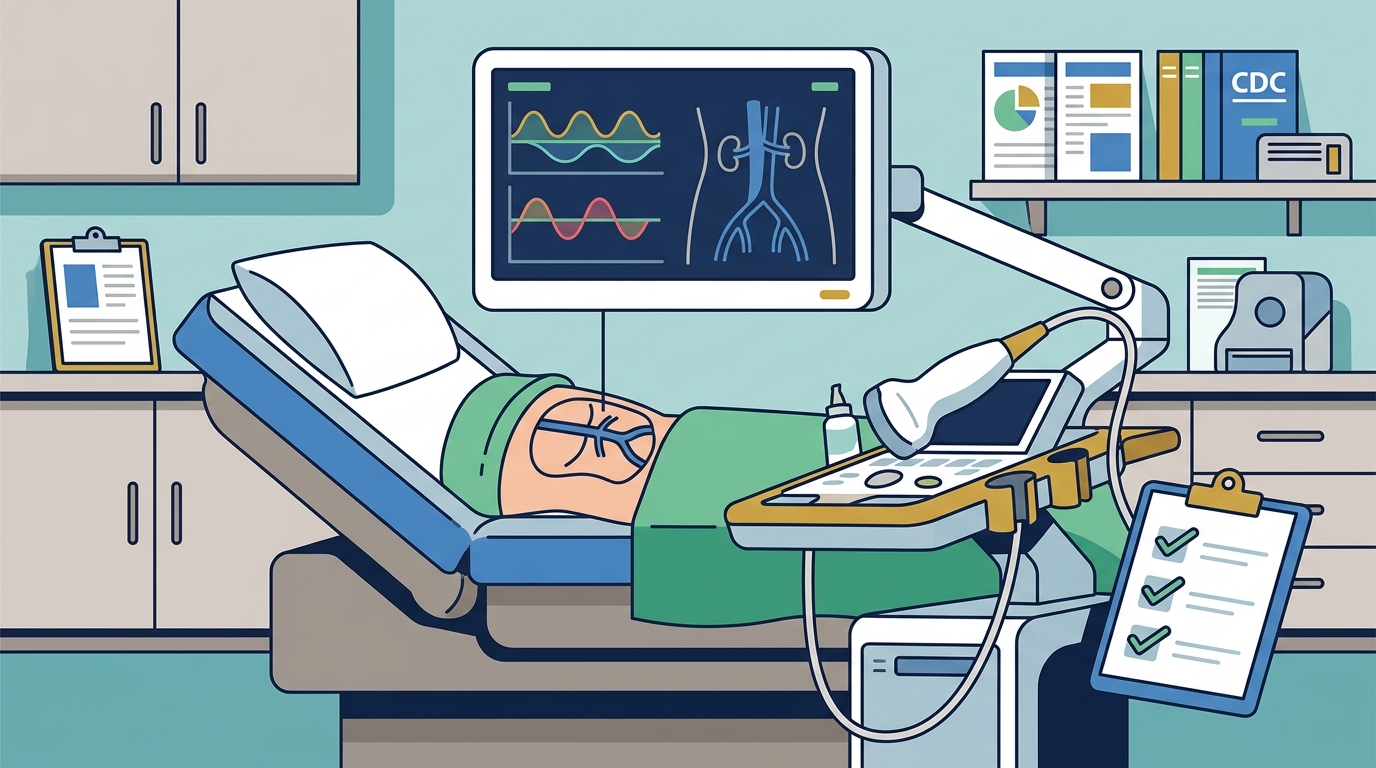
The procedure is completely non-invasive and painless. A trained vascular technician, often an RVT (Registered Vascular Technician) or RPhS (Registered Peripheral Vascular Sonographer), will apply a warm gel to your abdomen and move a transducer over the area. The transducer sends sound waves into your body, which bounce back to create real-time images on a monitor. These images help identify any abnormalities in the inferior vena cava, renal veins, or iliac veins.
At Truffles Vein Specialists, we utilize state-of-the-art vascular testing equipment to ensure the highest quality images. Our team, including experts like Brian Sapp, RVT, RPhS, is dedicated to providing accurate and timely results. Understanding the purpose of this scan helps alleviate anxiety and prepares you for a smooth experience.
Essential Preparation Steps
Proper preparation is key to obtaining clear images during your abdominal venous duplex scan. Gas in the intestines can block ultrasound waves, so specific guidelines must be followed to minimize interference. Here is what you need to know before your appointment.
Fasting Requirements
In most cases, you will be required to fast for a specific period before the scan. Typically, this means no food or drink for 6 to 8 hours prior to your appointment. This fasting period helps reduce gas in the stomach and intestines, allowing for a clearer view of the abdominal veins. If you have diabetes or other medical conditions that require regular eating, please consult with your doctor for specific instructions. Never skip prescribed medications unless explicitly told to do so by your healthcare provider.
Clothing and Comfort
Wear loose, comfortable clothing to your appointment. You will likely be asked to change into a hospital gown, which allows easy access to your abdomen. Avoid wearing tight jeans or belts that might restrict movement or cause discomfort while lying on the examination table. Bringing a robe or a cardigan can also be helpful, as the examination room may be cool.
Medication and Health History
Inform your provider about any medications you are taking, especially blood thinners. While these usually do not need to be stopped, your doctor needs to know your full medical history. If you have had previous abdominal surgeries, mention this, as scar tissue can sometimes affect the imaging process. Transparency about your health ensures the technician can adjust their technique if necessary.
What to Expect During the Procedure
On the day of your scan, you will be taken to a private examination room. The procedure typically takes between 30 to 60 minutes, depending on the complexity of the case and the areas being examined. Here is a step-by-step look at the process.
The Examination Process
You will lie on your back on an examination table. The technician will apply a small amount of warm gel to your abdomen. This gel helps the transducer glide smoothly over your skin and improves the transmission of sound waves. The technician will then press the transducer against your skin, moving it in specific patterns to capture images of the abdominal veins.
You may be asked to hold your breath at certain moments. This helps stabilize the organs and veins, providing clearer images. The technician might also ask you to change positions, such as lying on your side, to get a better view of specific veins like the renal arteries or iliac veins. These movements are normal and part of the standard protocol for a comprehensive abdominal venous duplex scan.
Communication and Comfort
Communication is key during the scan. If you feel any discomfort or have questions, speak up immediately. The technician is there to ensure your comfort while obtaining the necessary data. The gel is water-soluble and will wipe off easily after the procedure. There is no radiation involved, making this a safe option for repeated monitoring if needed.
Post-Procedure Care and Recovery
One of the significant advantages of the abdominal venous duplex scan is the lack of recovery time. You can resume your normal activities immediately after the appointment. There are no restrictions on driving, eating, or working following the test.
Immediate Aftercare
After the scan, the technician will wipe off the gel. You can get dressed and leave the facility. If you were fasting, it is a good idea to have a light snack ready to restore your energy levels. The results of the scan are typically reviewed by a vascular specialist, such as Dr. Paul Feldman or Dr. Christopher Perez, who will interpret the images in the context of your medical history.
Follow-Up and Next Steps
Your doctor will discuss the results with you, usually within a few days. If the scan reveals any issues, such as blood clots or vein compression, your provider will outline a treatment plan. This might include further testing, medication, or a referral to a vein specialist. At Truffles Vein Specialists, we offer comprehensive vein treatment options, including VenaSeal and Radio-Frequency Closure, for patients who require intervention.
It is important to follow any post-procedure instructions provided by your doctor. If you experience any unusual symptoms after the scan, such as severe pain or swelling, contact your healthcare provider immediately. Early intervention is crucial for managing vascular health effectively.
Why Choose Truffles Vein Specialists
Truffles Vein Specialists is a leading vein care center in Georgia, known for its expertise in diagnosing and treating venous diseases. Our team of board-certified specialists and advanced practitioners is dedicated to providing personalized care to each patient. We understand that vascular health is a critical component of overall well-being, and we strive to make the diagnostic process as comfortable and efficient as possible.
Our facility is equipped with the latest technology for vascular testing, including high-resolution ultrasound machines. We offer a range of services, from free vein screenings to advanced treatments for varicose veins and spider veins. Our commitment to excellence is reflected in our positive patient reviews and our focus on evidence-based medicine.
We also prioritize patient education. Understanding your condition empowers you to make informed decisions about your health. Our blog and resources provide valuable information on topics such as vein disease, DVT, and pelvic health. We believe that an informed patient is a confident patient.
Key Takeaways
- Fasting is Critical: Avoid eating or drinking for 6-8 hours before your scan to reduce intestinal gas and improve image clarity.
- Non-Invasive Safety: The abdominal venous duplex scan uses sound waves, not radiation, making it a safe diagnostic tool for vascular assessment.
- Expert Interpretation: Results are analyzed by specialized physicians like Dr. Paul Feldman to ensure accurate diagnosis of conditions like iliac vein compression.
- Immediate Recovery: Patients can resume normal activities immediately after the procedure, with no downtime required.
- Comprehensive Care: Truffles Vein Specialists offers a full spectrum of vascular testing and treatment options, from diagnosis to intervention.
- Advanced Technology: Our use of high-resolution ultrasound ensures detailed visualization of the abdominal veins and surrounding structures.
- Patient-Centered Approach: We prioritize comfort and communication throughout the diagnostic process to alleviate patient anxiety.
Frequently Asked Questions
Do I need to fast for an abdominal venous duplex scan?
Yes, fasting is typically required for 6 to 8 hours before the procedure. This helps minimize gas in the digestive tract, which can obstruct the ultrasound waves and obscure the view of the abdominal veins.
Is the abdominal venous duplex scan painful?
No, the scan is painless. You may feel slight pressure from the transducer, but there is no sharp pain. The gel used is warm and comfortable, and the technician will check in with you regularly to ensure your comfort.
How long does the procedure take?
The procedure usually takes between 30 to 60 minutes. The duration can vary depending on the specific veins being examined and the complexity of the case.
Can I drive home after the scan?
Yes, you can drive home immediately after the scan. There are no sedatives or medications used during the procedure that would impair your ability to drive.
What conditions can this scan detect?
This scan can detect a variety of conditions, including deep vein thrombosis (DVT), iliac vein compression, renal artery stenosis, and other vascular abnormalities in the abdomen.
Do I need a referral for this test?
Most insurance companies require a referral from a primary care physician or specialist. Contact your insurance provider to verify your coverage and referral requirements before your appointment.
What happens if a blood clot is found?
If a blood clot is detected, your doctor will discuss treatment options with you. These may include anticoagulant medication, compression therapy, or other interventions to prevent the clot from moving to the lungs.
Schedule Your Evaluation
Don't wait until symptoms worsen to address your vascular health. Early detection through an abdominal venous duplex scan can prevent serious complications and improve your quality of life. At Truffles Vein Specialists, we are here to guide you through every step of your vascular journey. Contact us today to schedule your appointment or learn more about our free vein screening services. Your health is our priority, and we are committed to providing you with the best possible care.