

Spider veins, medically known as telangiectasias, affect millions of individuals across the United States, creating visible, web-like patterns on the legs and face. According to the American Academy of Dermatology, these minor blood vessels are extremely common, with estimates suggesting that up to 50 percent of adults may experience some form of venous insufficiency or cosmetic vein concerns. While many people initially dismiss them as purely aesthetic issues, untreated spider veins can sometimes progress to more significant venous disorders. Fortunately, modern medicine has moved far beyond invasive surgical stripping. Today, patients have access to highly effective, non-surgical interventions that offer rapid recovery times and impressive cosmetic outcomes. This guide explores the leading non-surgical treatments available, including sclerotherapy, laser therapy, and advanced adhesive techniques, to help you determine the best path for your vascular health.
Understanding Spider Veins and Their Causes
Before diving into treatments, it is essential to understand the underlying mechanics of the condition. Spider veins are dilated, small blood vessels located near the surface of the skin. They often appear blue, purple, or red and resemble spider webs or tree branches. Unlike varicose veins, which are larger, swollen, and twisted, spider veins are typically smaller and less raised, though they can cause discomfort such as burning, itching, or aching.
The primary cause of spider veins is venous insufficiency. This occurs when the tiny valves within the veins weaken or fail. Normally, these valves ensure blood flows upward toward the heart. When they malfunction, blood pools in the veins, increasing pressure and causing the vessel walls to stretch and become visible. Several risk factors contribute to this condition, including genetics, hormonal changes during pregnancy, prolonged standing or sitting, and obesity. According to the Centers for Disease Control and Prevention, lifestyle factors play a significant role in the development of chronic venous disorders, emphasizing the importance of early intervention.
While spider veins are often considered a cosmetic concern, they can be a sign of deeper venous reflux. If left untreated, the underlying valve failure can worsen, leading to larger varicose veins or more serious complications like blood clots. Therefore, addressing spider veins is not just about appearance; it is about maintaining long-term vascular health. At Truffles Vein Specialists, we prioritize a comprehensive diagnosis to ensure that any underlying venous insufficiency is identified and treated alongside the visible spider veins.
Sclerotherapy: The Gold Standard
Sclerotherapy remains the most widely prescribed and effective non-surgical treatment for spider veins. This procedure involves the injection of a specialized solution directly into the affected vein. The solution irritates the lining of the vein, causing it to collapse, stick together, and eventually fade away. The body naturally absorbs the treated vein, and blood is rerouted to healthier veins nearby.
Traditional Liquid Sclerotherapy
Traditional sclerotherapy uses a liquid solution to treat smaller spider veins. It is highly effective for veins on the legs and is considered the gold standard for this type of treatment. The procedure is quick, often taking less than 30 minutes, and requires no anesthesia. Patients may experience minor discomfort during the injection, similar to a pinprick, but the results are typically visible within three to six weeks. Multiple sessions are often required for optimal results, depending on the severity of the condition.
Foam Sclerotherapy
Foam sclerotherapy is a variation used for larger veins, such as varicose veins, but it can also be adapted for certain spider vein cases. The sclerosing agent is mixed with air or gas to create a foam, which displaces blood more effectively and allows for better contact with the vein walls. This method is particularly useful for treating veins that are too large for liquid sclerotherapy. Foam sclerotherapy is often guided by ultrasound to ensure precise delivery and maximize efficacy.
Ultrasound-Guided Sclerotherapy
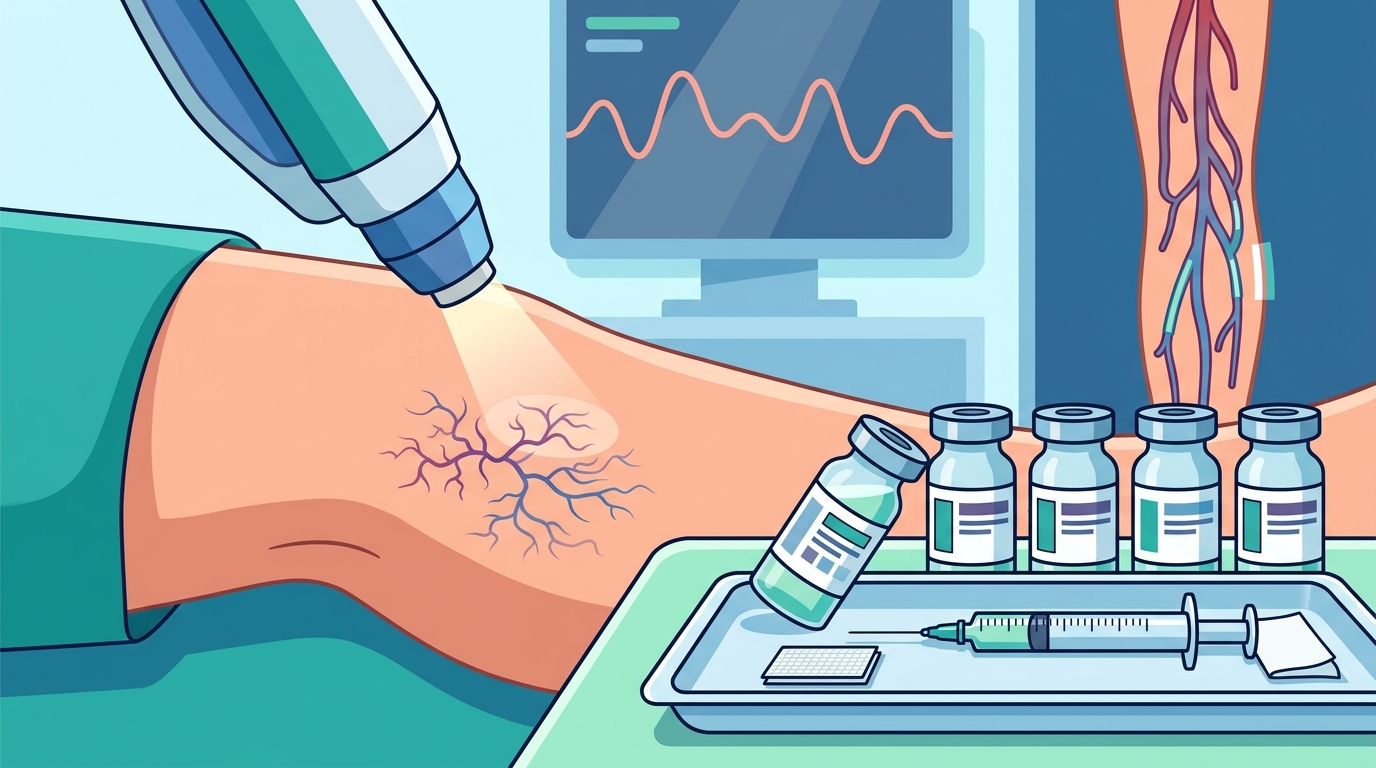
For deeper or more complex venous issues, ultrasound-guided sclerotherapy provides real-time visualization of the veins. This technique allows specialists to target the exact location of the faulty veins with precision, reducing the risk of complications and improving treatment outcomes. This method is particularly valuable for patients with a history of venous thromboembolism or those requiring complex venous mapping.
Laser and Light-Based Treatments
Laser therapy offers a needle-free alternative for patients who prefer to avoid injections. This treatment uses concentrated beams of light to heat and destroy the spider veins. The heat causes the veins to collapse and gradually fade from view. Laser therapy is particularly effective for smaller, finer veins that are difficult to treat with sclerotherapy, such as those on the face or near the knees.
Endovenous Laser Ablation (EVLA)
While primarily used for larger varicose veins, endovenous laser ablation can be part of a comprehensive treatment plan for patients with significant venous reflux. A laser fiber is inserted into the vein, delivering heat energy to seal the vein shut. This minimally invasive procedure is performed under local anesthesia and offers a quick recovery time. According to the Society for Vascular Surgery, laser ablation has a high success rate and is considered a safe alternative to traditional surgery.
Surface Laser Therapy
Surface laser therapy is non-invasive and does not require needles. It is ideal for treating spider veins on the face, nose, and legs. The laser targets the hemoglobin in the blood, converting light energy into heat that destroys the vein without damaging the surrounding skin. Patients may experience mild swelling or redness after treatment, but these side effects typically resolve within a few days. Multiple sessions are often needed for complete clearance.
Advanced Adhesive Treatments
VenaSeal is a revolutionary non-surgical treatment that uses a medical-grade adhesive to seal off problematic veins. Unlike sclerotherapy, which relies on chemical irritation, VenaSeal uses a cyanoacrylate-based glue to close the vein instantly. This method eliminates the need for compression stockings in many cases, offering a significant convenience for patients.
How VenaSeal Works
During a VenaSeal procedure, the adhesive is injected into the vein using a fine needle. The glue bonds the vein walls together, immediately stopping blood flow through the vessel. The body then naturally reroutes blood to healthy veins and gradually absorbs the sealed vein. This treatment is particularly beneficial for patients with allergies to sclerosing agents or those who wish to avoid the discomfort associated with compression therapy.
Benefits of VenaSeal
One of the primary advantages of VenaSeal is the reduced need for post-procedure compression. Traditional sclerotherapy often requires patients to wear compression stockings for several weeks to ensure proper healing. VenaSeal minimizes this requirement, allowing for a faster return to normal activities. Additionally, the procedure is virtually painless and does not require tumescent anesthesia, which is often used in laser treatments to protect the skin from heat.
Varithena: A New Frontier
Varithena is another advanced option, utilizing a foam-based medication delivered via catheter to treat varicose veins. While primarily for larger veins, it represents the cutting edge of non-surgical venous care. It offers a minimally invasive approach with high patient satisfaction rates. For patients with both spider veins and larger varicose veins, a combination of treatments may be recommended to achieve comprehensive results.
Comparing Non-Surgical Modalities
Choosing the right treatment depends on various factors, including the size and location of the veins, your medical history, and your personal preferences. The following table summarizes the key differences between the primary non-surgical options.
| Treatment | Best For | Invasiveness | Compression Required | Recovery Time |
|---|---|---|---|---|
| Sclerotherapy | Small to medium spider veins | Minimally Invasive (Injection) | Yes, typically 1-3 weeks | Immediate return to light activity |
| Laser Therapy | Fine veins, facial veins | Non-Invasive (No needles) | No | Minimal to none |
| VenaSeal | Larger veins, allergy to sclerosants | Minimally Invasive (Injection) | Often not required | Immediate return to activity |
| Varithena | Varicose veins, reflux | Minimally Invasive (Catheter) | Varies by case | Quick recovery |
Key Takeaways
- Prevalence: Up to 50 percent of adults may experience venous insufficiency, making spider vein treatment a common and necessary medical concern.
- Sclerotherapy Efficacy: Sclerotherapy is the gold standard for spider veins, with success rates often exceeding 80 percent for visible clearance.
- Laser Benefits: Laser therapy offers a needle-free option, ideal for patients with needle phobia or those treating facial veins.
- VenaSeal Innovation: VenaSeal uses medical adhesive to seal veins, often eliminating the need for post-procedure compression stockings.
- Diagnostic Importance: A venous ultrasound is critical before treatment to rule out underlying venous reflux or deep vein thrombosis.
- Expert Care: Treatment by board-certified specialists, such as those at Truffles Vein Specialists, ensures optimal outcomes and safety.
- Prevention: Maintaining a healthy weight and avoiding prolonged standing can help prevent the progression of spider veins.
Frequently Asked Questions
Are non-surgical spider vein treatments painful?
Most non-surgical treatments are well-tolerated. Sclerotherapy may cause a slight pinching sensation, while laser therapy can feel like a rubber band snap. VenaSeal is virtually painless. Local anesthesia or numbing creams are often used to ensure patient comfort during the procedure.
How many sessions are needed for spider vein removal?
The number of sessions varies based on the severity of the condition. Most patients require 2 to 4 sessions for sclerotherapy, spaced several weeks apart. Laser therapy may also require multiple sessions for complete clearance. Your specialist will create a personalized treatment plan during your consultation.
Is there downtime after non-surgical vein treatment?
There is typically little to no downtime. Patients can usually return to work and normal activities immediately after treatment. However, strenuous exercise and heavy lifting should be avoided for a few days to a week, depending on the treatment type.
Can spider veins come back after treatment?
While treated veins will not return, new spider veins can develop over time due to genetics, hormonal changes, or lifestyle factors. Maintaining a healthy lifestyle and attending regular follow-up appointments can help manage new developments.
What is the difference between spider veins and varicose veins?
Spider veins are smaller, closer to the skin surface, and often appear red or blue. Varicose veins are larger, swollen, twisted, and often raised above the skin. Both conditions stem from venous insufficiency but require different treatment approaches.
Are non-surgical treatments covered by insurance?
Treatment coverage depends on medical necessity. If spider veins cause symptoms like pain, swelling, or skin changes, insurance may cover part of the cost. Cosmetic treatments are typically out-of-pocket. Our team can help you navigate insurance verification and pre-authorization.
What should I do before my spider vein treatment?
Patients are advised to avoid sun exposure, blood-thinning medications, and certain supplements before treatment. A thorough consultation will provide specific pre-procedure instructions to ensure the best possible outcome.
Schedule Your Consultation
Do not let spider veins hold you back from feeling confident and comfortable in your own skin. At Truffles Vein Specialists, we offer personalized, non-surgical treatment plans tailored to your unique vascular needs. Our team of experts, including Dr. Paul Feldman and Dr. Christopher Perez, is dedicated to providing exceptional care and visible results. Contact us today to schedule your free vein screening and take the first step toward healthier, smoother legs.